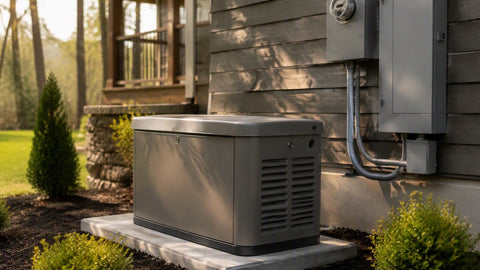
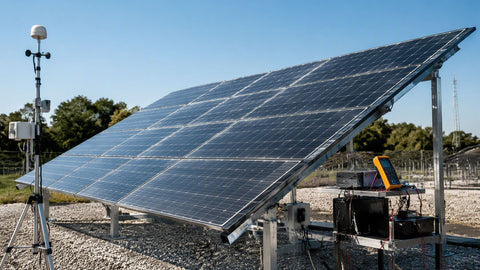
Procurement managers and project leads live in a permanent tension: the equipment budget says no, the project schedule says now. Leasing resolves that tension — and when the tax treatment is handled correctly, it does more than spread payments. Structured right, leased solar, storage, and electrical equipment can generate deductions that change the net cost of the project by five figures. I've watched contractors leave that money on the table because nobody mapped the tax treatment before signing, and I've watched others fund an extra service truck with the difference. This guide is the map: Section 179, bonus depreciation, MACRS, lease structures, and the decision framework — with the arithmetic shown, and with the standing caveat that your CPA reads the current code, not a blog post.

The Three Tax Mechanisms That Matter
Equipment cost recovery runs through three overlapping mechanisms. Understanding each one's shape beats memorizing dollar limits, because the limits get indexed and revised nearly every year.
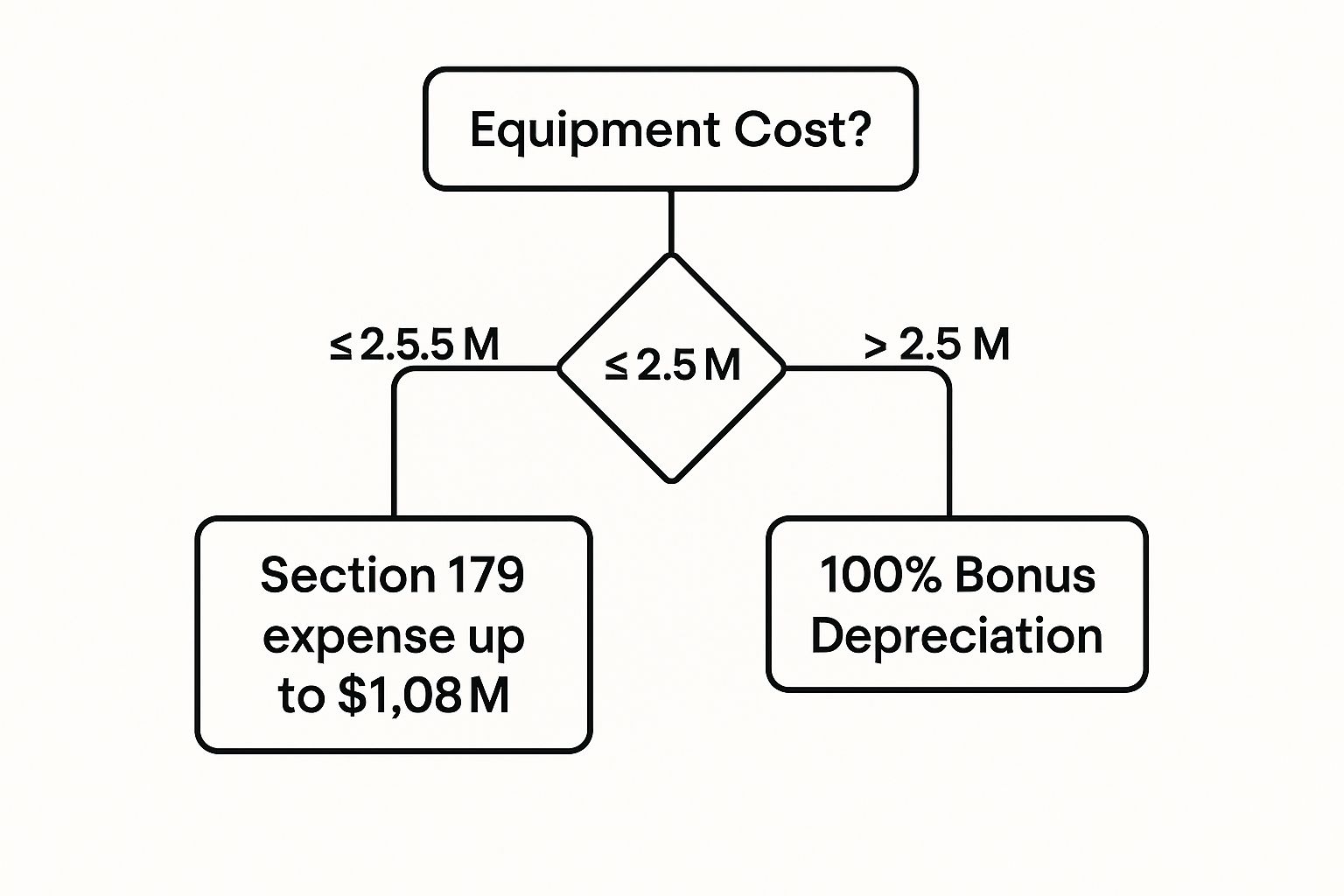
Section 179 expensing lets a business deduct the full purchase price of qualifying equipment in the year it's placed in service, rather than depreciating it over years. The deduction cap and the phase-out threshold are inflation-indexed annually — recent years have seen the cap in the $1.2–1.25 million range with phase-out beginning around $3 million of total equipment placed in service. Two real constraints: the deduction can't exceed taxable business income (excess carries forward), and the equipment must be used more than 50% for business.
Bonus depreciation allows an additional first-year deduction on qualifying property, historically up to 100% and scheduled by statute through phase-downs and reinstatements. Unlike 179, bonus depreciation can create or increase a net operating loss — no taxable-income ceiling — and there's no dollar cap. Which one leads depends on the current statute and your income picture; that's a conversation for your tax advisor with the current year's numbers.
MACRS (Modified Accelerated Cost Recovery System) is the default schedule when you don't expense. Solar and most electrical equipment falls in the 5-year property class, depreciated over six tax years under the half-year convention:
| Tax Year | MACRS 5-Year Rate | Deduction on $100,000 Basis | Cumulative |
|---|---|---|---|
| Year 1 | 20.00% | $20,000 | $20,000 |
| Year 2 | 32.00% | $32,000 | $52,000 |
| Year 3 | 19.20% | $19,200 | $71,200 |
| Year 4 | 11.52% | $11,520 | $82,720 |
| Year 5 | 11.52% | $11,520 | $94,240 |
| Year 6 | 5.76% | $5,760 | $100,000 |
The rates sum to exactly 100% — check: 20 + 32 + 19.2 + 11.52 + 11.52 + 5.76 = 100.00. Note the front-loading: over half the basis deducts in the first two years, which is where the time value of money lives.
Lease Structure Determines Tax Treatment
Here's the fork in the road that decides everything downstream: is your lease a capital/finance lease (a purchase wearing a lease's clothes) or a true/operating lease (a rental)? The tax code looks through the label to the economics — bargain purchase options, lease terms covering most of the asset's life, and present value tests all push toward capital treatment.
| Dimension | Capital / Finance Lease ($1 Buyout, FMV-10%) | True / Operating Lease (FMV) |
|---|---|---|
| Economic substance | Financed purchase | Rental |
| Typical tax treatment | Lessee depreciates: Section 179 / bonus / MACRS | Lessee deducts lease payments as operating expense |
| Deduction timing | Front-loaded — potentially 100% in year one | Spread evenly across the lease term |
| Balance sheet | Asset and liability recorded | Lease liability under current accounting standards |
| End of term | Own the equipment (for $1 or agreed price) | Return, renew, or buy at fair market value |
| Best for | Equipment you'll keep long-term | Equipment with short useful relevance or upgrade cycles |
The $1-buyout lease is the procurement world's open secret: it functions as financing, qualifies the lessee for ownership-style tax treatment, and preserves cash like a lease. The FMV lease is a rental — simpler books, even deductions, no residual risk. Both are legitimate tools; matching the tool to the asset's life in your hands is the skill.
Worked Example: $120,000 of Solar and Storage Equipment
Concrete numbers make the choice visible. A contractor leases $120,000 of equipment — panels, hybrid inverters, and battery storage — for an installation business expansion. Assume a 24% combined marginal tax rate and current-year expensing available (verify limits for your tax year):
| Scenario | Year-1 Deduction | Year-1 Tax Value @ 24% | Total Deductions Over 5 Years | Notes |
|---|---|---|---|---|
| Cash purchase, Section 179 | $120,000 | $28,800 | $120,000 (all year 1) | Requires taxable income ≥ deduction |
| Capital lease + 179/bonus | $120,000 | $28,800 | $120,000 (front-loaded) | Financed — cash preserved, deduction intact |
| Cash purchase, straight MACRS | $24,000 | $5,760 | $120,000 over 6 yrs | Same total, slower arrival |
| True/operating lease (36 mo, ~$3,500/mo) | $42,000 | $10,080 | ~$126,000 over term | Payments fully deductible as paid |
The headline insight: the capital lease pairs the deduction profile of a purchase with the cash-flow profile of a lease. The $28,800 of year-one tax value in row two arrived without writing the $120,000 check. That combination — cash preserved, deduction banked — is why equipment-savvy contractors structure acquisitions this way, and it's worth real money at tax rates where contracting businesses actually live. Run your own figures through the ROI calculator framework, then validate the tax side with your CPA.
Where Solar and Storage Equipment Fits

Energy equipment carries its own layer of incentives that interact with depreciation. The federal Investment Tax Credit applies to owned solar and storage — including equipment acquired through capital leases where the lessee is the tax owner — and the interplay matters: claiming the ITC generally reduces the depreciable basis by half the credit value under longstanding rules. So a $100,000 solar-plus-storage system with a 30% credit depreciates $85,000 of basis, not $100,000 — still a deeply favorable stack, but run the combined math rather than stacking headline percentages. Domestic content and other adders can raise the credit further for qualifying projects; our incentives by state page tracks the program landscape, and the commercial installation cost guide puts the equipment share of project budgets in context.
One structural note for lessor arrangements: under a true lease or a third-party-ownership structure like a PPA, the lessor — not you — typically claims the ITC and depreciation, pricing some of that value into your payments. Neither structure is universally better; the question is who can monetize the tax attributes more efficiently, and at what price they pass the value through.
The Procurement Decision Framework
After watching hundreds of these decisions, the sequence that produces good outcomes looks like this:
- Define the use period honestly. Will this equipment serve you for 10+ years (buy or capital-lease) or is it project-specific or upgrade-prone (operating lease)?
- Model the after-tax cost of each path. Purchase price minus tax value of deductions, compared against total lease payments minus their tax value. The table above is the template.
- Check the constraints. Taxable income for 179, mid-quarter convention timing if Q4 purchases are heavy, state conformity (many states decouple from federal bonus depreciation), and any ITC basis adjustments.
- Read the end-of-term clause before the rate. Buyout terms, return conditions, and early-termination provisions move total cost more than a quarter-point of rate.
- Get the CPA's sign-off on classification. Capital vs. operating treatment is a facts-and-circumstances determination. Paper it correctly the first time; re-characterization after the fact is expensive.
Mistakes That Cost Real Money
From the equipment side of the counter, the recurring errors:
- Leasing long-life assets on operating terms by default. A switchgear lineup or a commercial standby generator with a 20-year life on a 36-month FMV lease means paying again at term for equipment you'll never stop needing. Match structure to asset life.
- Missing placed-in-service deadlines. Section 179 and bonus attach to the year equipment is placed in service — installed and operational, not ordered. December deliveries that commission in January move the deduction a full year. We've expedited freight more than once specifically to land a December commissioning date; the tax value dwarfed the freight premium.
- Ignoring state non-conformity. Several states don't follow federal bonus depreciation. The federal deduction is real, but the state return adds it back — model both.
- Assuming used equipment doesn't qualify. Section 179 covers qualifying used equipment new to your business. Surplus and refurbished gear — a real budget strategy, per our installation cost breakdowns — can carry the same first-year deduction.
Cash Flow: Lease vs. Purchase Over Five Years
The tax tables show deductions; procurement managers live on cash. Same $120,000 equipment package, illustrative terms (a 36-month capital lease at typical rates, versus a cash purchase), showing how tax value changes net position:
| Year | Cash Out — Purchase | Cash Out — Capital Lease | Tax Value — Purchase (MACRS) | Tax Value — Capital Lease (179) |
|---|---|---|---|---|
| 1 | $120,000 | ~$48,000 (payments) | $24,000 × 24% = $5,760 | $120,000 × 24% = $28,800 |
| 2 | $0 | ~$48,000 | $38,400 × 24% = $9,216 | $0 (deduction banked in Y1) |
| 3 | $0 | ~$48,000 | $23,040 × 24% = $5,530 | $0 |
| 4 | $0 | $0 | $13,824 × 24% = $3,318 | $0 |
| 5 | $0 | $0 | $13,824 × 24% = $3,318 | $0 |
| Net cash out (5 yrs, after tax value) | ~$92,858 | ~$115,200 | — | — |
Illustrative only — real lease rates, terms, and tax positions vary. The lease carries financing cost (~$24,000 here), and in exchange the business kept $120,000 of working capital deployed in the business for three years and banked the full deduction in year one. Whether the working-capital return beats the financing cost is the actual decision — and for a growing contractor, it usually does.
Timing, Recapture, and the Fine Print That Bites
Three technical traps account for most of the unpleasant surprises I've watched unfold:
Placed-in-service timing. The deduction attaches to the year equipment is ready and available for its intended use — installed and operational. A system delivered December 28th and commissioned January 5th is a January deduction. Freight schedules in Q4 carry tax consequences; we've prioritized December commissioning slots for exactly this reason.
Recapture. Expense $120,000 under Section 179 and sell or convert the equipment to personal use before its class life runs out, and the IRS recaptures the excess over what straight depreciation would have allowed. The deduction is a loan against continued business use, not a gift. Equipment you expect to churn — demo units, short-term project gear — wants a depreciation strategy that matches its real holding period.
State conformity gaps. Many states decouple from federal bonus depreciation and cap or modify 179. The federal return can show a full first-year write-off while the state return spreads it over years. Multistate operators should model each filing state; the combined rate in my worked examples is deliberately labeled "combined" for a reason.
Structuring by Buyer Type
The right answer shifts with the buyer's tax posture:
| Buyer Profile | Typical Best Fit | Why |
|---|---|---|
| Profitable contractor, steady income | Capital lease + 179/bonus | Monetizes deductions immediately; preserves cash for growth |
| Early-stage business, thin taxable income | Operating lease or bonus depreciation | 179 caps at taxable income; bonus can create a loss; operating lease spreads deductions to match income |
| Municipality / nonprofit (no tax appetite) | Third-party ownership or PPA structures | The financing entity claims the tax attributes and prices value into the rate |
| Commercial real estate owner | Capital lease or purchase with ITC | Long holding periods suit ownership economics; stack with property-level incentives |
| Project-specific need under 3 years | True/operating lease | No residual risk; payments deductible as incurred |
The nonprofit and municipal row deserves emphasis: entities without tax liability can't use credits or depreciation directly, which is precisely why the third-party-ownership market exists. The lessor harvests the tax value and shares it through pricing — imperfectly, but materially. Our commercial cost breakdown shows how these structures land in real project budgets.
Recordkeeping That Survives the Audit
Tax positions live and die on files. For every leased or purchased equipment package, retain: the executed lease or invoice with the classification analysis, placed-in-service documentation (commissioning dates, not delivery dates), the depreciation schedule your CPA filed, invoices tying serial numbers to assets, and disposal or buyout records at end of term. Audits on equipment deductions are rarely hostile — they're documentation requests, and the file either exists or it doesn't. Five folders per acquisition, maintained as you go, is the entire cost of being audit-proof.
The Tax Calendar: Year-Round Procurement Discipline
The difference between tax-aware procurement and tax-driven panic is a calendar. Businesses that capture the full value treat acquisition timing as a year-round discipline rather than a December scramble. First quarter is for planning: the CPA projects income, the operations team lists equipment needs, and the finance lead decides how much Section 179 capacity the year can absorb. Second and third quarters are for execution — order equipment with lead times that guarantee commissioning well inside the tax year. Fourth quarter is for verification: confirm what's actually placed in service, chase stragglers, and make deliberate decisions about anything that will slip into January. The December 26th equipment purchase that commissions January 4th is the signature move of the undisciplined — a full year of deduction timing lost to a shipping department. I've stood on docks watching trucks race the calendar; it works until the year it doesn't.
Financing Structures Beyond the Plain Lease

Between cash purchase and operating lease sits a spectrum worth knowing:
- Equipment finance agreements (EFAs). A loan secured by the equipment — you own it from day one, depreciate it, and the lender holds a lien. Functionally a purchase with payments; the tax treatment is ownership treatment without leasing's classification questions.
- Sale-leaseback. Sell equipment you already own to a lessor and lease it back. Converts owned assets to cash; tax treatment shifts from depreciation to rent deduction. Useful for balance-sheet restructuring, dangerous if done carelessly with recently expensed assets — recapture applies.
- TRAC leases (vehicles). Terminal rental adjustment clause leases dominate work-truck and fleet financing, with predetermined residual responsibility. The generator trailers and service fleet decisions run through this channel more often than standard equipment leases.
- Municipal lease-purchase. For public entities, tax-exempt municipal lease-purchase agreements carry their own structures — no tax credit appetite, but favorable rates and annual-appropriation escape clauses that match public budgeting.
Each structure allocates tax attributes, residual risk, and cash timing differently. The menu matters because the default — whatever the vendor's financing arm offers at the counter — is optimized for the vendor's close rate, not your tax position.
Section 179 and Bonus: Choosing the Lead Mechanism
When both expensing paths are available, the choice isn't cosmetic. Section 179's taxable-income ceiling makes it the right tool for profitable years when you want precision — deduct exactly what shelters this year's income. Bonus depreciation's ability to create a loss suits high-growth or lumpy years where the loss carries forward against future income. There's also the interaction: 179 applies first, bonus applies to remaining basis, MACRS catches what's left. A business buying $200,000 of equipment in a $150,000-income year might 179 the first $150,000 and bonus the remainder — or bonus everything and keep it simple. The answer depends on income trajectory, state conformity, and the depreciation schedule you want to carry. That is genuinely a your-CPA question, and it's a fifteen-minute conversation that can move five figures. Bring the equipment list, the in-service dates, and the income projection; leave with a number.
The Operations Case That Tax Arguments Hide
One closing perspective from the equipment side: the tax tail should never wag the operations dog. The best reason to lease or buy a commercial solar array, a standby generator, or a fleet of EV chargers is that the asset earns more than it costs — the tax treatment improves a good decision; it doesn't rescue a bad one. I've watched businesses acquire equipment in December for the deduction and trip over payment streams in March. Run the operational case first — revenue enabled, costs avoided, resilience purchased — then let the tax structure optimize a decision that already stands on its own. The deductions are the margin, not the mission.
Bringing It Back to the Equipment Order
Theory ends at the purchase order. When the tax analysis and the operations case both say go, the practical sequence for a smooth equipment acquisition looks like this: lock the specification with your engineering or design lead, get lease versus purchase quotes on identical equipment so the comparison is clean, run both through the tax model with your advisor, negotiate end-of-term terms with the same energy you negotiate price, and schedule delivery around commissioning capacity — not the other way around. The ordering details that seem administrative — delivery windows, liftgate service, commissioning slots — are exactly where placed-in-service dates are won and lost. And when the equipment arrives, inspect before signing and file every serial number. The procurement manager who treats freight paperwork as part of the tax strategy is the one whose December never gets interesting in the bad way.
One last framework note: revisit the structure decision when the business changes, not just when the equipment does. A company that outgrew its taxable-income ceiling, crossed a state line, or added a nonprofit subsidiary is a company whose optimal lease-versus-buy answer probably moved. The annual tax-planning meeting deserves a standing agenda item: does our equipment acquisition structure still match our posture? Fifteen minutes, once a year, keeps the machinery honest.
And a final point for the procurement file: document why you chose the structure you chose. A one-page memo — the quotes compared, the tax model output, the advisor's recommendation, the business rationale — turns a future audit or a future successor's question into a five-minute answer instead of an archaeology project. The businesses that handle equipment decisions well share that habit: the reasoning gets filed alongside the paperwork, so the decision defends itself years later when nobody remembers the meeting. Tax law will keep changing; a documented rationale never goes stale.
None of this requires a finance department. It requires the discipline to treat the tax treatment as part of the specification — as real as the voltage rating or the warranty term — from the first quote to the last filing. Do that, and the equipment budget stops being a cost center that gets negotiated down every year and starts being a lever that funds the next one. That's the whole game, and it's winnable, and the winners plan it in January rather than scrambling in December. The calendar is the cheapest tax tool you own — use it early, use it every single quarter, and let the deductions land where you planned them.
Frequently Asked Questions
Can I deduct lease payments on equipment?
Under a true/operating lease, lease payments are generally deductible as ordinary business expenses in the year paid. Under a capital/finance lease, you instead depreciate the equipment — potentially expensing most or all of it in year one under Section 179 or bonus depreciation.
What's the difference between Section 179 and bonus depreciation?
Section 179 has an annual dollar cap, phases out with heavy equipment purchases, and can't exceed taxable business income. Bonus depreciation historically had no cap and could create a loss. The applicable percentages and limits change by statute, so confirm the current year's rules with your tax advisor.
Does leased solar equipment qualify for the federal tax credit?
Under a capital lease where the lessee is the tax owner, generally yes. Under true leases and PPAs, the lessor typically claims the credit and prices value into your payments. Structure determines who monetizes the incentive.
Is there a dollar limit on equipment leasing deductions?
Operating-lease payment deductions aren't capped the way Section 179 is, but they're spread over the payment stream. Capital-lease depreciation follows the same 179/bonus/MACRS limits as a purchase.
Does used or surplus equipment qualify for Section 179?
Yes, provided it's new to your business and meets the qualifying-property rules — a genuine budget strategy for electrical and energy equipment.
Should I talk to a tax professional before signing a lease?
Absolutely, and before — not after. Capital vs. operating classification, placed-in-service timing, ITC interaction, and state conformity all get locked in at signing. This article is a map, not tax advice.