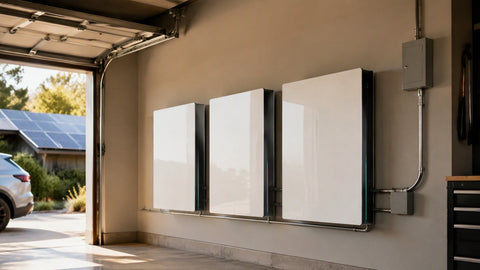
The EG4 LiFePower4 48V V2 100Ah is the battery module that quietly took over our server-rack battery sales floor. Five years ago, serious off-grid customers agonized over battery chemistry for weeks. Now the conversation is usually just "how many modules?" — because the LiFePO4 answer picked itself. I've racked more of these than any other battery we sell, and this guide covers what the V2 actually is, the bank-sizing math, how it compares against lead-acid on real cost per kilowatt-hour, and the installation details that decide whether it lasts fifteen years or five.

What the LiFePower4 V2 Actually Is
Strip the marketing off and you have a 19-inch rack-mount module built around sixteen 100Ah LiFePO4 prismatic cells in series — a nominal 51.2V pack with a battery management system watching every cell group. The V2 revision refined the original LiFePower4 with updated BMS firmware, improved communications behavior with EG4 inverters, and physical tweaks to the rack form factor that make stacking and cabling cleaner.
The number everything hangs off: 51.2 V × 100 Ah = 5,120 Wh, or 5.12 kWh per module. Every sizing calculation in this article is arithmetic from that figure, so you can check all of it with a calculator.
| Parameter | LiFePower4 48V V2 100Ah | Field Significance |
|---|---|---|
| Nominal voltage | 51.2 V | Standard "48V class" — matches EG4, Sol-Ark, and most hybrid inverters |
| Capacity | 100 Ah / 5.12 kWh | Base unit for all bank math |
| Chemistry | LiFePO4 (LFP) | Thermally stable, no cobalt, long cycle life |
| Rated cycle life | ~6,000 cycles @ 80% DoD | 16+ years of daily cycling on paper |
| Max continuous discharge | 100 A per module | ~5 kW per module — sets minimum module count per inverter |
| Communications | CAN / RS485, closed-loop with EG4 inverters | Inverter obeys the BMS charge/discharge limits automatically |
| Form factor | 19" rack-mount, 3U class | Standard server cabinet or EG4 enclosed rack |
| Warranty | 10 years (manufacturer) | Matches the expected service life of the install around it |
Confirm the current spec sheet before permitting — EG4 revises ratings and certifications over time, and the AHJ will want the documentation that matches the label on the unit.
Why LiFePO4 Won the Rack
The chemistry matters less as trivia and more as behavior. LFP cells tolerate deep discharge, shrug off partial state-of-charge operation that murders lead-acid, and don't need ventilation for hydrogen off-gassing. Their thermal runaway threshold sits far above the operating range a residential system ever sees. For the owner, the practical translation: you can use 80–90% of the nameplate every single day, in a garage or utility room, without a maintenance ritual. Our energy storage overview covers the chemistry landscape if you want the broader picture.
Bank Sizing: The Arithmetic That Runs Everything
One module is 5.12 kWh nominal. Using 90% of that (a reasonable daily DoD for LFP) gives 4.61 kWh of usable energy per module. Scale linearly:
| Modules | Nominal kWh | Usable @ 90% DoD | Runtime @ 2 kW Load | Runtime @ 5 kW Load | Max Continuous Discharge |
|---|---|---|---|---|---|
| 1 | 5.12 | 4.61 | 2.3 h | 0.9 h | ~5.1 kW |
| 2 | 10.24 | 9.22 | 4.6 h | 1.8 h | ~10.2 kW |
| 3 | 15.36 | 13.82 | 6.9 h | 2.8 h | ~15.4 kW |
| 4 | 20.48 | 18.43 | 9.2 h | 3.7 h | ~20.5 kW |
| 5 | 25.60 | 23.04 | 11.5 h | 4.6 h | ~25.6 kW |
| 6 | 30.72 | 27.65 | 13.8 h | 5.5 h | ~30.7 kW |
Check the math: 27.65 kWh ÷ 2 kW = 13.8 hours. The discharge column matters as much as the energy column — see the next section.
Two separate questions hide in that table. How much energy do you need overnight? (the kWh columns) and how much power can the bank deliver at once? (the last column). Customers fixate on the first and get bitten by the second. The battery backup runtime calculator and the battery bank sizing guide walk through both with your actual load list.
The Discharge-Rate Floor Nobody Mentions
Here's the sizing rule that experience teaches: match the bank to the inverter's current draw, not just to the nightly energy budget. A 12 kW hybrid inverter at full output pulls roughly 250 A from a 48V bank (12,000 W ÷ 48 V ≈ 250 A). Each LiFePower4 module delivers 100 A continuous. Therefore:
| Inverter Class | Full-Output Battery Current | Minimum Modules @ 100 A Each | Comfortable Module Count |
|---|---|---|---|
| 3 kW off-grid inverter | ~63 A | 1 | 1–2 |
| 6 kW hybrid (6000XP class) | ~125 A | 2 | 2–3 |
| 8 kW hybrid | ~167 A | 2 | 3 |
| 12 kW hybrid (18kPV class) | ~250 A | 3 | 4–6 |
| 15–16 kW hybrid | ~313–333 A | 4 | 5–6 |
Run below the minimum and the BMS will throttle or trip under surge — the system "works" on paper and falls over the first time the well pump and microwave overlap. I got called to a cabin where a single module fed an 8 kW inverter; the owner thought the inverter was defective. Two more modules fixed the "defect" permanently.
LiFePO4 vs. AGM Lead-Acid: The Honest Lifetime Cost Table
Lead-acid still wins on day-one sticker price. It loses everywhere else. Using round, conservative example pricing (verify current prices — they move):
| Metric | LiFePower4 5.12 kWh (LFP) | Comparable AGM Bank (2.4 kWh usable per string) |
|---|---|---|
| Example purchase price | $1,400 | $450 per 12V 200Ah unit |
| Rated cycle life | ~6,000 @ 80% DoD | ~500 @ 50% DoD |
| Usable energy per cycle | 5.12 × 0.80 = 4.10 kWh | 2.4 × 0.50 = 1.20 kWh |
| Lifetime throughput | 4.10 × 6,000 = 24,576 kWh | 1.20 × 500 = 600 kWh |
| Cost per lifetime kWh | $1,400 ÷ 24,576 ≈ $0.057 | $450 ÷ 600 = $0.75 |
| Maintenance | None | Terminal cleaning, equalization (flooded), ventilation |
| Replacement events over 15 years | 0–1 | 5–8 |
Thirteen-to-one on cost per delivered kilowatt-hour. That gap is why the AGM rack in our warehouse mostly serves legacy-system repairs now. If you're nursing an older flooded or AGM bank, the battery life extension guide will help it last while you plan the upgrade.
Closed-Loop Communication: Set It Up Right or Don't Bother
The single biggest functional difference between a LiFePower4 bank and a generic lithium battery is the CAN/RS485 link to the inverter. In closed loop, the BMS broadcasts its real-time limits — maximum charge current, maximum discharge current, temperature lockouts — and the inverter obeys them. Cold morning below freezing? The BMS cuts charge current to protect the cells, automatically. Bank nearly full? Charge current tapers without you programming absorption curves.
Setup details that matter:
- Cable order is protocol order. The inverter talks to the master module; the master aggregates the slaves. Follow the EG4 comms diagram exactly — daisy-chain direction and DIP-switch addressing are not suggestions.
- Set the inverter battery type to the EG4/LiFePower4 profile. "User-defined lithium" works but throws away the protection layer you paid for.
- Verify communication before closing up the rack. The inverter display should show per-battery state of charge. If it shows a generic voltage-based estimate, the loop isn't closed and something's mis-wired. I've found exactly one bad comms cable in the field — but it took an hour to isolate because the system "mostly worked" without it.
Charging Behavior and the 20–80 Question
LFP's flat voltage curve confuses people raised on lead-acid: voltage barely moves between 20% and 80% state of charge, so voltage-based SOC guesses are worthless in the middle band. Trust the BMS-reported percentage, not a voltmeter. As for longevity habits, the 20–80 rule discussion applies in a softened form to LFP — daily full charges cost less lifespan than they do on phone batteries, but holding the bank at 100% for weeks (say, a vacation home between visits) does accelerate calendar aging. EG4 inverters let you cap charge at 90% for storage periods; use it.
Installation: Code and Craft

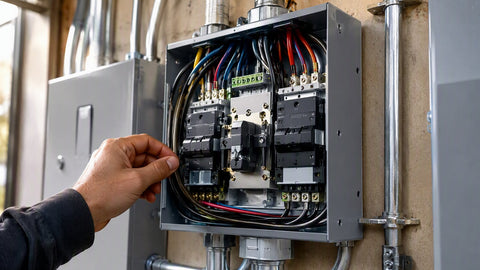
Energy storage systems live under NEC Article 706, with Article 480 applying to the batteries themselves. The practical checkpoints for a residential LiFePower4 install:
| Requirement | What It Means on the Wall | Reference |
|---|---|---|
| Overcurrent protection on the battery circuit | Class T fuse or listed DC breaker per battery bank output | NEC 706.31 / 480 |
| Disconnecting means | Readily accessible battery disconnect within sight of the equipment | NEC 706.15 |
| Conductor sizing for a 250 A inverter draw | 2/0–4/0 copper depending on run length and termination rating | NEC Table 310.16 |
| Working clearances | 36" depth in front of rack and inverter | NEC 110.26 |
| Location restrictions | Follow manufacturer clearance and temperature specs; garages need vehicle-impact protection | Manufacturer manual / local AHJ |
The NEC wire sizing guide covers ampacity tables, and the grounding and bonding guide handles the equipment grounding questions that inspectors always ask. One craft note: torque the battery terminals to spec with an actual torque wrench, mark them with a paint pen, and re-check at the one-year visit. Loose high-current DC connections don't fail loudly at first — they fail as intermittent gremlins that eat diagnostic hours.
Where the LiFePower4 Fits in the EG4 Lineup
EG4's storage line has grown around this module. The rack-mount LiFePower4 is the building block; the EG4 battery catalog also carries the LL series and wall-mount units for spaces where a rack doesn't fit. Against the Tesla Powerwall-style all-in-ones, the modular approach trades sleekness for serviceability and expansion — add a module next year without replacing anything. The EG4 vs Powerwall comparison lays out that trade in detail. For most 48V battery shoppers building around an EG4 or similar hybrid inverter, the LiFePower4 V2 is the default answer, and the only real question left is how many.
Racking, Cable, and the Physical Craft
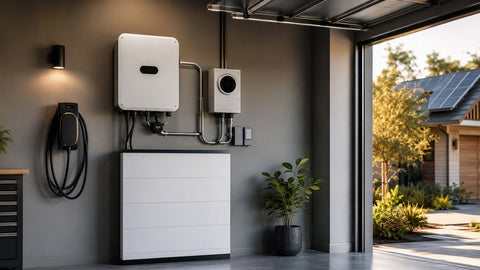
Each module weighs in the neighborhood of 100 lbs — a two-person lift, no exceptions, and I've watched exactly one person try it solo and regret it. The enclosed EG4 rack holds six modules and earns its cost in a garage install: it hides the wiring, protects the modules from incidental contact, and gives the inspector something tidy to look at. Open-frame racks work fine in a dedicated utility room.
Cable practice separates clean installs from future service calls:
- Equal-length parallel cables. Modules paralleled with mismatched cable lengths see unequal resistance and share current unevenly. Cut them all the same length, even if it means a service loop.
- 2/0 copper for inverter runs on most residential banks; 4/0 if the inverter is more than ten feet from the rack at full 250 A draw. Voltage drop on the battery side steals efficiency twice — once discharging, once charging.
- Class T fuses, not ANL. Lithium banks deliver fault currents that exceed the interrupt rating of cheaper fuse types. A Class T at the bank output is the standard of care, and it's what we stock with every kit.
- Label everything. Future-you, at 11 PM in a power outage, will thank present-you for the tag that says which breaker isolates the bank.
Expansion Planning: Buying for the System You'll Have
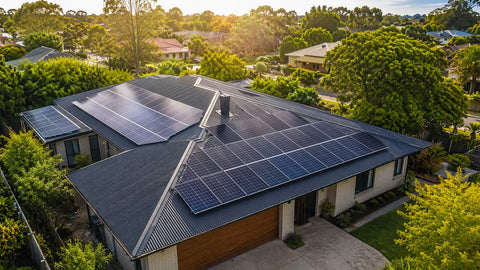
The modular format invites phased builds, and that's legitimate — but phase smart. A bank expanded within a year or two behaves well; modules added five years in carry noticeably less wear capacity than their older siblings, and the bank settles at the weakest module's level. My guidance to customers phasing a build: buy the rack enclosure sized for the final count, install at least the discharge-rate floor for your inverter on day one, and plan the expansion inside 24 months. If the budget truly forces a longer gap, consider buying the full module count up front and deferring the array instead — panels age gently in a way that mismatched battery banks don't.
Also plan the wall. A six-module enclosed rack plus an 18kPV plus clearances consumes most of an 8-foot wall section. Measure before the freight arrives, not after. I've re-drywalled exactly one garage because a customer mounted the rack where the car door swings — measure twice, mount once.
Degradation: What the First Years Actually Look Like
LFP degradation is front-loaded and then gentle. Expect a few percent of capacity loss in the first year as the cells settle, then a slow, roughly linear slide thereafter. A well-treated bank at moderate temperature commonly tests above 90% of original capacity at year five. The killers, in order of the damage I've actually seen:
| Degradation Driver | Mechanism | Mitigation |
|---|---|---|
| Sustained heat (85°F+ ambient) | Accelerated electrolyte and SEI aging | Conditioned space or shaded, ventilated enclosure |
| Charging below freezing | Lithium plating on the anode | BMS cold lockout (automatic in closed loop); heated enclosure |
| Weeks at 100% SOC | Calendar aging at high voltage | Cap charge at 90% during storage periods |
| Deep discharge to cutoff daily | Cathode stress at low voltage | Set a 10–20% reserve floor in the inverter |
None of these require heroics. A garage in a temperate climate with sensible inverter settings delivers a boring, decade-plus service life — and boring is the highest compliment a battery bank can earn.
Freight, Delivery, and Unboxing
These ship freight, not parcel, and the logistics deserve two minutes of planning. Have the liftgate service confirmed if you don't have a forklift or loading dock — a 100-lb module in a crate is not a tailgate item. Inspect the crate before signing; note any damage on the delivery receipt before the driver leaves, because freight claims die without that notation. And save the packaging for a month. Returns or warranty shipments without original packaging become custom-crate projects that cost more than the cardboard ever did.
Daily Ownership: What Living With the Bank Is Like
Customers ask what changes after installation, and the truthful answer is: almost nothing, which is the point. The bank charges when the sun shines or the grid is cheap, discharges when it's needed, and the BMS minds the boundaries. There's no watering schedule, no equalization ritual, no vent fan humming. What owners actually interact with is the monitoring app — state of charge, daily throughput, solar contribution. Most check it obsessively for a month, then weekly, then only when the power goes out and they want to watch the house run on stored sunshine.
The habits worth keeping are light: glance at the app monthly for anything odd, keep the area around the rack clear of storage creep (paint cans and gasoline don't belong next to any electrical equipment), and put that annual terminal-torque check on the calendar next to the smoke-detector batteries. Ownership of a modern LFP bank is closer to owning a furnace than owning a hobby.
Mistakes We See From the Service Side
Since these modules went mainstream, the failure modes have become predictable — and nearly all of them are installation choices, not battery defects:
- Undersized banks for the inverter. Covered in the discharge-rate table above, and still the number-one callback. Two modules behind a 12 kW inverter is a surge-trip waiting for a motor start.
- Open-loop settings copied from the internet. Voltage-based charge parameters posted for "lithium" generically often float the bank at 100% around the clock. Closed loop or a properly programmed LFP profile avoids it.
- No main fuse at the bank. Individual module fuses are not a substitute for a Class T at the combined output feeding the inverter. This is a fire-safety item, not a preference.
- Rack in the flood zone. Garages with water heaters, basements with history. Water and 51.2V DC don't mix politely. Elevate or relocate.
- Skipping the firmware update. Both the modules and the inverter ship with update paths. Current firmware on both ends resolves most comms oddities before they start.
Every item on that list is a ten-minute decision at install time. Every one is a service call when skipped.
Warranty Service: How It Actually Goes
Ten-year warranties are only as good as the claim process behind them, and this is where buying through a real distributor pays. EG4 warranty claims run on documentation: the serial numbers, the inverter logs, and a description of the behavior. Keep the commissioning records — module serials, firmware versions, the closed-loop verification — because the claim that includes logs gets resolved; the claim that's a phone call and a shrug becomes a negotiation. In my experience the failure rate on these modules is low, but the resolution speed difference between documented and undocumented claims is measured in weeks. File the paperwork the day you rack the bank, and you'll never think about it again.
One closing note from the sales counter: the customers happiest with these banks five years in are the ones who sized for the system they planned to grow into, not the one they could barely afford that week. The module count decision is cheapest at install time and most expensive as a retrofit — buy the rack space, buy the floor count, and let the math in the tables above make the case.
Frequently Asked Questions
How long will a LiFePower4 48V V2 battery last?
At one full cycle per day, the ~6,000-cycle rating at 80% depth of discharge works out to over sixteen years of theoretical cycling. Real-world life depends on temperature, average DoD, and calendar aging — ten to fifteen years is a reasonable planning horizon, which matches the 10-year manufacturer warranty.
Can I mix V2 modules with older LiFePower4 modules in one bank?
Mixing revisions or ages in one parallel bank creates imbalance headaches — the newer, stronger modules carry more of the load. Best practice is same model, same age, commissioned together. If you must expand later, add a matched set and accept slightly uneven wear.
Do these batteries work with non-EG4 inverters?
Yes, via open-loop voltage-based settings or supported CAN protocols — Sol-Ark, Victron, and others have documented profiles. You lose the tightest closed-loop integration outside the EG4 ecosystem, but the battery operates safely with correct voltage and current limits programmed.
What's the operating temperature range?
Charge protection typically locks out below freezing to protect the cells — the BMS handles this automatically in closed loop. Discharge works at lower temperatures with reduced capacity. For unheated spaces in cold climates, plan enclosure heating or choose a self-heated model variant.
How many modules do I need for a typical home overnight?
A home using 10–15 kWh overnight needs three to four modules (15.4–20.5 kWh nominal). Also check the discharge-rate table above — your inverter size may set a higher floor than your energy budget does.
Is a permit required to install a battery bank?
In most jurisdictions, yes — energy storage systems are permitted and inspected under NEC Article 706 and local amendments. Off-grid structures sometimes fall outside enforcement, but the safety logic of overcurrent protection and disconnects applies regardless of who's watching.