If you have ever watched the lights die during an ice storm, heard the sump pump go silent, and felt the house start its slow slide toward the temperature outside, you already understand why standby generators exist. What surprises most people is how far the technology has come. The modern 20kW air-cooled standby is quiet enough to hold a conversation next to, starts itself within seconds of an outage, manages its own exercise schedule, and texts you when it needs attention. The Cummins Quiet Connect RS20ACE 20kW standby generator sits squarely in that modern class, and it has become one of the units we recommend most often for whole-home backup on 200-amp services.

This guide is written for two audiences at once: homeowners trying to decide whether 20kW is the right size, and the electricians and GCs who install these units and want a straight answer on load math, transfer switch integration, code requirements, and how the Cummins stacks up against the Generac alternatives on our standby generators page. Where a figure depends on configuration or production revision, we say so and tell you to verify against the current Cummins spec sheet — that document is the final authority, not any blog post, ours included.
What the RS20ACE Is — and Where It Fits in the Lineup
Understanding the Cummins RS20ACE Generator
Quiet Connect™ Technology
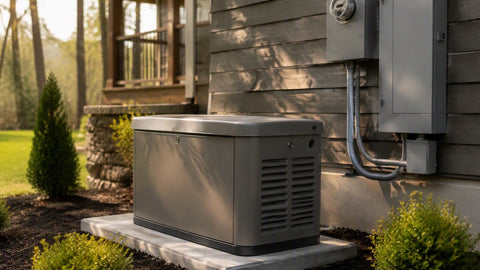
The RS20ACE is part of the Cummins Quiet Connect series of air-cooled home standby generators: permanently installed, fully automatic units that monitor utility power around the clock. When the grid drops, the transfer switch disconnects your home from the utility, the generator starts, and power is restored — typically in under twenty seconds, often closer to ten. When the utility returns and stabilizes, the system transfers back and the generator cools down and shuts off. Nobody has to be home. Nobody has to drag anything out of the garage.
Power Capacity – 20kW for Whole-Home Use
Within the Quiet Connect family, 20kW is the sweet spot for the most common American residential scenario: a 2,000-3,500 square foot home with a 200-amp service, one central air conditioner, gas heat, and a normal complement of well pump, refrigeration, and electronics. Smaller 13-17kW units force harder choices about which circuits get power. Larger 24-36kW units cost more to buy and install and make sense mainly for all-electric homes or properties with multiple AC systems. The 20kW class hits the intersection of capability and installed cost where most of our customers land.
Design features that matter in the field
- Quiet Connect sound engineering. The enclosure, intake, and exhaust are tuned as a system, putting normal-load operation in the mid-60s dB(A) range at the standard 23-foot measurement distance — quiet enough that most HOAs and neighbors never notice it. Verify the exact rating for your unit on the spec sheet.
- Dual-fuel flexibility. The unit is configured at installation for either natural gas or liquid propane, covering both city lots with gas service and rural properties on LP tanks. Fuel configuration affects output slightly — natural gas derates the engine somewhat versus propane on most air-cooled platforms — so confirm the NG and LP ratings for your fuel before finalizing load plans.
- Remote monitoring. Cummins' connected monitoring lets owners and dealers see status, exercise history, and faults from a phone, which turns the annual "is my generator okay?" question into a glance at an app.
- Self-exercise and diagnostics. The controller runs scheduled exercise cycles and continuously self-tests, flagging battery weakness and service needs before they become no-start failures during an actual outage.
- Corrosion-resistant enclosure. A galvanized, powder-coated enclosure matters more than most buyers realize. Generators live outdoors for decades; enclosure quality is a big part of why some units look and run like new at year twelve and others are rusted apologies by year seven.
Load Sizing: What 20kW Actually Runs
Generator sizing is where installations succeed or fail, and it is pure arithmetic. Twenty kilowatts is roughly 83 amps at 240 volts. The question is what combination of your home's loads fits inside that envelope with room for motor starting surges. Here is the planning table our estimators use for first-pass sizing. Running watts are typical for the equipment class; starting watts reflect the brief inrush when motors spin up.
| Load | Typical running watts | Starting surge | Notes |
|---|---|---|---|
| Central AC, 3-ton (36,000 BTU) | 3,000-4,200 W | 2-3x without soft start | Largest single load in most homes; a soft-start kit tames the surge |
| Central AC, 4-ton | 4,500-5,500 W | 2-3x without soft start | Usually needs load management or soft start on a 20kW unit |
| Electric furnace blower / air handler | 500-1,200 W | Moderate | Gas furnace heat itself uses no meaningful electricity |
| Well pump, 1-1.5 HP | 1,000-2,500 W | 2-3x | Critical load; verify nameplate amps |
| Sump pump | 800-1,500 W | 2-3x | Non-negotiable in flood-prone basements |
| Refrigerator + freezer | 400-1,200 W combined | 2-3x each | Compressors stagger naturally most of the time |
| Electric water heater (tank) | 4,500 W | None (resistive) | Prime candidate for load shedding |
| Electric range / oven | 3,000-8,000 W in use | None | Usually load-shed or excluded on 20kW |
| Electric dryer | 4,500-5,500 W | Moderate (motor) | Usually load-shed |
| Lighting + receptacles + electronics | 1,000-3,000 W | Minimal | LED conversions have cut this substantially |
| EV charger (Level 2) | 7,200-11,500 W | None | Exclude or hard-shed on 20kW; plan accordingly |
Add it up honestly and a picture emerges. A home with a 3-ton AC, well pump, sump pump, two refrigeration appliances, furnace blower, and normal lighting runs around 9,000-12,000 watts with everything coincident — comfortably inside 20kW even after reserving surge capacity. That same home with a 4-ton AC, electric water heater, and an EV charging needs active load management to stay inside the envelope, which is exactly what modern transfer switch systems provide. If your load math keeps breaking past 16-17kW of coincident demand, step up a size rather than betting on discipline during an outage — occupants do not ration power gracefully at 2 a.m. in January.
For a deeper walkthrough of the sizing process including the NEC Article 220 calculation method inspectors expect, see our whole-home generator sizing guide, and for how the next size class behaves, our guide to what you need to know about 22kW generators.
Fuel Consumption and Runtime Planning
Key Features of the Cummins RS20ACE
Applications of the Cummins RS20ACE
Maintenance and Longevity of the Cummins RS20ACE
Fuel planning separates paper-backup from real resilience. The figures below are class-typical for air-cooled 20kW units; treat them as planning numbers and verify the RS20ACE's exact consumption curves against the current Cummins spec sheet before committing to tank sizing or gas meter upgrades.
| Fuel | Consumption at ~50% load | Consumption at ~100% load | Practical implication |
|---|---|---|---|
| Natural gas | ~200-260 cu ft/hr (class-typical) | ~330-420 cu ft/hr (class-typical) | Unlimited runtime while utility gas flows; confirm meter and line capacity with the gas utility — many homes need a meter upsize |
| Liquid propane | ~2.0-2.6 gal/hr (class-typical) | ~3.2-4.0 gal/hr (class-typical) | 500-gal tank (~400 gal usable) ≈ 6-8 days at half load, 4-5 days at heavy load |
| 250-gal LP tank reference | ~200 gal usable | — | ≈ 3-4 days at half load — marginal for multi-week events |
| 1,000-gal LP tank reference | ~800 gal usable | — | ≈ 12+ days at half load — the rural resilience choice |
Two practical notes from the field. First, natural gas is operationally wonderful — no tank, no deliveries, no runtime ceiling — but confirm with the gas utility that your meter and service line can supply the generator plus the furnace and water heater simultaneously in January. Utilities handle these capacity checks routinely; ask before the install, not during it. Second, propane owners should size the tank for their actual risk profile. If your region's outage history says three days is the worst case, 500 gallons is generous. If you are the last house on a rural feeder that goes down for a week every ice storm, the 1,000-gallon tank is cheap insurance against a very bad week.
Transfer Switch Integration: The Other Half of the System
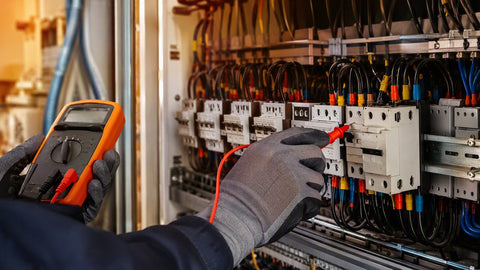
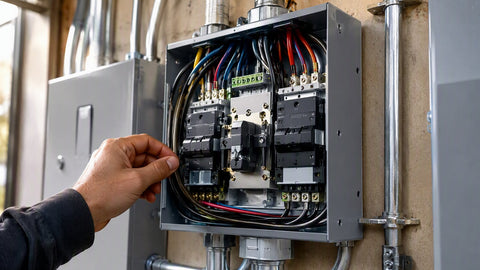
A standby generator without an automatic transfer switch is just expensive yard art. The ATS is the device that makes the system both automatic and legal: it senses utility loss, starts the generator, transfers the load, and — critically — makes it physically impossible for generator power and utility power to meet, which protects line workers and your equipment. For the RS20ACE on a typical home, the standard pairing is a 200-amp service-entrance-rated ATS installed between the meter and the main panel, which transfers the entire house as one block.
The wrinkle, as the load math above shows, is that the whole house can exceed 20kW. The industry answer is intelligent load management: the transfer system monitors generator output and automatically sheds designated high-draw circuits — electric water heater, dryer, range, second AC, EV charger — whenever demand approaches capacity, then restores them as headroom returns. From the homeowner's seat, the house simply works; the big discretionary loads quietly take turns. When speccing the package, confirm which load-shed modules are included and which appliances you want managed. Our transfer switches collection covers the ATS options, and a project quote from our team will pair the right switch and load modules with the generator for your panel configuration.
Code and Permitting: What Inspectors Look For

Standby generator installations touch several NEC articles, and inspectors in most jurisdictions know exactly where to look. The highlights:
| Code area | What it governs | Field takeaway |
|---|---|---|
| NEC Article 702 — Optional Standby Systems | Transfer equipment, interconnection, signage | The ATS must be listed and sized for the load; signage at the service equipment is required |
| NEC Article 445 — Generators | Generator installation, disconnects, grounding | Bonding/grounding configuration depends on whether the ATS switches the neutral — follow the Cummins install manual for your switch |
| NEC Article 220 — Load Calculations | Proving the generator can serve the connected load | Either calculate per Article 220 or use load management that prevents overload — inspectors want one or the other documented |
| NEC 240.6 / Article 240 — Overcurrent Protection | Standard ampere ratings and breaker sizing | Generator output breaker and feeder protection must match conductor ampacity |
| NFPA 37 — Stationary Engines | Siting clearances | Typical requirements: ~5 ft from doors, windows, and fresh-air intakes (openable openings); 18+ inches from combustible walls per the install manual; verify local amendments |
| Fuel gas code (NFPA 54 / local) | Gas line sizing and installation | Long runs need upsized pipe to hold pressure under full-load demand — undersized gas lines are the #2 cause of generator underperformance |
Permits typically run two or three deep: electrical for the ATS and interconnection, mechanical/plumbing for the gas line, and occasionally a zoning or setback review. Plan for a pad as well — most jurisdictions accept a manufacturer's composite pad on level ground, while some require poured concrete. The Cummins installation manual and your AHJ have the final word; build the permit set around them and inspections go smoothly.
Installation Day: Timeline and What to Expect
Homeowners consistently underestimate how civilized a modern standby install is. There is no trench warfare, no week of chaos — a well-run crew with permits in hand typically finishes the physical work in one to two days. Here is the sequence we see on smooth projects:
| Phase | Typical duration | What happens |
|---|---|---|
| Permits and utility coordination | 1-4 weeks (varies wildly by AHJ) | Electrical and gas permits pulled; gas utility confirms meter capacity; HOA approval if applicable |
| Site prep and pad | Half a day | Composite pad leveled or concrete poured ahead of time; clearances to windows, doors, and intakes verified against NFPA 37 and the install manual |
| Generator set and fuel connection | Half a day | Unit placed and anchored; gas line connected with properly sized pipe and drip leg; NG/LP fuel configuration set |
| ATS and electrical | 3-6 hours | Service-entrance ATS mounted at the meter, main panel converted to subpanel (neutrals and grounds separated), load-shed modules landed on managed circuits |
| Commissioning | 1-2 hours | Firmware check, exercise schedule set, simulated outage test under load, monitoring app paired to the owner's phone |
| Inspection and closeout | Inspector's schedule | Electrical and gas inspections; the punch list is usually short when the neutral/ground separation and signage were done right |
The variable that actually drives timelines is almost never the installation itself — it is permitting and the gas utility's meter work. Order the equipment and start the permit set the week you decide; the hardware often arrives before the paperwork clears. One more field note: photograph the gas-line sizing calculation and the nameplate of the existing meter before the utility visit. Having both in hand turns a two-week capacity review into a two-day one more often than it should.
RS20ACE vs. the Competition: An Honest Comparison
We stock multiple generator lines, so we have no house reason to flatter any of them. Here is how the Cummins 20kW stacks against the two alternatives customers cross-shop most, with the caveat that exact specs shift between revisions — verify current spec sheets before publishing quotes:
| Attribute | Cummins RS20ACE 20kW | Generac Guardian 22kW | Champion 22kW |
|---|---|---|---|
| Rated output (class) | 20kW (NG/LP — verify per fuel) | 22kW LP / ~19.5kW NG (verify) | 22kW LP / ~19.8kW NG (verify) |
| Noise positioning | Quiet Connect engineering; among the quietest in class (mid-60s dB(A) range typical) | ~65-67 dB(A) class-typical | ~67 dB(A) class-typical |
| Service network | Cummins commercial-grade dealer organization | Largest residential dealer network in North America | Growing network; strong value positioning |
| Enclosure | Galvanized, powder-coated | Aluminum (RhinoCoat) on current models | Steel, powder-coated |
| Typical installed price band | Competitive; quote-dependent | Often the lowest equipment cost due to volume | Frequently the value leader |
| Best fit | Noise-sensitive neighborhoods; buyers who value the Cummins service organization | Widest installer familiarity; maximum parts availability | Budget-conscious whole-home projects |
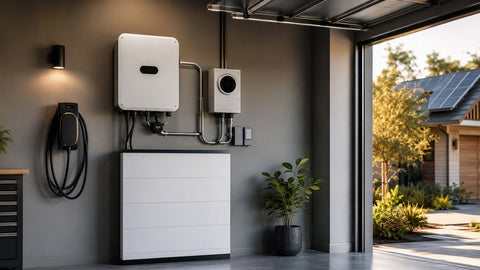
Browse the full lineup on our Generac collection and the Generac 26kW Guardian with 200A SE transfer switch if your load math pushed past 20kW, or the Champion 22kW standby for the value play. For a detailed look at the 26kW class, see our complete guide to 26kW generators. And if your property already runs solar with batteries, a standby generator pairs beautifully as the third layer of resilience — our batteries and energy storage page covers the storage side of that architecture.
Ownership: Maintenance and Long-Term Reality
A standby generator is a small power plant, and it rewards small, regular attention. Oil and filter changes follow the engine schedule (typically annually or per run-hour interval, whichever comes first). The battery is the most common failure point across every brand — plan on replacement every three to four years and keep it on the maintainer the unit provides. Exercise cycles should be left enabled; engines that sit unexercised develop stuck rings and moisture problems that show up exactly when the power goes out. Finally, schedule a professional service visit annually, ideally before your region's storm season, and keep the area around the unit clear of mulch, leaves, and snow drift.
Do that, and a Quiet Connect class unit is a 15-20 year asset that runs when it matters. Neglect it, and it becomes the most expensive false sense of security you own. The difference is about an hour a year and a service call.
The Bottom Line
The Cummins RS20ACE earns its place in the 20kW class the honest way: quiet operation that respects the neighborhood, dual-fuel flexibility, connected monitoring, and the backing of a service organization that maintains prime-power diesels for hospitals and data centers. Size it with real load math, pair it with a properly configured 200-amp service-entrance ATS and load management, pull the permits, and it will carry your home through everything the grid fails to. Our team quotes complete packages — generator, transfer switch, load modules, pad, and permitting guidance — through the quote page, or contact us to talk through your specific load list with someone who sizes these systems every week.
Frequently Asked Questions
What can a 20kW standby generator actually run?
A 20kW air-cooled standby typically carries a 3-ton central air conditioner plus a full complement of household circuits — refrigerator, freezer, well pump up to about 1.5 HP, furnace blower, lighting, and receptacles — with roughly 30-40% headroom left over. With smart load management it can sequence a second AC or an electric water heater. It will not comfortably run electric resistance heat, a tankless electric water heater, and a range all at once; those loads need load shedding or a larger unit.
Is the Cummins RS20ACE compatible with a 200-amp service?
Yes. The RS20ACE pairs with a 200-amp service-entrance-rated automatic transfer switch, which sits between the meter and the main panel and transfers the whole house. Because the generator supplies 20kW (about 83 amps), the ATS manages loads so the house can never draw more than the generator can deliver, typically through built-in load management or external load-shed modules on high-draw appliances.
How loud is the Cummins Quiet Connect series?
2. Easy Installation and Operation
Quiet Connect models are engineered for neighborhood-friendly operation in the mid-60s dB(A) range at 23 feet under normal load — roughly conversational volume. Sound varies with load and installation surface, so verify the exact figure for your configuration against the current Cummins spec sheet. For context, many competing air-cooled units operate in the 65-70 dB(A) band.
How long will a 20kW generator run on a propane tank?
Runtime depends on load and tank size. Air-cooled 20kW-class units typically burn roughly 2.0-2.6 gallons of propane per hour at half load and 3.2-4.0 gallons per hour near full load. A 500-gallon propane tank (about 400 gallons usable) therefore delivers roughly 6-8 days at half load or 4-5 days at heavy load. Natural gas installations fed from the utility run indefinitely as long as gas service holds.
Do I need a permit to install a standby generator?
In virtually every U.S. jurisdiction, yes — typically an electrical permit for the transfer switch and interconnection, plus a mechanical or plumbing permit for the gas line, and sometimes a zoning review for setback compliance. The installation must meet NEC Article 702 (optional standby systems), Article 445 (generators), and the load calculation rules of Article 220, plus NFPA 37 clearances from openings and combustibles.
Cummins RS20ACE vs. Generac 22kW: which should I buy?
Both are proven air-cooled platforms. The Generac 22kW Guardian offers slightly more capacity, a huge dealer network, and the widest parts availability; the Cummins RS20ACE counters with exceptionally quiet operation, a robust enclosure, and Cummins' commercial-grade service organization. In most markets the deciding factors are local dealer support quality, installed price, and noise sensitivity. Portlandia Electric Supply stocks both lines and can quote either for your project.