The Homeowner's Case for Putting Solar on the Ground
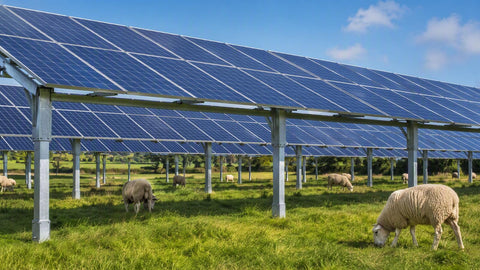
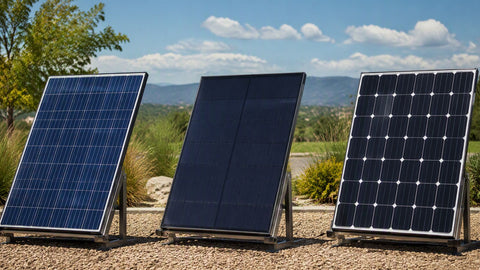
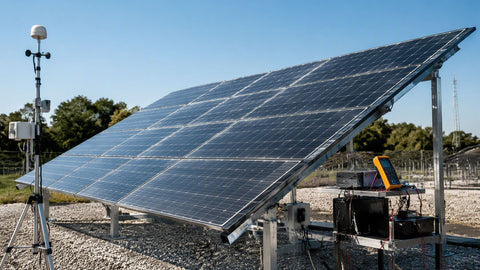
Most solar quotes start on your roof by default, and for many homes that default is wrong. If your roof faces east-west, carries twenty-year-old shingles, hides behind a maple canopy, or simply makes you nervous every time a salesperson talks about "penetrations," a 7 kW ground-mounted system sidesteps all of it. You get a power plant standing in your yard at the perfect angle, cooled by open air, serviceable from a step stool, and producing ten to twenty-five percent more energy than the same modules would produce on a compromised roof plane. For a household using 9,000 to 12,000 kWh a year, 7 kW is the size that covers most or all of the bill in most of the country — big enough to matter, small enough to fit a modest backyard and a modest budget.

I have walked hundreds of homeowners through this exact decision, and my advice has not changed in years: if you have unshaded ground within a hundred feet of your panel, price the ground mount before you let anyone bolt anything to your roof.
Will 7 kW Cover Your Usage? The Sizing Math
Sizing starts with your utility bill, not your roof. Pull twelve months of kWh usage — every bill shows it — and match it against what a 7.2 kW array produces in your climate:
| Your Climate (Peak Sun Hours) | 7.2 kW Annual Output (× PSH × 365 × 0.80) | Monthly Average | Covers a Home Using… |
|---|---|---|---|
| 3.8 PSH (Pacific NW, Great Lakes) | ≈ 7,990 kWh | ≈ 666 kWh | up to ~8,000 kWh/yr |
| 4.5 PSH (Mid-Atlantic, Plains) | ≈ 9,460 kWh | ≈ 788 kWh | up to ~9,500 kWh/yr |
| 5.0 PSH (Carolinas, NorCal) | ≈ 10,500 kWh | ≈ 876 kWh | up to ~10,500 kWh/yr |
| 6.0 PSH (Desert Southwest) | ≈ 12,600 kWh | ≈ 1,051 kWh | up to ~12,600 kWh/yr |
The average US home burns through about 10,500 kWh a year, which puts 7 kW in the sweet spot for most of the map. Heavy users — electric heat, EV charging, a pool pump running half the year — should size up; our solar system size calculator and the how many watts to power a home explainer will get your number right before you spend a dollar.
What's in a 7 kW Ground-Mount Kit
A complete kit is a grocery list where every item has to agree with every other item. Here is the anatomy of a typical 7.2 kW package — sixteen modern 450W modules:
| Component | What It Does | What to Look For |
|---|---|---|
| 16 × 450W modules | Convert sunlight to DC power | 25-yr product/performance warranty, Tier-1 manufacturer |
| String inverter (6–7.6 kW) | Converts DC to grid-ready 240V AC | 2 MPPTs, 10+ yr warranty, US support |
| Ground rack, 2×8 layout | Holds modules at fixed tilt | Site-rated wind/snow engineering letter |
| Foundations | Anchors rack to earth | Driven posts or piers matched to soil |
| PV wire & MC4s | String and home-run wiring | 10 AWG USE-2/PV wire, factory-spec connectors |
| Disconnects & breakers | Code-required isolation and protection | AC disconnect in sight of inverter; 40A 2P breaker |
| Monitoring | Tracks production and faults | Per-string or per-module visibility |
Kits from our solar panel power system kits and complete solar kits collections arrive with the compatibility questions already answered — the inverter's voltage window fits the strings, the connectors match the wire, the rack fits the modules. Mixing and matching yourself is possible, but one wrong MC4 variant or an undersized rack letter turns into a permit revision. For module shopping by wattage, browse 400–459W panels; the racking side lives under solar mounting systems.
Ground Mount vs. Roof Mount: The Honest Comparison
| Factor | Ground Mount (7 kW) | Roof Mount (7 kW) |
|---|---|---|
| Annual production | Optimized tilt/azimuth — baseline +10–25% | Constrained by roof geometry |
| Installed cost premium | +$0.30–$0.60/W (foundations, trench) | Baseline |
| Roof condition dependency | None | Re-roofing later costs $2,000–$4,000 to R&R array |
| Maintenance access | Ground level | Ladder and harness work |
| Snow shedding | Adjustable tilt + ground clearance | Fixed to roof pitch |
| Space consumed | ~450 sq ft of yard | ~400 sq ft of roof |
| Expansion path | Add rows to the rack line | Limited by roof planes |
The cost premium is real but small — on a 7.2 kW build, roughly $2,200–$4,300 — and the production advantage typically repays it within three to five years, after which the ground mount pays you a dividend forever. Add the avoided roof-removal risk and the maintenance convenience and the ground mount wins anywhere land is available.
The Installation Journey, Step by Step
From stake-out to switch-on, a residential ground mount runs four to ten weeks depending on the utility's interconnection queue. The sequence:
- Site assessment. Confirm southern exposure, measure the winter shade line at 9 AM and 3 PM on the solstice path, and locate the trench route to the main panel.
- Design and permitting. String sizing, structural letter for the rack, electrical one-line, AHJ permit, utility interconnection application.
- Foundations and racking. Posts driven or piers poured to the engineering, rack assembled square and torqued.
- Modules and wiring. Sixteen modules mounted, two strings of eight wired, home runs protected in conduit.
- Trench and electrical tie-in. Conductors buried to code depth, inverter and disconnect mounted, dedicated breaker landed, labels applied.
- Inspection and energization. AHJ sign-off, utility meter swap or witness test, permission to operate, then commissioning and monitoring setup.
Two moments decide whether the project feels easy or cursed: the shading study at step one, and the squareness of the rack at step three. I have personally re-plumbed a rack that was two inches out across thirty feet — every module fought us for an hour. Measure twice, because the modules only forgive once. The detailed companion read is our solar installation guide.
What It Costs and What It Returns
| Line | Typical Range (7.2 kW) |
|---|---|
| Turnkey installed price | $18,700–$24,500 ($2.60–$3.40/W) |
| Federal tax credit (30%) | −$5,600 to −$7,350 |
| State/utility incentives | Varies — check before you sign |
| Net cost | ≈ $12,500–$17,500 |
| Annual bill savings @ $0.16/kWh | $1,280–$2,020 by climate |
| Simple payback | ≈ 7–12 years |
| 25-year net savings (3% escalation) | ≈ $25,000–$45,000 |
Financing reshapes but doesn't change the fundamentals: cash buyers capture the fastest payback, loan buyers trade a few years of savings for preserved capital, and both beat leasing on lifetime value. Run your address-specific numbers on the solar ROI calculator and check the incentives by state page — a single state rebate can move payback by two full years.
Living With It: The Maintenance Calendar
| Interval | Task | DIY or Pro? |
|---|---|---|
| Monthly (2 min) | Glance at monitoring; confirm production tracks weather | DIY |
| Spring | Walk the array: clamps, wiring, vegetation, critters | DIY |
| Fall | Clear leaves/debris; check conduit seals; verify labels legible | DIY |
| As needed | Wash modules only if monitoring shows 3–4%+ soiling loss | DIY with soft brush, early morning |
| Every 5 years | Torque check on rack and electrical connections | Pro recommended |
| Years 8–15 | Likely inverter fan/capacitor service | Pro — budget $150–$400 |
That is the entire ownership burden — less attention than a lawn mower, for an asset worth more than most cars. The maintenance best-practices guide has the deeper checklist if you want it.
Common Questions Homeowners Ask Me on Site
The three questions I hear standing in backyards, answered straight. "Will it survive hail?" Modern modules are tested to UL 61730 impact standards — one-inch hail at terminal velocity — and I've inspected arrays after storms that shredded asphalt shingles while the glass above them showed nothing. "What about snow?" Ground mounts shed it better than roofs because tilt is steeper and clearance lets it slide free; a soft roof rake handles the rest. "Can I add panels later?" Yes, if you plan now: oversize the trench conduit and leave rail space, and adding four modules at year five is a Saturday instead of a rebuild. Batteries follow the same logic — a storage addition later pairs cleanly with a grid-tie array through AC coupling, and our battery sizing guide covers the math when that day comes.
Choosing Your Panel Wattage: 450W vs. 550W vs. 580W
Panel wattage changes the count, not the outcome — 7 kW is 7 kW. But the choice ripples through the project in ways worth understanding. Higher-wattage modules mean fewer clamps, fewer connections, and a smaller footprint; they also mean larger, heavier panels that are harder for one person to handle safely above shoulder height on a rack rail. Price per watt usually favors the mid-range sizes because manufacturing volume lives there.
| Module Class | Panel Count for 7.2 kW | Array Footprint | Handling Notes |
|---|---|---|---|
| 450W (400–459W collection) | 16 | ≈ 450 sq ft | Two-person lift, manageable size |
| 550W (550W collection) | 13 | ≈ 420 sq ft | Larger format; check rack rail spacing |
| 580W (550–709W collection) | 13 (7.54 kW) | ≈ 430 sq ft | Big-module weight; confirm clamp zones |
Whichever class you choose, verify three compatibility points before ordering: the module's Voc against your string sizing at record-low temperature, the module dimensions against the rack's rail spacing, and the connector family against your PV wire. Our kit builders check all three automatically — it is the main reason kits exist.
Permits, Paperwork, and the Utility Queue

The invisible half of a ground-mount project is paperwork, and it runs on two clocks you do not control. The building department wants a site plan with setbacks, a structural letter for the rack's wind and snow ratings, an electrical one-line, and sometimes a separate electrical permit. The utility wants an interconnection application with the inverter's certification listings (UL 1741 SB / IEEE 1547), and their review queue is the schedule wildcard — I have seen approvals in nine days and in eleven weeks, from neighboring utilities. File both applications the week you order equipment. One bureaucratic gift of ground mounts: many AHJs process them as accessory structures with simpler review than roof attachments, and there is no roof-framing structural question to answer.
Insurance, Taxes, and the Resale Question
Three financial side-conversations deserve five minutes each. First, insurance: call your homeowner's carrier before energization — most policies extend coverage to a ground array as an appurtenant structure, sometimes with a small rider, and the call is free while the surprise claim denial is not. Second, property tax: many states exempt the added value of renewable energy systems from assessment, but the rules are state-specific — check the incentives page for your state's treatment. Third, resale: owned solar transfers as a home improvement with documented production history, and ground mounts photograph beautifully in listings. Keep your commissioning report, monitoring history exports, and permit sign-offs in a folder; that folder is worth real money at closing.
Shade Management: The Ten-Year View
Shade is the only site problem that gets worse on its own. The sapling twenty feet south of your array location is a problem at year eight, not year one — map the shade line against mature tree height, not current tree height. A useful field rule: at 40°N, an object casts a shadow roughly 2.5 times its height at winter noon, so a tree that will mature at 40 feet needs 100 feet of clearance for year-round full sun. If full clearance is impossible, bias the array toward the sunnier end of the site and let the monitoring prove out the compromise. And if a neighbor's tree is the issue, have the friendly conversation now — it is free today and awkward in a decade.
Grid-Tie and Net Metering: How the Billing Actually Works
The "grid-tie" in the name is the whole business model. Your array feeds your home first; surplus flows out through the meter for credit; at night you draw from the utility as usual. Under true net metering, exports earn the full retail rate — a kilowatt-hour sent out at noon cancels one drawn at 9 PM. Under net billing, exports earn a lower avoided-cost rate, which tilts design toward self-consumption and, eventually, a battery. Find out which regime your utility runs before sizing anything; it changes whether a 100%-offset system or an 80%-offset system is the better investment. The interconnection agreement you sign also locks in the inspection and metering sequence, so read it — I have watched homeowners sign interconnection terms that capped their array size below the quote they had already approved.
Winter Performance and the Snow Question
Ground mounts handle winter better than roof arrays for three physical reasons. First, tilt: a 35–45° ground rack sheds snow far faster than a low-slope roof array, and seasonally adjustable racks steeper still. Second, clearance: snow sliding off the modules needs somewhere to go, and 18–24 inches of ground clearance gives it a landing zone instead of a dam. Third, the albedo bonus: snow-covered ground reflects additional light onto the modules, and cold cells run more efficiently — a clear 25°F day after a storm frequently produces the best winter numbers of the month. Production still drops in December and January to roughly a third of July output at northern latitudes; that is geometry, not failure, and annual sizing math already accounts for it.
DIY, Hybrid, or Full-Service: Picking Your Build Model
Ground mounts are the most DIY-accessible solar format — no roof work, no fall protection rigging, everything at shoulder height. The honest skill split: most handy homeowners can stake the layout, assemble the rack, and set modules in a weekend or two. Where DIY projects reliably get into trouble is the electrical and paperwork layer: string sizing at record-low temperatures, grounding electrode details, conduit fill and burial depth, permit drawings, and the utility interconnection application. The hybrid model — owner builds the mechanical half, a licensed electrician lands the electrical half — saves real money while keeping the inspection bulletproof. Full-service installation costs more and buys you a single throat to choke if anything underperforms. All three models produce excellent systems; the failures I get called to inspect almost always trace to skipped engineering at the foundation or skipped code math at the strings.
Getting Three Quotes That Actually Compare
When you solicit quotes, force comparability: ask each bidder for the same five numbers — DC array size with module model named, year-one production with the performance ratio stated, gross cost per watt, itemized incentive assumptions, and degradation-adjusted 25-year output. Then grade them against the component prices you can see yourself in the kit catalog. A quote that beats component-level pricing by a suspicious margin is planning to make it up somewhere — change orders, stripped balance-of-system, or a subcontractor you haven't met. The boring, itemized quote is almost always the honest one.
The First Five Years: An Ownership Snapshot
What does living with a 7 kW ground mount actually feel like? Year one is the novelty phase — you will check the monitoring app daily, learn your home's load shape by accident, and develop strong opinions about clouds. Years two and three are the quiet validation: the true-up statements arrive, the savings match the model within a few percent if the shading study was honest, and the array fades into the background the way good infrastructure should. Years four and five bring the first maintenance moments — perhaps an inverter fan cleaning, perhaps a critter-guard addition after a squirrel explores the wire ways — none of them expensive, all of them logged. The owners who report the highest satisfaction five years in share two habits: they set monitoring alerts on day one, and they kept their paperwork in one place. The ones who struggle skipped the shading study or bought the cheapest quote without checking what was in it. The system itself is rarely the variable.
What the Monitoring App Teaches You
An underrated benefit of a ground-mounted system is how quickly it turns owners into informed energy users. Within a month of watching production curves, you will know that your HVAC dominates the 3–7 PM window, that cloudy mornings cost less than you feared, and that the old freezer in the garage draws more than the refrigerator it pretends to supplement. That awareness compounds: most monitoring-equipped households shave 5–10% off consumption within the first year simply because the data made waste visible. The array pays for itself faster when the household learns from it — a return no spreadsheet models, but one I have watched happen in enough driveways to consider it reliable.
The Carbon Math for a Home This Size
A 7.2 kW array producing about 9,460 kWh a year avoids roughly 3.6 metric tons of CO₂ annually against the US grid average of 0.85 lb per kWh — about 83 tons over 25 years, the equivalent of parking a car for eighteen years. For households tracking their footprint, that single number usually outweighs every other efficiency measure in the home combined — more than LED conversions, smart thermostats, and insulation upgrades stacked together.
Frequently Asked Questions
How much does a 7 kW ground-mount solar system cost for a home? Turnkey pricing typically runs $2.60–$3.40 per watt, or $18,700–$24,500 installed. After the 30% federal tax credit, most homeowners land between $12,500 and $17,500 net.
How much backyard space does a 7 kW ground mount need? About 400–450 square feet for the array itself — roughly a 34-by-13-foot two-row rack — plus clear southern sky and a trench path to your electrical panel.
How many solar panels are in a 7 kW home system? Sixteen 450W panels or thirteen 550W panels. Higher-wattage panels shrink the footprint; the 540W class is a popular middle path.
Is a ground mount worth the extra cost over a roof mount? When land is available, usually yes — 10–25% more production, no roof-penetration risk, ground-level maintenance, and easy expansion typically repay the $2,000–$4,000 premium within three to five years.
How long does installation take? Four to ten weeks contract-to-energization, with utility interconnection usually the longest wait. Physical construction is typically three to five days.
Will a 7 kW system run my whole house? It offsets the annual consumption of an average US home (~10,500 kWh) in most climates, but a grid-tie system without batteries does not power your home during outages — the array shuts down with the grid for safety.