10kW Grid-Tie Solar Kit: String Inverter & Solar Panel System
Complete engineering walkthrough: NEC 690.7 string sizing, DC/AC clipping ratios, NEC 310.16/240.6 wire and breaker math, and real-world kWh production by region.

A 10kW grid-tie solar kit sits at the upper end of residential systems and the lower end of light commercial work. It is large enough to offset the full annual consumption of an average U.S. household in most of the country, yet small enough to install on a single roof plane with two or three strings. This guide walks through the numbers an installer actually runs before ordering equipment: cold-weather string voltage per NEC 690.7, conductor and breaker sizing per NEC 310.16 and 240.6, DC-to-AC loading and inverter clipping, the 120% interconnection rule, and expected production in six U.S. regions. If you are still at the planning stage, our solar system calculator and inverter sizing calculator will get you to a first-pass layout, and our grid-tied solar systems collection shows complete kit configurations.
A complete 10kW grid-tie package is more than panels and an inverter. A typical bill of materials includes twenty-five 400 W class modules, one 10 kW string inverter with two or three MPPT inputs, roof or ground racking with flashings, PV wire home runs, a rapid-shutdown transmitter and initiators per NEC 690.12, an AC disconnect, a 60 A two-pole backfeed breaker, and the grounding/bonding hardware required by NEC 690.43 and Article 250. For a component-by-component breakdown, see our guide to solar panel system components.
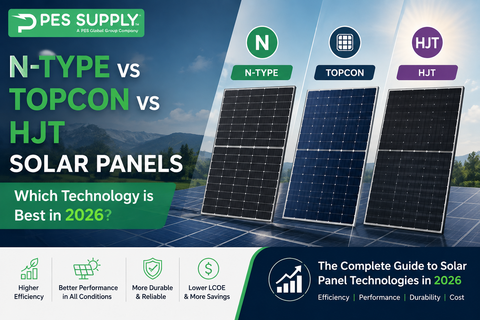
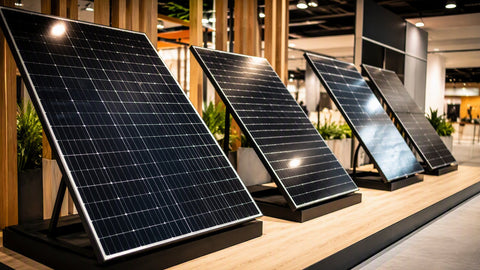
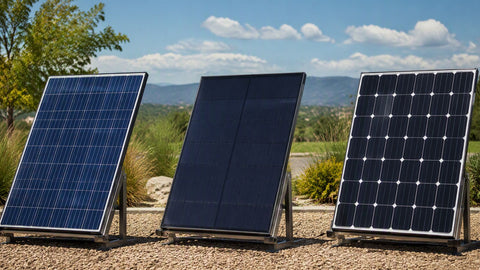
On the module side, most 10kW kits today ship with half-cut monocrystalline panels in the 400–450 W class. Panels in our 400–459 W solar panels collection measure roughly 77.6 in × 39.3 in (about 21.2 sq ft each) and carry open-circuit voltages around 41 V with short-circuit currents near 12 A. On the inverter side, 10 kW string units are available from several manufacturers; compare options in our 10 kW inverters and string inverters collections, including SolarEdge and Fronius units with integrated monitoring. If you prefer a pre-engineered package rather than a custom BOM, browse solar kits where racking, wire, and balance-of-system parts are already matched to the array.
NEC 690.7 requires that the maximum system voltage of a PV string never exceed the inverter's rated maximum input voltage, and it requires you to correct module open-circuit voltage (Voc) for the lowest expected ambient temperature using the crystalline-silicon correction factors in Table 690.7(A). Voltage rises as temperature falls, which is why a string that looks safe at 77 °F can exceed 600 V on a January morning.
Worked example with a representative 400 W module (Voc 41.2 V, Vmp 34.0 V, Isc 12.2 A, Imp 11.8 A) and a string inverter rated for 600 V max DC input with a 200–520 V MPPT window:
| Lowest design temp | Table 690.7(A) factor | Corrected Voc / module | 9-module string Voc | ≤ 600 V limit? |
|---|---|---|---|---|
| 0 °C (32 °F) | 1.10 | 41.2 × 1.10 = 45.3 V | 407.9 V | Pass |
| −5 °C (23 °F) | 1.12 | 41.2 × 1.12 = 46.1 V | 415.3 V | Pass |
| −10 °C (14 °F) | 1.14 | 41.2 × 1.14 = 47.0 V | 422.7 V | Pass |
| −20 °C (−4 °F) | 1.18 | 41.2 × 1.18 = 48.6 V | 437.5 V | Pass |
The low end of the string also matters. On hot afternoons, cell temperature pushes module voltage down roughly 10% below nameplate Vmp. A 9-module string at 30.6 V per module delivers 275 V, still above the inverter's 200 V MPPT floor. The result: 25 modules wired as strings of 8, 8, and 9 keeps every string inside the inverter window year-round while using three MPPT inputs. Always run this math with your actual module datasheet and your local ASHRAE extreme minimum temperature before cutting a purchase order; our solar panel wiring basics article covers series versus parallel behavior in more detail.
Installer note #1 — verify voltage at dawn, not at noon
On my own jobs I take open-circuit readings on the coldest morning available before energizing the inverter. I have measured strings at 6 a.m. that sat 8–10% above the value my design software predicted for the same array at solar noon. That cold-morning number is the one the inspector and the inverter's fault log care about, and it is the number NEC 690.7 is written around. If your calculated cold Voc lands within 5% of the inverter's maximum input, drop a module from the string rather than hoping for a mild winter.
NEC 690.8 treats PV output as a continuous load. Maximum circuit current is 1.25 × Isc (the irradiance factor), and conductors and overcurrent devices are then sized at 125% of that value for continuous operation. The same 125% logic applies on the AC side of the inverter.
DC side, per string: 12.2 A Isc × 1.25 = 15.25 A maximum current; × 1.25 again for continuous duty = 19.1 A design ampacity. A 12 AWG PV wire rated 30 A at 90 °C handles that even after a 0.8 rooftop temperature derate (30 × 0.8 = 24 A > 19.1 A), but most installers pull 10 AWG for runs over 50 ft to hold voltage drop under 2%. Our PV wire vs USE-2 vs THHN guide explains insulation ratings, and the NEC wire sizing guide has the full ampacity charts.
AC side: 10,000 W ÷ 240 V = 41.7 A. Continuous-load sizing: 41.7 × 1.25 = 52.1 A. The next standard overcurrent device per NEC 240.6 is 60 A, and Table 310.16 gives 6 AWG copper THHN/THWN-2 an ampacity of 65 A at 75 °C, which satisfies both the 52.1 A minimum and the 60 A breaker protection.
| Circuit | Calculation | Design ampacity | Conductor (310.16, Cu) | OCPD (240.6) |
|---|---|---|---|---|
| PV string (DC) | 12.2 A × 1.25 × 1.25 | 19.1 A | 12 AWG PV wire (30 A @ 90 °C; 24 A derated) | 20 A fuse where series fusing is required |
| PV string, long run | 19.1 A + ≤2% voltage drop | 19.1 A | 10 AWG PV wire (40 A @ 90 °C) | 20 A |
| Inverter AC output | 10,000 W ÷ 240 V × 1.25 | 52.1 A | 6 AWG THHN/THWN-2 (65 A @ 75 °C) | 60 A two-pole breaker |
| Equipment grounding | Per NEC 250.122 for 60 A circuit | — | 10 AWG Cu EGC | — |
For the disconnect and overcurrent protection details that Article 690 layers on top of these numbers, read our NEC 690 disconnect and OCPD guide, and for the grounding electrode and bonding path, the solar grounding and bonding guide. Both articles align with our NEC code compliance guide used for permit submittals.
Clipping occurs when the array can produce more DC power than the inverter's AC rating can pass through; the inverter flattens the top of the production curve at solar noon. Loading a 10 kWac inverter with more than 10 kWdc is standard practice because modules rarely hit nameplate in the field, but each increment of oversizing trades a small amount of clipped energy for more production during mornings, evenings, and cloudy weather.
| Array size (kWdc) | DC/AC ratio on 10 kWac | Approx. annual clipping loss | Typical use case |
|---|---|---|---|
| 8.0 kW (20 × 400 W) | 0.80 | ~0% | Shaded or east/west roofs; maximum kWh per panel |
| 10.0 kW (25 × 400 W) | 1.00 | ~0–0.5% | Balanced default for most residential kits |
| 12.0 kW (30 × 400 W) | 1.20 | ~0.5–1% | Common industry oversizing sweet spot |
| 13.5 kW (34 × 400 W) | 1.35 | ~2–3% | Aggressive oversizing; check inverter max DC input |
| 15.0 kW (38 × 400 W) | 1.50 | ~5–8% | Rarely economical on residential roofs |
The clipping-loss percentages above are modeled approximations for a south-facing array at 30° tilt in a mid-irradiance climate; run your own numbers in PVWatts or your design software before committing. Two hard limits override economics: never exceed the inverter's maximum DC input voltage per the 690.7 math above, and never exceed its maximum usable input current per MPPT. For a 10kW residential kit, a ratio between 1.0 and 1.25 is the range we recommend most often.
Interconnection: The 120% Rule and Your Main Panel

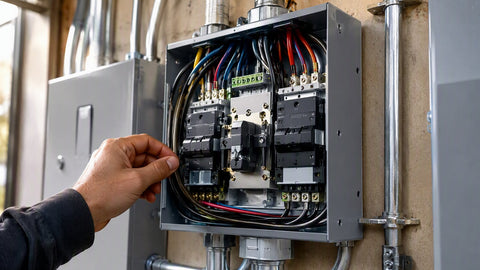
NEC 705.12(B) limits backfeed through a load-side breaker using the 120% rule: the sum of the main breaker rating and the PV breaker rating cannot exceed 120% of the panel's busbar rating. On the most common residential service — a 200 A bus with a 200 A main — the allowance is 200 × 1.2 − 200 = 40 A of PV, and a 10kW system needs 60 A. Your three code-compliant paths:
| Option | Math | Max inverter AC | Notes |
|---|---|---|---|
| Load-side breaker, 200 A bus / 200 A main | 200 × 1.2 − 200 = 40 A | 40 ÷ 1.25 = 32 A = 7.7 kW @ 240 V | Too small for 10 kW |
| Load-side breaker, 200 A bus / 175 A main | 200 × 1.2 − 175 = 65 A | 65 ÷ 1.25 = 52 A = 12.5 kW | 60 A PV breaker fits |
| Supply-side (line-side) tap | Tap conductors sized to 60 A OCPD | Full 10 kW | No bus limit; utility approval required |
Downsizing the main breaker from 200 A to 175 A is usually the cheapest fix, but it must be justified by a load calculation under NEC 220. A supply-side tap ahead of the main disconnect avoids touching the busbar entirely and is the standard approach when the service also feeds EV chargers or electric heat. Confirm the interconnection method with your utility before rough-in; some utilities require a visible, lockable AC disconnect within sight of the meter regardless of which path you choose.
Installer note #2 — open the panel before you quote
I never quote a 10kW grid-tie job without physically opening the main panel. Listing labels, bus ratings, and stab limits are frequently different from what the homeowner's paperwork says, and I have found more than one "200 A" service that was actually a 150 A bus with a 200 A main someone swapped in. Ten minutes with a flashlight at the site survey has saved me from redesigning the interconnection after the permit was already submitted.
Annual production scales directly with peak sun hours (PSH). Using the standard estimate production = array kW × PSH × 365 × 0.86 (the 0.86 factor accounts for inverter efficiency, soiling, wiring, and temperature losses, consistent with PVWatts default system losses of roughly 14%):
| Region (example city) | Avg. peak sun hours | Annual production | Daily average |
|---|---|---|---|
| Southwest (Phoenix, AZ) | 6.5 | 10 × 6.5 × 365 × 0.86 = 20,395 kWh | 55.9 kWh |
| Mountain West (Denver, CO) | 5.5 | 10 × 5.5 × 365 × 0.86 = 17,257 kWh | 47.3 kWh |
| Southeast (Atlanta, GA) | 5.0 | 10 × 5.0 × 365 × 0.86 = 15,695 kWh | 43.0 kWh |
| Midwest (Chicago, IL) | 4.5 | 10 × 4.5 × 365 × 0.86 = 14,126 kWh | 38.7 kWh |
| Pacific NW (Portland, OR) | 4.0 | 10 × 4.0 × 365 × 0.86 = 12,556 kWh | 34.4 kWh |
| Coastal NW (Seattle, WA) | 3.5 | 10 × 3.5 × 365 × 0.86 = 10,987 kWh | 30.1 kWh |
For context, the average U.S. household consumes roughly 10,600 kWh per year, so a 10kW array offsets full annual consumption in every region above, with a wide surplus in the Southwest. Actual output shifts with tilt, azimuth, shading, and module degradation (typically 0.4–0.5% per year for modern mono modules). State-level incentives and net-metering policies change the economics more than the physics; check current programs on our solar incentives by state page before finalizing a payback estimate.
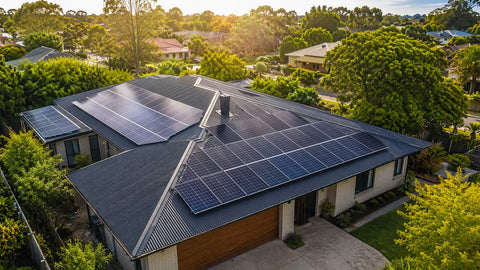
Twenty-five modules at about 21.2 sq ft each cover roughly 530 sq ft of array area, a power density of about 18.9 W per sq ft. After fire-code setbacks (typically 18 in at ridges and 36 in pathways per IFC 605.11), plan on 600–700 sq ft of usable roof, which usually means one large unshaded plane or two planes on separate MPPTs. Rail-based systems from our solar mounting systems collection handle composition shingle, tile, and standing-seam metal with the appropriate flashing or clamp. Keep row spacing generous enough that the winter sun does not row-shade the back of the array; at 40° latitude, inter-row shading starts to bite when pitch exceeds roughly 2:1 row spacing.
Installer note #3 — map rafters before you set the first rail
My crews snap chalk lines for every rafter before any rail goes up, and every penetration gets a flashed mount, never a bare lag through sealant. On a 25-panel job that is roughly 40 to 50 attachments depending on rail span and wind zone. Skipping the rafter map is how you end up with a lag into sheathing alone, and that is the leak callback two winters later. I also torque every mid-clamp and end-clamp to the racking manufacturer's spec and mark each bolt with a paint pen so the inspector can see the work was verified.
A 10kW grid-tie system requires an electrical permit in virtually every U.S. jurisdiction, plus a utility interconnection agreement before energization. The permit package typically includes a site plan, a three-line electrical diagram, module and inverter spec sheets, the string-voltage calculation from the 690.7 section above, and a rapid-shutdown plan per NEC 690.12, which requires module-level or array-level shutdown that reduces conductors outside the array boundary to 30 V within 30 seconds. Inspectors also check labeling (690.53/690.54 plaques at the disconnect and panel), the grounding electrode connection, and the backfeed breaker hold-down kit. For step-by-step mechanical and electrical sequence, our solar installation guide mirrors the order most AHJs expect to see.
Installer note #4 — label everything before inspection day
I keep a label kit on the truck and print every placard before the inspector arrives: DC voltage and current at the inverter, AC ratings at the disconnect, the "PV system interconnected" directory at the main panel, and rapid-shutdown identification. Missing labels are the single most common inspection failure I see on competitor installs, and they are entirely avoidable. A five-dollar label printer pays for itself on the first job.
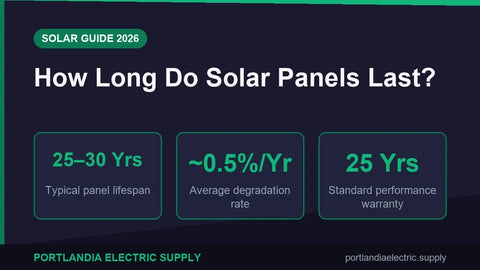
Every modern 10 kW string inverter ships with Wi-Fi or cellular monitoring that reports per-string voltage, current, and energy harvest. Set up alerts on day one: a string that drops offline usually means a failed connector or a tripped rapid-shutdown initiator, and catching it in a week instead of a billing cycle protects your production numbers. Expect modern mono modules to degrade roughly 0.4–0.5% per year, so a system producing 14,000 kWh in year one still delivers about 12,600 kWh in year twenty-five — the basis for most 25-year payback models.
Maintenance on a grid-tie system is minimal but not zero. Plan an annual visual inspection of racking bolts and flashings, a check of inverter fault logs, and cleaning where soiling is measurable — in dusty or agricultural regions, soiling can cost 3–7% of annual production if panels are never washed. Keep vegetation trimmed so morning and evening shade does not creep onto the array as trees grow; a shadow across one cell string can drag a whole MPPT down. Finally, keep the inverter's firmware current and record each year's total production so you can spot degradation trends that fall outside the module warranty curve.
How many solar panels are in a 10kW kit?
Twenty-five 400 W panels make exactly 10.0 kW. With 440 W modules you need 23 panels (10.1 kW), and with 370 W modules you need 27 (10.0 kW). The module count matters less than the string-voltage and MPPT math covered above.
How much roof space does a 10kW system need?
About 530 sq ft of array footprint, or 600–700 sq ft of usable roof after fire setbacks and walkways. Ground mounts are a good alternative when the roof is shaded, small, or east/west oriented.
How much electricity does a 10kW system produce per year?
Between roughly 11,000 kWh (Seattle, 3.5 PSH) and 20,400 kWh (Phoenix, 6.5 PSH) using the 0.86 system-derate factor. The national midpoint around 4.5–5.0 PSH lands near 14,000–15,700 kWh annually.
Can I connect a 10kW system to a 200A panel?
Not with a standard 200 A main under the 120% rule, which caps PV backfeed at 40 A (enough for about 7.7 kW). A 10kW system needs a 60 A backfeed breaker, so either downsize the main to 175 A with a supporting load calculation or use a supply-side tap.
Do I need batteries with a grid-tie kit?
No. A grid-tie string-inverter system exports surplus power to the utility and shuts down during outages per UL 1741 anti-islanding. If you want backup power, choose a hybrid inverter platform and add storage later rather than retrofitting an AC-coupled battery onto a standard string inverter.
What does a 10kW grid-tie kit cost?
Equipment-only pricing for panels, inverter, racking, and balance-of-system typically runs in the low-to-mid five figures depending on module brand and racking type, with turnkey installed pricing commonly between $2.50 and $3.50 per watt before incentives. Wholesale account pricing through our solar panels and kit programs narrows the gap for contractors and experienced DIY installers.
Build Your 10kW Grid-Tie System
Wholesale pricing on modules, string inverters, racking, and balance-of-system — one PO, one invoice, permit-ready documentation included.
Shop Grid-Tie Solar Systems