Updated September 2026 — refreshed against the live PES catalog; product pricing verified 2026-09-26.
2026 product line update
| Product | Class | Price |
|---|---|---|
| Canadian Solar 710W TOPCon Bifacial Solar Panel | 710W | $340.80 |
| Hyundai 640W 156-Cell TOPCon Bifacial Solar Panel | 640W | $220.78 |
| Thornova Solar TS-BGT72(600) 600W Bifacial Solar Panel | 600W | $165.76 |
| Thornova Solar 595W Solar Panel 144 Cell Bifacial TS-BGT72(595) Wholesale 31 panels per pallet | 595W | $164.64 |
| ZNShine Solar 585W 144-Cell Bifacial Solar Panel | 585W | $246.99 |
| Hyundai HiS-S585OJ 585W Clear on Transparent156 Half-Cell Bifacial Solar Panel | 585W | $195.86 |
Live prices verified 2026-09-26. The current pallet line tops out at 550–640W, plus the Canadian Solar 710W TOPCon flagship panel.
Nobody asks us "what does solar cost?" because they want a national average. They ask because they have a roof, a utility bill, and a budget, and they want to know if the numbers clear. We've quoted thousands of residential and light-commercial systems over the years, and the honest answer is always the same: the equipment is the cheap part now. Everything around it — labor, permitting, interconnection, the service upgrade nobody told you about — is where the money goes.

This guide breaks a solar installation quote down the way we do at the counter: line by line, with real 2026 pricing ranges, worked payback math, and the incentive picture as it actually stands this year (which changed more in the last twelve months than in the previous five). Whether you're a homeowner pricing your first array or an installer sanity-checking your own quotes, the tables below are the ones we use ourselves.
What a Solar Panel System Costs in 2026
Installed residential solar in the US typically runs $2.60 to $3.40 per watt before incentives, depending on roof complexity, region, and equipment tier. Light-commercial work (25–100 kW) usually lands between $1.90 and $2.60 per watt because fixed costs spread over more watts. Here's what that looks like in dollars:
| System size (DC) | Typical use | Gross cost @ $2.60/W | Gross cost @ $3.00/W | Gross cost @ $3.40/W |
|---|---|---|---|---|
| 4 kW | Small home, low usage | $10,400 | $12,000 | $13,600 |
| 6 kW | Average home, ~700 kWh/mo | $15,600 | $18,000 | $20,400 |
| 8 kW | Average home, ~950 kWh/mo | $20,800 | $24,000 | $27,200 |
| 10 kW | Large home / EV charging | $26,000 | $30,000 | $34,000 |
| 12 kW | Large home + EV + pool | $31,200 | $36,000 | $40,800 |
| 25 kW (commercial) | Small business | $47,500–65,000 @ $1.90–2.60/W | — | — |
Two things to notice. First, the range on the same size system is roughly 30% — that spread is almost never about the panels. It's about the roof, the service panel, and the local permitting office. Second, 2026 pricing has a new floor underneath it: the Section 232 Minimum Import Price program that took effect in August 2026 sets a hard floor of $0.38/W on imported modules, stacking on top of the existing AD/CVD duties. If a quote comes in dramatically below these ranges, ask what modules are on it and where they came from. There's cheap, and there's distressed-inventory cheap, and they are not the same thing.
If you want to size a system against your actual usage before you price it, run your last twelve months of kWh through our solar system sizing calculator first. Sizing wrong is the most expensive mistake in this entire process — more on that below.
Line-Item Breakdown: Where the Money Actually Goes
When we dissect a finished residential quote, the split consistently looks something like this. The percentages below are from our own job costing and match what the industry reports in aggregate:
| Cost category | Share of total | On a $24,000 (8 kW) job | What's in it |
|---|---|---|---|
| PV modules | 22–28% | $5,300–6,700 | 18–20 panels at 430–450W class |
| Inverter(s) | 8–12% | $1,900–2,900 | String unit, or 18–20 microinverters |
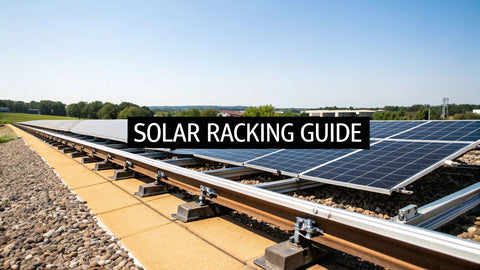
| Racking & roof attachments | 6–9% | $1,400–2,200 | Rails, clamps, flashings, standoffs |
| Electrical BOS | 10–14% | $2,400–3,400 | Wire, conduit, breakers, disconnects, rapid shutdown |
| Labor (install + electrical) | 12–18% | $2,900–4,300 | Crew days + licensed electrician time |
| Permitting, engineering, interconnection | 4–7% | $1,000–1,700 | AHJ fees, structural letter, utility application |
| Overhead, sales, margin | 20–30% | $4,800–7,200 | The part that keeps the installer in business |
The module line is the one everyone fixates on, and it's barely a quarter of the job. We pulled a customer's competing quote apart last spring: the "expensive" bidder was using 450W TOPCon modules at $0.42/W US-delivered, and the "cheap" bidder had PERC distress stock at $0.19/W. Difference on the whole job? Under $900. The cheap quote was also missing the rapid-shutdown hardware and the 200A panel upgrade — a $3,000 swing hidden in the fine print.
Lesson: compare quotes line by line, not total to total. Ask every bidder for the module make and model, the inverter make and model, and whether the quote includes main-panel work, trenching, and permit fees. Then run the two through the panel comparison tool and our brand matchup pages so you know what tier of equipment you're actually being offered.
The 2026 Incentive Landscape — Read This Before You Model ROI
The federal picture changed hard at the end of 2025, and most of the blog posts you'll find ranking right now still describe the old rules. Here's the honest status as of August 2026:
| Incentive | Status as of August 2026 | Who it affects |
|---|---|---|
| Section 25D residential credit (30%) | Expired December 31, 2025 (OBBBA). No longer available for homeowner-owned systems. | Homeowners buying cash or with a loan |
| Section 48/48E commercial ITC | Still available, but the begin-construction safe harbor for the easy pathway closed July 4, 2026. Placed-in-service and FEOC compliance rules now drive eligibility. | Businesses, farms, nonprofits via third-party structures |
| Domestic content bonus (+10 pts) | Active, but requires FEOC-compliant equipment — no Chinese-entity components in the stack. | Commercial / third-party-owned projects |
| Third-party-owned (lease/PPA) residential | The leasing company, not the homeowner, claims the commercial credit and passes value through the rate. | Homeowners who lease |
| State/local incentives | Unchanged by federal action — property tax exemptions, sales tax exemptions, and utility rebates still vary by state. | Everyone — check your state |
What this means in practice: a cash homeowner in 2026 models ROI on the gross number, not a net-of-credit number. That stretches simple payback by roughly three to four years compared to 2024 math, and it has quietly made third-party-owned structures competitive again because the lease provider can still monetize 48E. If you're in Florida, Texas, Arizona, or anywhere with strong state-level stack-ons, check the current list on our state solar incentives page — several state programs are worth more now than the old federal delta.
We've had three customers this summer alone bring us ROI spreadsheets built on the expired 30% credit. One was about to sign. Don't be that spreadsheet.
The Cost Drivers That Swing a Quote by Thousands
Two identical 8 kW systems can differ by $8,000. Here's why, ranked by how often each one blindsides a buyer:
| Cost driver | Typical adder | Why it happens |
|---|---|---|
| Main service panel upgrade (100A → 200A) | $2,000–4,500 | Older homes can't take a solar backfeed breaker per NEC 705.12; the 120% rule fails on a 100A bus. |
| Battery storage (13.5–16 kWh class) | $9,000–15,000 installed | Battery, hybrid inverter or second inverter, critical-loads subpanel, extra labor. |
| Roof condition / re-roof before install | $6,000–14,000 (roof) | Never put a 30-year system on a 12-year-old shingle roof without a plan. |
| Complex roof (multiple planes, steep pitch, tile) | +$0.15–0.40/W | More attachments, more flashing, slower crew days. |
| Trenching for ground-mount / detached structure | $1,500–5,000 | Conduit, wire upsizing for voltage drop, sometimes a subpanel. |
| Panel brand tier | ±$0.05–0.15/W | TOPCon commodity vs. premium BC/HJT residential modules. |
| Microinverters vs. string | +$0.10–0.25/W | 18–20 micros cost more than one string unit but harvest more on shaded roofs. |
The panel upgrade deserves its own paragraph because it kills more deals than any other line. A 200A panel with a 200A main breaker allows a 40A solar backfeed under the 120% rule (200A bus × 1.2 − 200A main = 40A). That's 7.7 kW AC of solar — fine for most homes. A 100A panel allows only 20A of backfeed (100 × 1.2 − 100 = 20A), or 3.8 kW AC. We've opened plenty of 1980s panels and found a full bus with tandem breakers and no room at all. If your home was built before 1990 and you still have the original panel, budget the upgrade and move on. Our NEC code compliance guide walks through the 705.12 math in more detail.
Worked Payback Math (2026 Rules)
Let's run a real example — the same 8 kW system, cash purchase, Portland-metro style numbers, and no federal residential credit:
| Line | Value | Notes |
|---|---|---|
| System size | 8 kW DC | 18 × 445W TOPCon modules |
| Gross installed cost | $24,000 | $3.00/W |
| Federal residential credit | $0 | 25D expired 12/31/2025 |
| Net cost | $24,000 | — |
| Year-1 production | 11,200 kWh | 8 kW × 1,400 kWh/kW-yr |
| Year-1 utility savings | $1,904 | 11,200 kWh × $0.17/kWh retail |
| Simple payback | 12.6 years | $24,000 ÷ $1,904 |
| Payback w/ 3%/yr utility escalation | ~10.8 years | Savings grow each year |
| 25-year cumulative savings (escalated) | ~$69,000 | Sum of 25 escalating years minus net cost ≈ $45,000 net gain |
Twelve-plus years is a longer payback than the 2021–2024 glory years, and we say so to customers' faces. But the escalation case is the one that matters — utilities have averaged 3–5% annual rate increases in most territories lately, and every increase makes the array more valuable. Panel degradation runs about 0.4–0.5% per year on modern N-type modules, so a system making 11,200 kWh in year one still makes roughly 10,100 kWh in year 25. The math works; it just works slower than it used to, and anyone who tells you otherwise is selling something.
Run your own numbers through the solar ROI calculator with your actual utility rate — not a national average. Rates in this country run from $0.09 to $0.38/kWh, and that single input swings payback by a decade.
Financing: Cash vs. Loan vs. Lease/PPA in 2026
| Structure | Upfront cost | Who owns incentives | Best for | Watch out for |
|---|---|---|---|---|
| Cash | 100% | You (state/local only now) | Strongest lifetime ROI | Longest payback timeline without 25D |
| Solar loan (10–20 yr) | $0 down | You (state/local) | Ownership with no cash outlay | Dealer fees of 15–30% baked into principal — ask for the cash price |
| Lease / PPA | $0 down | The leasing company (48E) | Immediate bill reduction, no maintenance | Escalator clauses, transfer friction at home sale |
The dealer-fee line is the dirty secret of solar lending. A "$24,000 system" on a loan proposal is often an $18,500 cash price with $5,500 of dealer fee stacked into the financed amount. We tell every customer: ask each bidder for the cash price first, negotiate that, then discuss financing. If the financed total is more than 10–12% above the cash price, the loan is expensive even if the rate looks low.
Equipment Choices That Move the Price
Module selection matters less to total cost than people think, but it matters a lot to roof-space-constrained jobs. Current Tier 1 residential modules run 440–520W at 22.5–25% efficiency; the premium back-contact class costs more per watt but squeezes more watts out of the same roof. Browse current inventory on our solar panels collection — we stock Qcells, Trina, REC, JA Solar, and Mission Solar, and the per-watt difference across tiers on a 20-panel job is usually under $1,500.
Inverters split the same way. A string inverter is the budget play; microinverters or optimizers cost more but pay back on shaded or multi-plane roofs. Our inverter buyer's guide and inverter sizing calculator cover the trade-offs, and the inverters collection has current pricing. If storage is on the table — and with net metering eroding in several states, it increasingly should be — the battery buyer's guide and battery sizing calculator will get you to a defensible kWh number before you spend a dollar.
How to Get a Clean Quote: The Field Checklist

After two decades of watching this process go right and wrong, here's the sequence that protects you:
- Twelve months of bills first. No quote is real until it's sized against actual usage. Add planned loads — EV, heat pump, hot tub — before sizing, not after.
- Get the cash price from every bidder. Financing conversations come second.
- Demand the equipment list. Module model number, inverter model number, racking brand. "Tier 1 panels" is not a model number.
- Ask about the panel. If your service is 100A or the panel is pre-1990, get the upgrade priced in writing.
- Ask who pulls the permit and who shows up for inspection. The answer tells you whether you're dealing with an installer or a sales org.
- Check the roof. If it has fewer than 10–12 years of life left, re-roof first. Removing and reinstalling an array costs $3,000–6,000.
- Read the warranty stack. 25-year product and 30-year performance warranties are now standard on quality modules. Labor/workmanship should be 10 years minimum from the installer.
Our solar installation guide and permitting guide cover the process side in depth, and the mounting guide explains the racking decisions that show up on your quote. For small off-grid or cabin projects where full retail install pricing makes no sense, the 5 kW kit, 10 kW solar-plus-battery kit, and off-grid cabin kit pages lay out DIY-friendly bundles with the engineering already done.
How 2024–2026 Price Trends Changed the Market
Module prices collapsed through 2024 and early 2025 — Tier 1 TOPCon was clearing FOB China at $0.09–0.11/W, and US-delivered product bottomed around $0.27–0.32/W after duties. That era is over. The Section 232 proclamation signed in August 2026 replaced the expired Section 201 safeguard with a Minimum Import Price program: $21/kg on polysilicon, $100/kg on ingots and wafers, $0.22/W on cells, and $0.38/W on modules, plus a 15% ad valorem duty on top. Contracts signed before August 6, 2026 are grandfathered, which is why you'll still see some "old stack" pricing floating around distributor warehouses this fall — but every container landing after the cutoff reprices upward.
| Benchmark | 2024 | 2025 | Aug 2026 | Driver |
|---|---|---|---|---|
| Tier 1 TOPCon module, FOB China | $0.11–0.13/W | $0.09–0.11/W | $0.085–0.10/W | Overcapacity still real at the factory gate |
| US-delivered module, any import | $0.28–0.35/W | $0.27–0.32/W | $0.38/W floor (MIP) + 15% duty + AD/CVD | Section 232 MIP program |
| US-made module | $0.35–0.45/W | $0.32–0.42/W | $0.30–0.40/W | Domestic plants scaling; FEOC-compliant premium easing |
| Residential installed price | $2.80–3.60/W | $2.70–3.50/W | $2.60–3.40/W | Soft costs falling faster than hardware rose |
| SE Asia AD/CVD exposure | Preliminary | Final rates set | Malaysia 9–14%, Thailand 23–77%, Vietnam 56–272%, Cambodia 117–292%+ | Country and supplier specific |
The counterintuitive result: installed prices are still drifting down even as import floors go up, because labor productivity, permitting reform in some AHJs, and cutthroat installer competition are eating the delta. I wouldn't model 2027 pricing below $2.50/W residential, though. The MIP floor is a floor.
Regional Price Variation Is Real and Large
The same 8 kW system quotes differently across the country because labor rates, permitting regimes, and market competition differ. These are the ranges we see quoted in 2026:
| Region | Typical $/W installed | Why |
|---|---|---|
| Southwest (AZ, NV, NM) | $2.50–3.10 | Mature market, simple roofs, fast permitting in most AHJs |
| Texas | $2.55–3.15 | High competition, no state income tax quirks, big roof planes |
| Southeast (FL, GA, NC) | $2.60–3.25 | Florida's sales and property tax exemptions help; hurricane code adds racking cost in coastal zones |
| Midwest | $2.80–3.40 | Fewer installers, more snow-load engineering |
| Mountain West (CO, UT) | $2.70–3.30 | Strong markets, altitude derates, snow loads |
| Northeast | $3.00–3.70 | Labor rates, older housing stock, slower permitting |
| California | $2.80–3.55 | High labor and permit costs offset by scale; NEM 3.0 pushes battery attach rates over 60% |
| Pacific Northwest | $2.70–3.40 | Moderate market; lower production per watt softens ROI, not price |
If a quote lands far above your region's band, the answer is usually scope, not gouging — but make the bidder prove it line by line.
Roof Orientation, Tilt, and the Production Math Behind the Price
A dollar-per-watt price is meaningless without a production estimate, and production hinges on orientation. Our rule-of-thumb derates, which match PVWatts output within a few percent for most US latitudes:
| Orientation (tilt ≈ latitude) | Relative production | 8 kW annual yield @ 1,400 kWh/kW-yr baseline |
|---|---|---|
| Due south | 100% | 11,200 kWh |
| Southeast / southwest | 94–96% | ~10,600 kWh |
| East / west | 82–86% | ~9,400 kWh |
| North (low tilt only) | 60–70% | ~7,300 kWh |
West-facing arrays deserve special mention. They produce about 15% less energy than south-facing, but they produce it later in the day — exactly when utilities on time-of-use rates charge the most. In California and Arizona TOU territories, a west-facing array can beat a south-facing one on dollars saved even while losing on kilowatt-hours. Any quote that doesn't model your rate schedule against your roof planes is a napkin sketch, not engineering. We caught this exact issue on a Beaverton job last year: the bidder had modeled a west-facing garage array as south-facing. The customer's "9.8-year payback" was really 11.4. Same panels. Same price. Wrong math.
Install Day: What Actually Happens
A residential install is typically one to three crew-days on the roof plus a half-day of electrical finish work. The sequence we run: layout chalk lines and rafter mapping first (missed rafters are how roofs leak), then standoffs and flashings, rails, modules, then the rooftop wiring and rapid-shutdown hardware. The electrician lands the inverter, the AC disconnect, and the backfeed breaker — and if there's a panel upgrade, that happens the same day under the same permit in most jurisdictions.
Inspection follows within a week or two depending on the AHJ, then the utility swaps the meter and issues Permission to Operate. PTO is the finish line — running the system before PTO can void your interconnection agreement, and yes, utilities check. Total elapsed time from signed contract to PTO runs 6–14 weeks in most markets in 2026, with permitting and utility queue time — not the install itself — eating most of it. The installation guide walks the full timeline, and the permitting guide covers the AHJ side state by state.
The 25-Year Ownership Cost Nobody Puts in the Brochure
Panels are nearly maintenance-free, but the system around them isn't. Honest lifetime budget on an 8 kW system:
| Item | When | Typical cost (2026 $) |
|---|---|---|
| String inverter replacement | Year 12–15 | $2,000–3,200 installed |
| Microinverter failures (1–3 units typical) | Years 5–20 | $0 under 25-yr warranty; $150–250 labor each if out of labor warranty |
| Panel cleaning (if you DIY or hire it) | Annual, dusty regions | $0–300/yr |
| Monitoring subscription (some platforms) | Ongoing | $0–120/yr |
| Home insurance rider increase | From day one | $40–150/yr |
| Removal & reinstall for re-roof | Once, if roof outlives shingles | $3,000–6,000 |
| Squirrel / pest damage repair | Random, critter-prone areas | $200–800 per incident |
Add it up pessimistically and you're looking at roughly $4,000–7,000 of lifetime cost beyond the install — call it another $0.15–0.25/W spread over 25 years. Our payback table above stays comfortably positive even if you subtract all of it, which is exactly the stress test your own ROI model should survive. The maintenance guide covers the upkeep schedule in detail.
Why Commercial Pricing Works Differently
Light-commercial jobs (25–250 kW) price lower per watt — $1.90–2.60/W in 2026 — because soft costs amortize: one permit set, one interconnection application, one mobilization, but fifty times the modules. The trade-offs are different, though. Commercial jobs live and die on interconnection timelines (six months is normal, eighteen isn't rare on constrained feeders), structural engineering on older flat roofs, and demand-charge arithmetic rather than pure kWh offset. A commercial quote without a demand profile analysis is incomplete, full stop. Businesses should also model the surviving Section 48E credit carefully — with the begin-construction window closed for the easy pathway, placed-in-service timing and FEOC-compliant equipment sourcing now decide whether the 30% (plus domestic-content bonus) shows up at all. That's a six-figure swing on a 500 kW project, and it belongs in a tax professional's hands, not a salesperson's slide deck.
Negotiating Tactics That Actually Work
We've been on both sides of this table. What moves numbers:
- Get three quotes with identical scope. Same kW, same module class, same inverter architecture. Divergent scope makes quotes incomparable by design.
- Ask for the cash price in writing. Everything else is theater until you have it.
- Time it for quarter-end. Installer sales teams have quotas; the last week of a quarter is when margin flexibility appears.
- Bundle the panel upgrade. An electrician already on-site does a 200A upgrade for meaningfully less than a standalone service call.
- Offer flexibility on scheduling. Filling a crew's gap week is worth real money to an installer — ask what it buys you.
- Don't negotiate the modules down to distress stock. Saving $800 on modules with no bankable warranty behind them is the worst trade on the table.
The Battery Add-On: 2026 Economics

Storage changes the payback model completely, so it deserves its own math instead of a hand-wave. Take the same 8 kW system and add a 13.5 kWh battery at $11,500 installed. In a full-retail net metering state, that battery is a resilience purchase — nice during outages, but it adds years to payback because every kWh you store was going to be credited at retail anyway. In a net-billing territory where exports earn $0.04–0.08/kWh but imports cost $0.30+/kWh at peak, the same battery shifts 8–10 kWh per day from "sold cheap" to "used instead of bought expensive." That's $0.22–0.26 of captured value per stored kWh, or roughly $650–950 per year of additional savings. The battery still doesn't pay back fast — call it 12–16 years against a 10–15 year warranty — but combined with the resilience value and the fact that batteries keep getting cheaper, the attach decision in export-hostile states is easy. In full-retail NEM states, buy the battery because you want backup, not because a spreadsheet told you to.
One practical note from the field: batteries installed simultaneously with solar cost meaningfully less than retrofits. Same permit, same mobilization, one electrical rough-in instead of two. Retrofit storage quotes run $1,500–3,000 higher for identical hardware. If there's any chance you want storage in the next five years, rough it in now.
Warranties: Reading the Stack Like a Contractor
Every proposal brags about warranties. Few explain that a solar system carries four separate ones, from four separate entities, with four separate durations:
| Warranty | Who stands behind it | Typical term (2026 Tier 1) | What it covers |
|---|---|---|---|
| Module product warranty | Panel manufacturer | 25 years (12 on budget lines) | Defects, lamination failures, junction boxes |
| Module performance warranty | Panel manufacturer | 30 years at 85–87.4% retained output | Excess degradation beyond ~0.4%/yr |
| Inverter warranty | Inverter manufacturer | 10–12 yr string; 25 yr microinverter | Electronics failure |
| Workmanship warranty | Your installer | 5–25 years (10 is the credible minimum) | Roof leaks at attachments, wiring faults, labor |
Two hard-won observations. First, a warranty is only as good as the company behind it — check whether the module maker is on the current BloombergNEF Tier 1 list and whether they've survived a downturn. The 2024–2026 shakeout orphaned a lot of warranties, and a 30-year performance guarantee from a company in judicial management is a PDF, not a promise. Second, the workmanship warranty is the one you'll actually use. Roof penetrations and wiring are where failures happen, and those belong to the installer. Ten years minimum, in writing, transferable if you sell the house.
Red Flags That Should Kill a Quote on Sight
After reviewing hundreds of our customers' competing bids, these are the patterns that reliably predict a bad outcome:
- No model numbers anywhere. "Premium Tier 1 panels" is marketing. A real quote names the module, the inverter, and the racking system.
- Production estimates without shade analysis. If nobody looked at your roof with a shade tool, the kWh number is fiction.
- Pressure to sign same-day. Legitimate pricing survives the weekend. Expiring discounts are a sales tactic, not a market condition.
- A financed "price" with no cash equivalent shown. Dealer fees hide here.
- No mention of your service panel. On a pre-2000 home, silence about the panel means the upgrade is coming as a change order.
- Out-of-state sales orgs with subcontracted crews. Not automatically bad, but ask who holds the workmanship warranty and who answers the phone in year seven.
- Payback claims under six years in moderate-rate states. The math above is public. Anyone showing 5-year payback on $0.16/kWh power is modeling fantasy escalation or a credit that no longer exists.
DIY vs. Professional Install: Honest Economics
We're a supply house, so we'll say the quiet part: a competent DIYer can legally self-install in most jurisdictions (as an owner-builder) and save $0.80–1.20/W on labor and margin. On the 8 kW example, that's $6,500–9,500. The catches are real, though. You forfeit most workmanship warranty protection, you own the permit and inspection process, some utilities won't interconnect owner-built systems without a licensed electrician's sign-off, and a roof mistake costs more than the savings. The sane middle path is the kit-plus-electrician model: buy an engineered bundle like the 10 kW solar-plus-battery kit or a grid-tied system package, self-perform the mechanical work, and hire a licensed electrician for the service-side connections and sign-off. That structure typically saves 40–60% of the DIY delta while keeping the electrical work inspectable and insured. For true off-grid builds — cabins, ag buildings, RVs — full DIY is far less fraught, and the off-grid cabin kit and DIY kits collection exist precisely for that buyer.
HOAs, Aesthetics, and the Soft Costs of Approval
About 40% of US housing stock sits under an HOA, and while roughly half the states now have solar access laws limiting HOA restrictions, the approval process still adds two to six weeks and occasional design compromises — all-black modules, no visible conduit runs, front-plane restrictions. All-black premium modules carry a $0.03–0.08/W premium over silver-frame product. Skirt kits and painted conduit add a few hundred dollars. None of this is huge money, but it belongs in the budget on HOA jobs, and the approval timeline belongs in your project schedule. Submit early, with the exact module cut sheet attached — HOAs approve faster when they can see what the roof will actually look like.
Anatomy of a Real Quote: A Walkthrough
Let me describe what a clean 2026 quote packet looks like, because most homeowners have never seen a good one. Page one is the summary: system size in kW DC, panel count and model, inverter model, gross price, any incentives applied, and the net price. Page two is the production model: monthly kWh by month, the shade report reference, the assumed degradation rate (0.4–0.5%/yr on N-type, anything claiming better is optimistic), and the utility rate and escalation assumptions spelled out in plain numbers. Page three is scope: what's included (permits, engineering, monitoring setup, PTO paperwork) and — just as important — what's excluded, like panel upgrades, trenching, or roof repair. Then the warranty page, the license and insurance numbers, and the payment schedule. A reasonable payment schedule on a residential job is a deposit of 10% or less, a progress payment at installation, and the balance at PTO. Anyone asking for half up front is financing their operations with your money.
If a bidder can't produce that packet, they're not a serious bidder. We keep redacted examples at the counter specifically so customers know what to demand from everyone, including us.
Monitoring, Production Guarantees, and Life After PTO
Modern systems report per-panel or per-string production to an app, and that data is your warranty enforcement tool. Check it monthly for the first year. A single failed microinverter or a tripped string can cost you 5–10% of annual production, and the only person watching is you. Some installers sell production guarantees — a promise of minimum annual kWh with a true-up payment. They're worth having if the true-up is automatic and the guarantee uses conservative weather data; they're worthless if claiming requires an act of Congress. Read the true-up mechanism, not the headline number.
Also budget ten minutes each spring for a visual: look for cracked conduit, lifted flashings, nesting under the array, and any module with visible discoloration or snail trails. The maintenance guide has the full checklist. Systems that get ten minutes of attention a year outproduce neglected ones by 2–4% annually — free yield for almost no work. We've diagnosed dozens of "broken" systems that turned out to be a tripped disconnect or a gateway that fell off Wi-Fi after a router swap. Check the simple things first, keep the installer's number somewhere you'll find it in year nine, and remember that the monitoring app is the dashboard for a five-figure asset sitting on your roof.
Permitting and Interconnection: The Timeline Eaters
The physical install is three days. The paperwork is three months. Permit review runs one to four weeks in reformed AHJs and eight-plus in laggards; a few jurisdictions now offer instant same-day permits for standard residential designs, and if yours does, your installer's life is easier and your price should reflect it. Interconnection applications add another two to eight weeks, longer where the utility wants a transformer upgrade or a feeder study. None of this costs much in fees — $500 to $1,500 combined in most places — but it costs time, and time is why "I signed in June, why is it October" is the most common complaint in this industry. Ask your installer for their current average contract-to-PTO timeline in your specific AHJ. Any company installing locally knows this number cold; the ones who quote you a national average are guessing.
One more budgeting note on the electrical side that catches commercial buyers especially: switchgear and transformer lead times in 2026 are still stretched. Pad-mount transformers run 40–80 weeks from some manufacturers, and even residential meter-main combos can take six to ten weeks in tight supply periods. If your project needs utility-side equipment, order it at contract signing, not after permit approval. We stock what we can on the supply side — check the electrical supplies collection for panels, disconnects, and BOS hardware — but utility-owned equipment is on the utility's clock, and no amount of urgency changes their procurement queue.
Frequently Asked Questions
What is the average cost of a solar panel system in 2026?
Most US residential systems install for $2.60–3.40 per watt before incentives, so a typical 8 kW system runs $20,800–27,200. The August 2026 Section 232 import price floor ($0.38/W on modules) has put a hard bottom under equipment costs, so quotes far below this range deserve scrutiny.
Is the federal solar tax credit still available in 2026?
Not for homeowners. The Section 25D residential credit expired December 31, 2025. The commercial Section 48E credit survives with tighter rules — the easy begin-construction window closed July 4, 2026 — which is why third-party-owned leases and PPAs (where the finance company claims the commercial credit) have regained ground this year.
How long does solar take to pay for itself now?
On 2026 rules, a cash system at $3.00/W replacing power at $0.17/kWh pays back in roughly 11–13 years simple, and closer to 10–11 years once you account for utility rate escalation. High-rate states ($0.25+/kWh) still see 7–9 year paybacks. The 25-year net gain on a typical 8 kW system runs $40,000–50,000.
Why is one quote so much cheaper than another?
Usually equipment tier (distress-priced PERC vs. current TOPCon), missing scope (panel upgrade, trenching, rapid shutdown), or financing structure (dealer fees hidden in loan principal). Compare cash prices and model numbers line by line, never just totals.
Does adding a battery make financial sense in 2026?
More than it used to. As states move away from full-retail net metering, self-consumed solar is worth two to four times more than exported solar. A 13–16 kWh battery adds $9,000–15,000 but lets you keep the value of your own kilowatt-hours. In full-retail NEM states, the battery is still optional; in California-style net-billing territories, it's close to mandatory.
What's the most common hidden cost in a solar install?
The main service panel upgrade. Homes with 100A service or pre-1990 panels frequently need a $2,000–4,500 upgrade to legally backfeed solar under NEC 705.12. Get it quoted in writing before you sign anything.
Need pricing or availability on anything in this guide?
Portlandia Electric Supply dropships direct from the manufacturer — most items Ship Direct with lead times stated up front, no surprises.
Get a quote from PESBulk, pallet and contractor pricing available.