Buying solar panels by the container instead of by the pallet changes every part of the deal — the price per watt, the paperwork, the freight math, and the number of things that can go wrong between a factory in Vietnam and a laydown yard in Texas. We move truckload and container quantities of modules every month, and the buyers who do it well all share the same habits: they qualify suppliers hard, they write specs into the PO instead of assuming them, and they model landed cost down to the penny before they wire a deposit.

This guide is built for procurement managers, EPCs, developers, and volume resellers evaluating bulk solar panels for sale — typically 100 kW of modules and up, which is roughly three to five pallets of modern high-wattage product. Below that threshold you are really doing kit buying, and our solar panel kits buyer's guide is the better starting point. Above it, the rules in this article apply.
What "Bulk" Actually Means in Panel Quantities
Manufacturers and master distributors think in containers. A standard 40-foot high-cube container is the unit that unlocks factory-direct pricing, and everything else — pallets, half-truckloads — gets priced off that benchmark. Here is the arithmetic we run on every quote, using representative published module specs:
| Module class | Representative wattage | Panels per pallet | kW per pallet | Pallets per 40' HC | kW per container |
|---|---|---|---|---|---|
| 108 half-cell residential (approx. 1722 × 1134 mm) | 410 W | 36 | 14.76 kW | 26 | 383.8 kW |
| 144 half-cell C&I (approx. 2278 × 1134 mm) | 550 W | 31 | 17.05 kW | 26 | 443.3 kW |
| 144 half-cell TOPCon utility (approx. 2278 × 1134 mm) | 590 W | 31 | 18.29 kW | 26 | 475.5 kW |
| 210 mm large-format utility (approx. 2384 × 1303 mm) | 670 W | 26 | 17.42 kW | 26 | 452.9 kW |
Check the math the way we do: 550 W × 31 panels = 17,050 W per pallet, and 17.05 kW × 26 pallets = 443.3 kW per container. A 5 MW ground-mount is therefore 5,000 ÷ 443.3 ≈ 11.3 containers, so you order 12 and carry roughly 310 kW of attic stock and replacement modules — which you want anyway for a project that size. I have watched buyers try to shave that last partial container to save freight; every one of them ended up paying triple for a rush LTL shipment of fifteen panels when the install crew came up short. Order the extra pallet.
Who buys at this scale
Three buyer profiles dominate bulk purchasing. Utility and community-solar developers buy by the megawatt, usually direct from the factory or through a master distributor, on quarterly delivery schedules. Commercial EPCs buy 100–500 kW lots matched to a signed project pipeline. And volume resellers — including our own contractor customers buying through the commercial solar panels catalog — buy mixed pallets across brands to stock regional inventory. The qualification process below applies to all three; only the paperwork volume changes.
Technical Fundamentals: Wattage, Efficiency, and Form Factor
Panel wattage classes have marched upward every year, and the spec that matters for bulk buyers is not the headline wattage — it is watts per square meter and watts per dollar at your landed cost. Representative published specifications for the four classes we quote most often:
| Class | Typical wattage range | Published module efficiency | Cell technology | Best-fit application |
|---|---|---|---|---|
| Residential 108-cell | 400–430 W | 20.5–21.5% | Mono PERC / TOPCon | Roof-constrained residential, small C&I |
| C&I 144-cell | 540–560 W | 21.0–21.6% | Mono PERC | Flat commercial roofs, carports |
| Utility 144-cell TOPCon | 575–610 W | 22.0–23.0% | n-type TOPCon | Ground-mount, tracker rows |
| Large-format 210 mm | 650–700 W | 21.5–22.5% | TOPCon / HJT | Utility-scale, lowest BOS cost per watt |
Bifacial versions of the utility classes add a published bifaciality factor of roughly 70–80%, which translates to real-world rear-side gains of 5–15% over high-albedo ground — worth modeling for trackers, irrelevant on a shingle roof. If bifacial fits your project type, our bifacial solar panels category covers the current wholesale lineup, and the JA Solar, Trina Solar, and Qcells brand pages carry the current datasheets per SKU.
Efficiency is a land-cost calculation
Two points of module efficiency is worth real money when your constraint is area — a rooftop, a leased land parcel, an interconnection cap. On unconstrained cheap desert land, buy the cheaper panel. We tell every developer the same thing: run the efficiency premium against your land, racking, and labor cost per watt before falling in love with the 23% module. On a tracker project, higher-wattage panels also cut the number of foundations, torque tubes, and string runs per megawatt — savings that routinely exceed the module premium.
Certifications are non-negotiable line items
Every PO should name the standards explicitly: UL 61730-1/-2 for the US market, IEC 61215 and IEC 61730 for international acceptance, and a current PAN file from an independent lab if the project has third-party financing. For US federal incentive eligibility, check the module against current domestic-content and FEOC guidance with your tax counsel — the rules have moved twice in three years and I am not going to pretend a blog article can keep up with Treasury guidance. Get it in writing from your counsel.
Supplier Qualification: Where Bulk Deals Live or Die
The module market has more supply than demand right now, which means price is easy to get and reliability is hard. Our qualification screen for any new supply channel, in order:
- Financial durability. A 12-year product warranty from a company that will not exist in five years is a bookmark. Check BloombergNEF Tier 1 status (a bankability measure, not a quality measure — know the difference), public financials where available, and how the manufacturer weathered the 2023–2024 price collapse.
- Third-party reliability data. The annual Kiwa PVEL Module Reliability Scorecard is the single best public dataset on module durability — damp heat, thermal cycling, mechanical load, PID, LID/LeTID. We pull it for every serious bulk RFQ. Ask the supplier which test sequences their exact BOM has passed, not just the brand family.
- Batch traceability. Serial-number-level traceability to cell lot and lamination line. If a supplier cannot explain their traceability system in one email, walk away.
- Warranty administration with a US entity. Who do you call, in what time zone, and what is the published RMA process? We have processed warranty claims on behalf of customers; the brands with US-based service teams resolve claims in weeks, the rest in quarters.
- Logistics competence. Packaging standard (ask for the ISTA rating), container loading diagrams, moisture barrier packing for ocean freight, and a documented damage-claim process with photo requirements.
Landed Cost: The Only Price That Matters
A factory quote of $0.22/W means nothing until you stack the rest of the cost column. Here is a representative landed-cost model for a 1 MW purchase of 550 W C&I modules — the percentages move with freight markets and trade policy, so treat this as a worksheet, not a quote:
| Cost component | Example $/W | 1 MW total | Notes |
|---|---|---|---|
| Module, FOB factory | $0.220 | $220,000 | Volume-tier factory pricing |
| Ocean freight + insurance | $0.015 | $15,000 | 2.3 containers, spot rate dependent |
| Duties / tariffs (jurisdiction dependent) | $0.000–0.050 | $0–50,000 | AD/CVD exposure varies by origin country — get a customs ruling before the PO |
| Drayage, warehousing, delivery to site | $0.008 | $8,000 | Port to laydown yard |
| Damage/attrition allowance (1%) | $0.002 | $2,000 | Micro-crack and glass breakage reserve |
| Landed module cost | $0.245–0.295 | $245,000–295,000 | Before BOS, labor, and overhead |
Two traps in that table deserve emphasis. First, tariff exposure: origin-country AD/CVD determinations can swing landed cost by more than the entire module margin, and the obligation lands on the importer of record — which is you if you buy direct. Second, the damage allowance: plan on 0.5–1% of modules arriving with transit damage on any ocean shipment. I have opened containers where a shifted pallet put a forklift tine through eleven panels; the claim process works, but only if your receiving team photographs every pallet before the driver leaves.
Warranties and Service Terms to Benchmark
Put warranty terms in the comparison table next to price, because a $0.01/W premium for a materially better warranty is usually the right buy. Representative published terms across the current market:
| Term | Standard tier | Premium tier | What to verify |
|---|---|---|---|
| Product (workmanship) warranty | 12–15 years | 25 years | Whether labor/freight for replacement is covered |
| Performance warranty, PERC | 25 years, first-year degradation 2.0%, then 0.55%/yr (≈84.8% at year 25) | 30 years | Linear vs. step guarantee |
| Performance warranty, TOPCon | 30 years, first-year 1.0%, then 0.40%/yr (≈87.4% at year 30) | 30 years at 0.35%/yr | Degradation measurement method in the claims process |
| Bifacial performance adder | Same schedule, rear-side excluded | Rear-side covered at defined bifaciality | Whether rear gain counts toward guaranteed output |
| RMA and service | Email-based claims, 60–90 day resolution | US service office, advance replacement | Named US warranty administrator |
Logistics, Lead Times, and Risk Mitigation

Factory-direct lead times run 6–14 weeks depending on production slot availability, plus 3–5 weeks of ocean transit and 1–2 weeks of port and drayage. Against that baseline:
- Lock production slots early. Q4 and pre-incentive-deadline quarters book out first. A signed PO with a 10–20% deposit typically holds the slot.
- Split deliveries on multi-megawatt orders. One container a week beats five containers in one week unless your laydown yard and install crew can absorb the surge.
- Inspect on receipt, not on install day. Every pallet photographed, every serial range logged, flash-test reports matched to serials before the bill of lading is signed clean.
- Hold domestic backup supply. Even factory-direct buyers should know their master-distributor fallback. When a vessel rolls or a customs exam eats three weeks, domestic stock from channels like our solar panels catalog is how projects stay on schedule.
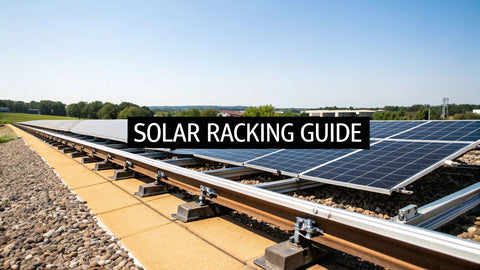
Pair the modules with racking and electrical BOS early in the schedule, not after the panels land — our racking and mounting inventory and the electrical supplies category exist precisely because module-first procurement with late BOS ordering is the most common schedule-killer we see.
Financing Structures and ROI Modeling
Bulk buyers generally fund modules four ways: cash (best pricing, typically 2–4% early-payment or volume discounts), supplier credit terms (net-30 to net-90 for qualified accounts), project finance draws (module cost wrapped into construction facility milestones), and inventory flooring for resellers. Whichever structure you use, model the project on landed cost, not FOB, and run sensitivity on three variables: module degradation curve, energy price escalation, and — for resale inventory — carrying cost per month of unsold stock.
For distributed-generation-scale buyers working ROI on customer projects, our solar ROI calculator and system sizing calculator handle the per-project math; for portfolio-level procurement, build the model in your own spreadsheet with the landed-cost stack above as the input column.
The Quote Comparison Framework
When the RFQs come back, normalize every quote to the same five lines before comparing: landed $/W at your site, payment terms, delivery schedule with Incoterms named (FOB, CIF, DDP — they move cost and risk between columns), warranty terms from the table above, and the compliance package (UL listing, PAN file, PVEL results, origin documentation). A quote that is $0.02/W cheaper but silent on origin documentation can be the most expensive line on the page.
We quote bulk volumes across REC, Mission Solar, Qcells, JA Solar, and Trina regularly, and we will happily put our quote into your comparison grid — that is what the framework is for.
Market Dynamics Every Bulk Buyer Should Watch
Supplier qualification and procurement criteria
Three forces set module pricing at any given moment: polysilicon and wafer input costs, global nameplate capacity versus demand, and trade policy. Input costs you can track through public polysilicon price indices; when polysilicon falls, module prices follow within one to two quarters. Capacity currently exceeds global demand, which keeps spot pricing soft and makes suppliers hungry — good for buyers, but it also means margin-squeezed manufacturers quietly change BOMs (bill of materials): different backsheets, different EVA, different cell suppliers under the same model number. This is why the qualification step above demands batch traceability and BOM-locked contracts. Write "no BOM changes without written approval" into the PO; serious suppliers sign it without blinking.
Trade policy is the third force and the least predictable. Section 201, Section 301, AD/CVD determinations, and forced-labor enforcement (UFLPA detentions) have each reshuffled landed costs within single quarters over the past few years. UFLPA detention risk alone justifies demanding full supply-chain documentation — quartz source, polysilicon source, wafer source — with the PO, not after customs asks for it. We have seen containers sit at the port for ninety days waiting on documentation that should have been collected before the vessel sailed.
Case-Style Benchmarks from Recent Procurement Cycles
These are anonymized but real patterns from volume deals we have supplied or quoted — use them as sanity checks on your own numbers:
| Project profile | Volume | Module choice | Outcome benchmark |
|---|---|---|---|
| Southeast US commercial roof portfolio (12 sites) | ~380 kW | 550 W 144-cell, single brand, two pallets of attic stock | Distributor channel beat factory-direct total cost once 14-week lead time and warehousing were priced in |
| 5 MW ground-mount, tracker rows | 12 containers | 590 W TOPCon bifacial | Higher-wattage class cut foundation and string counts enough to offset a $0.012/W module premium |
| Regional reseller stocking order | 1 container mixed | 410 W residential + 550 W C&I split | Mixed-SKU container from a master distributor turned inventory in under 60 days |
| Carport project, snow-load state | ~220 kW | 540 W with enhanced mechanical-load rating (5400 Pa front) | Spec-driven shortlist eliminated the two cheapest quotes; surviving bids were within $0.008/W of each other |
The pattern across all four: the cheapest module line rarely survives contact with schedule, structural, and documentation requirements. Price is the fourth filter, not the first.
The Actionable Procurement Checklist
Print this and run every bulk buy through it:
Ongoing performance tracking and warranty management
- Needs assessment. Define wattage class, technology (PERC/TOPCon/HJT), bifacial requirement, mechanical-load rating, and total watts including 1–2% attic stock.
- Supplier shortlist. Minimum three qualified channels: one factory-direct, one master distributor, one domestic-stock fallback.
- RFQ package. Named standards (UL 61730, IEC 61215/61730), PAN file requirement, PVEL Scorecard evidence for the exact BOM, warranty terms sheet, origin and UFLPA documentation, packaging spec, Incoterms named.
- Quote normalization. Landed $/W at your site, payment terms, delivery schedule, warranty comparison, compliance package — the five-line grid from the section above.
- Contract protections. BOM-lock clause, delivery-date liquidated damages or cancellation right, warranty administrator named, dispute venue named.
- Receiving protocol. Photo documentation before the driver leaves, serial ranges logged, flash reports matched, damage claims filed within the carrier window (often 5–15 days).
- Post-install tracking. Register warranties immediately, archive serials against array locations, and calendar the first-year performance review against the guaranteed degradation curve.
Buyers who run this checklist tell us the same thing afterward: the process adds about a week up front and saves a quarter somewhere downstream. That trade is available on every single order.
Frequently Asked Questions
How many solar panels fit in a shipping container?
It depends on module format. A 40-foot high-cube typically holds 26 pallets: about 936 panels of 410 W residential format (≈384 kW), 806 panels of 550 W C&I format (≈443 kW), or 676 panels of 670 W large format (≈453 kW). Confirm the loading diagram against your specific module's pallet configuration before booking freight.
What is a good price per watt for bulk solar panels?
Factory-direct volume pricing moves monthly with polysilicon and capacity cycles, so anchor on landed cost rather than any headline number. As a rule of thumb, if a quote is dramatically below the market band, the difference usually shows up later as tariff exposure, older cell technology, or warranty terms you do not want.
Is it better to buy direct from the factory or through a distributor?
Target buyers and typical project sizes
Factory direct wins on price at multi-container volumes with 3–6 months of schedule runway. Distributors win on speed, smaller lot sizes, mixed-brand pallets, domestic warranty administration, and schedule insurance. Most sophisticated buyers use both: factory direct for the base load of a project, distributor stock for schedule gaps and replacement modules.
How do I verify module quality before paying the balance?
Require flash-test reports matched to serial numbers, review the current Kiwa PVEL Scorecard results for the exact BOM, and for orders above roughly 1 MW, budget for third-party pre-shipment inspection (typically a few thousand dollars) — it is the cheapest insurance in the entire transaction.
What payment terms are standard for bulk module purchases?
Factory-direct deals typically run 10–30% deposit with balance against shipping documents or before delivery. Established distributor accounts can qualify for net-30 or better. Never wire 100% in advance to a new counterparty, whatever the discount.
Do bulk panels come with the same warranties as retail purchases?
Product warranties and performance guarantees
Yes — published product and performance warranties apply regardless of channel, but only if the seller is an authorized channel. Gray-market modules can arrive with unenforceable warranties, which is one more reason to qualify the supplier before the price.