Power Quality Optimization: How SaticShield Technology Transforms Residential and Commercial Energy Use
Dirty power costs you money three ways — wasted energy, shortened equipment life, and nuisance failures. Here's how SaticShield's filtering and power-factor technology attacks all three, with the math to prove it.

Most people think electricity is electricity. You pay for kilowatt-hours, the meter spins, the bill arrives. But anyone who has opened a panel with a power quality analyzer knows the truth: the waveform inside a modern building is messy. Variable-frequency drives chop it up. LED drivers and switch-mode power supplies spray harmonics back onto it. Motors run at lousy power factor, and every spike and sag that rides in from the grid takes a small bite out of everything plugged in downstream.
SaticShield built its product line around cleaning that waveform at the panel — filtering electromagnetic interference, correcting power factor, and clamping transients before they reach your equipment. We carry the SaticShield line at PES Supply, and we've watched these units go into homes, machine shops, offices, and agricultural buildings. This is the honest, numbers-first version of what power quality optimization does, what it can't do, and how to size it for your situation.
Power quality isn't one problem — it's a family of them, each with a different cause and a different cost mechanism. Knowing which one you're dealing with is the first step, because the fix that cures harmonics does nothing for a poor power factor.
| Problem | Typical Source | What It Does to Equipment | Primary Fix |
|---|---|---|---|
| Harmonic distortion (high THD) | VFDs, LED drivers, computers, UPS units | Overheats neutrals, transformers, and motors; trips breakers | Filtering at the panel; K-rated transformers for severe cases |
| Poor power factor | Induction motors, pumps, compressors, fans | Utility penalties; wasted capacity in service and wiring | Power factor correction (capacitance) at the service or load |
| Transients / surges | Lightning, utility switching, large motor starts | Cumulative degradation of electronics; instant failure in severe hits | Panel-mounted SPD plus point-of-use protection |
| Voltage sags and swells | Grid faults, large loads cycling on the same feeder | Nuisance trips, PLC resets, contactor dropout | Filtering/regulation; coordination with utility on persistent events |
| EMI / "dirty electricity" (high-frequency noise) | Switch-mode power supplies, dimmers, solar inverters, smart meters | Audio/video noise, sensor misreads, interference complaints | EMI/RFI filtering at the panel — SaticShield's core function |
Induction motors — the kind running your HVAC compressors, pumps, and fans — draw current that lags the voltage. The result is power factor (PF): the ratio of real power (kW, which does work) to apparent power (kVA, which your wiring and transformer must carry). A building pulling 400 kW at 0.82 power factor is actually dragging 488 kVA through its service (400 ÷ 0.82). Correct that to 0.97 and the same work takes 412 kVA. You just freed 76 kVA of capacity without touching a single load.
| Scenario (400 kW real load) | Power Factor | Apparent Power (kVA) | Capacity Freed vs Baseline |
|---|---|---|---|
| Uncorrected motor-heavy facility | 0.82 | 488 kVA | — |
| Partially corrected | 0.90 | 444 kVA | 44 kVA |
| Corrected with PF equipment | 0.97 | 412 kVA | 76 kVA |
Why does the utility care? Because kVA is what sizes their transformer and your service. Many commercial tariffs carry a demand ratchet or an explicit power factor penalty — commonly kicking in below 0.90–0.95. On a tariff charging $12/kVA-month of demand, dragging 76 extra kVA is $912 per month, every month, for nothing. That's $10,944 a year. Facilities with big motor loads — manufacturing, agriculture, cold storage — are where we see the fastest paybacks on correction equipment.
Every non-linear load — anything with a rectifier front end, which is nearly everything electronic — draws current in gulps rather than a smooth sine wave. Those gulps add harmonic currents at 180 Hz, 300 Hz, and up. The 60 Hz fundamental does the work; the harmonics mostly make heat. Total harmonic distortion (THD) above 8% on voltage or 20% on current is where problems start showing up: warm neutral conductors in offices full of computers, transformers running hot at partial load, breakers tripping below their rating.
| Load Type | Typical Current THD (unfiltered) | Field Symptom |
|---|---|---|
| Variable-frequency drives (HVAC, pumps) | 30–80% | Motor whine, overheated feeders, drive faults |
| LED lighting with cheap drivers | 20–60% | Flicker interactions, neutral heating in lighting panels |
| Desktop computers / server PSUs | 25–50% | Hot neutrals in office 4-wire systems |
| Solar inverters (older or poorly filtered) | 3–8% | Usually compliant; watch legacy units and weak-grid sites |
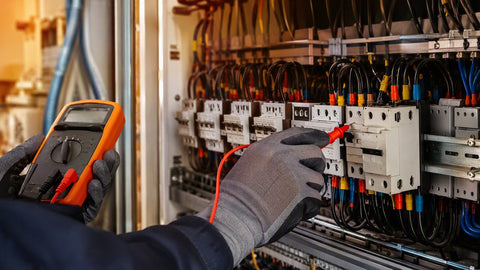
Filtering at the panel — the SaticShield approach — shunts high-frequency noise and smooths the waveform for everything downstream. I've clamped a meter on panels before and after installs at two customer sites, and the pattern held both times: THD came down by roughly a third to a half, and the infrared camera stopped lighting up the neutral bus. The loads didn't change; the waveform they fed from did.
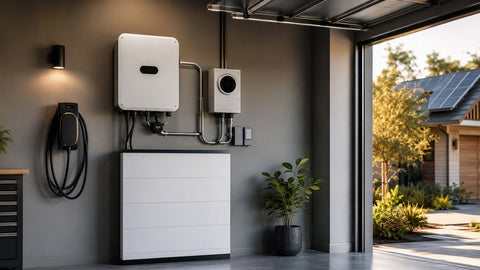
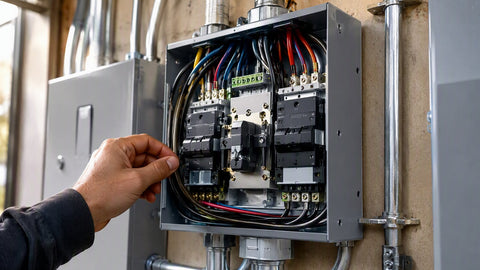
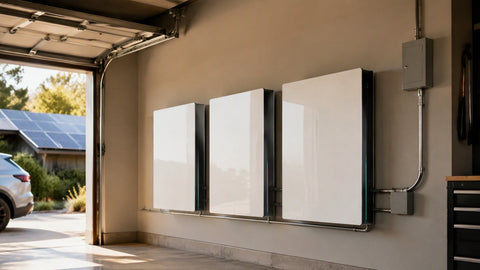
SaticShield's Power Perfect Box family combines three functions in one panel-mounted device: EMI/RFI filtering to strip high-frequency noise off the waveform, power factor correction to bring current back in phase with voltage, and surge protection to clamp transients. The residential units wire into a 240V breaker slot at the main panel; commercial units scale to three-phase services. It's a parallel device — it sits across the line, not in series with your loads — so installation doesn't mean rewiring anything.
| Deployment | Service Type | Install Time (typical) | Primary Targets |
|---|---|---|---|
| Residential Power Perfect Box | 120/240V single-phase | 1–2 hours, licensed electrician | EMI filtering, modest PF correction, whole-home surge clamping |
| Light commercial | 208Y/120V or 240V three-phase | Half day | PF penalty relief, harmonics from office/LED loads, surge |
| Industrial / agricultural | 480V three-phase | One day plus coordination | Motor PF correction, VFD harmonics, transient protection for controls |
Set Expectations Honestly
Power quality devices are not magic kWh erasers. The biggest, most bankable savings come from power factor penalty elimination and reduced losses in motor-heavy facilities. Residential bills dominated by resistive loads (water heaters, ovens, baseboard heat) will see smaller percentage savings. Where every installation earns its keep regardless: surge protection and reduced stress on electronics. If a vendor promises a flat 25% off any bill, walk away.
Here's a defensible savings model for a light-commercial site — a 30,000 sq ft mixed building with $4,200/month electric bills, several rooftop HVAC units, and a documented PF penalty:
| Savings Channel | Monthly Value | Basis |
|---|---|---|
| Power factor penalty eliminated | $310 | Documented penalty line on tariff, corrected above threshold |
| Reduced I²R losses in wiring/motors | $84–168 | 2–4% of bill; losses scale with the square of current |
| Extended equipment life (annualized) | $40–80 | Fewer ballast/driver/control replacements, conservative |
| Total monthly | $434–558 | ≈10–13% of bill in this motor-heavy profile |
Against an installed cost in the low four figures for a commercial unit, that's a payback measured in months, not years. Strip out the PF penalty — say the utility doesn't charge one — and the honest payback stretches to two to four years on losses and equipment life alone. That's still a good investment; it's just a different one than the brochure says. We run this math with customers before we sell the box, because a customer who understands the numbers is a customer who calls us back for the next project.
The transient side of power quality deserves its own mention because the stakes are asymmetric: one utility switching event or nearby lightning strike can take out a $4,000 VFD or a house full of electronics. The layered approach is the code-informed one — a panel-mounted SPD at the service (Type 1/Type 2), with point-of-use protection for sensitive gear. Our SPD sizing and installation guide covers selection in depth, and we stock dedicated surge protection devices alongside the SaticShield line. If you're running solar, that protection layer matters twice — once for the house, once for the inverter.
What We See in the Field

We had a machine shop customer whose CNC mills were faulting out two or three times a month — always mid-afternoon, always on hot days. The utility swore the feeder was fine. A week of logging showed sags every time the neighbor's chiller plant staged its compressors. Panel filtering plus a stiffened ground grid ended the faults. The power was "on" the whole time; it just wasn't clean.
I've also watched a property manager chase a "defective elevator" for eight months — three board replacements under warranty — before anyone clamped a harmonic analyzer on the feeder. THD was over 30% from a floor of LED retrofits with bargain drivers. Fixing the waveform fixed the elevator.
And one from the residential side: a homeowner called us convinced his smart meter was overbilling him because his usage "felt" lower after a Power Perfect Box install. The meter was fine. What changed was his pump house — two well pumps that had been running at a miserable power factor. His bill dropped about 9%. Feelings aren't measurements, but in his case the feeling had a kWh trail.
A five-minute self-audit:
- Read your bill. Any line mentioning power factor, reactive demand, or kVA demand? You have a direct-dollar case for correction.
- Count your motor loads. HVAC, pumps, compressors, fans, elevators, machine tools. More than a few? PF correction will show up in losses even without a penalty.
- List your electronics. Servers, CNC, medical, AV, solar inverters — the more sensitive the load, the more filtering and surge protection pay.
- Check your panel health. Warm neutrals, buzzing breakers, flicker when big loads start — all point at harmonics. Our panel and bus bar guide helps you read what you're looking at.
- Measure first if you can. A week with a rental power quality analyzer turns this from a guess into a quote with a payback number.
For bigger electrical work around the same project — service sizing, conductor ampacity, breaker coordination — our NEC wire sizing guide and the kWh-to-amps conversion walkthrough are the companion reads. And if you're tracking consumption to build the business case, start with how to calculate power consumption. We stock the supporting gear — breakers, transformers, and general electrical supplies — so the whole job ships on one PO.
When a utility or an engineer puts a number on "too much distortion," they cite IEEE 519 — the standard governing harmonic control at the point of common coupling (PCC) between your facility and the grid. The current-injection limits scale with your service's short-circuit strength relative to your load:
| Isc/IL Ratio | h < 11 | 11 ≤ h < 17 | 17 ≤ h < 23 | 23 ≤ h < 35 | Total Demand Distortion |
|---|---|---|---|---|---|
| < 20 | 4.0% | 2.0% | 1.5% | 0.6% | 5.0% |
| 20–50 | 7.0% | 3.5% | 2.5% | 1.0% | 8.0% |
| 50–100 | 10.0% | 4.5% | 4.0% | 1.5% | 12.0% |
| 100–1,000 | 12.0% | 5.5% | 5.0% | 2.0% | 15.0% |
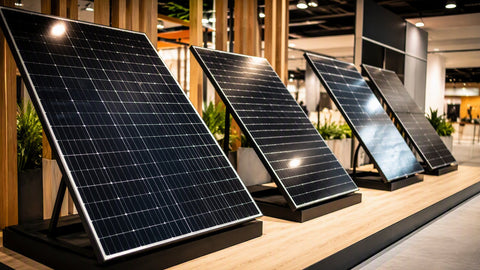
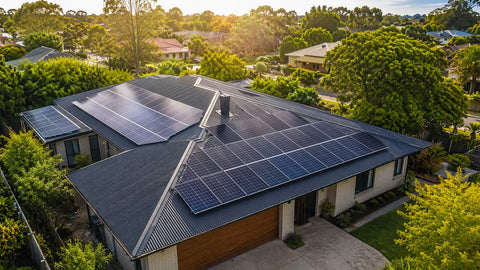
Compare those limits against the 30–80% current THD that unfiltered VFDs and cheap LED drivers inject, and the compliance gap explains itself. Panel-level filtering is how a facility closes that gap without replacing the loads — which is exactly the retrofit niche SaticShield occupies. If you're adding solar to the building, this matters twice: your inverter is both a victim of a dirty grid and a regulated source at the PCC, and our inverter fundamentals guide explains the grid-interactive side.
Strip away the engineering and residential power quality comes down to five things homeowners report after a whole-home install: lights stop flickering when the AC kicks on, the AV rack and networking gear stop glitching, the refrigerator and HVAC run quieter and cooler, smart-home devices drop offline less, and the tingly "dirty electricity" complaints from sensitive family members fade. Not every home sees every effect — a 1962 ranch with resistive everything has less to fix than a 2024 smart home full of switch-mode supplies — but the pattern is consistent enough that residential units have become a steady add-on line for our electrical contractors.
The honest pitch to a homeowner is protection first, savings second: whole-home surge clamping and cleaner power for a house full of electronics that cost more than the device does. The kilowatt-hour savings are real but modest in resistive-load homes — we tell customers 3–8% and let the pleasant surprises happen on their own.
The order of operations that works, learned from facilities that did it wrong first:
- Week 1–2: Measure. Log power quality at the service for at least one full production cycle — PF, THD, sag events, neutral current.
- Week 3: Fix the free stuff. Correct the bill-reading errors, rebalance legs, repair the failed capacitor banks you already own.
- Week 4: Size the device. Match correction capacity to measured kVAR deficit and harmonic profile, not to square footage.
- Install day: Coordinate downtime. Panel work means a shutdown window; schedule it with operations, not around them.
- Month 2–3: Verify. Re-log the same points. If PF didn't move and THD didn't drop, something upstream is misconfigured — a good vendor troubleshoots it with you.
Facility managers rarely see "power quality" as a budget line because the costs scatter across four different ledgers. Put them in one table and the case for a panel-level device stops being abstract:
| Cost Channel | Typical Annual Cost (mid-size facility) | Mechanism |
|---|---|---|
| Unplanned downtime / nuisance trips | $5,000–$50,000+ | PLC resets, contactor dropouts, drive faults on sags and transients |
| Premature equipment replacement | $2,000–$15,000 | Harmonic heating shortens motor, transformer, and driver life |
| Power factor penalties | $3,000–$12,000 | Tariff penalties or kVA demand billing below the PF threshold |
| Energy losses (I²R) | 2–4% of the electric bill | Reactive and harmonic currents heating conductors without doing work |
Add even the conservative ends of those ranges and a mid-size facility is spending $10,000–$30,000 a year on power it never uses and failures it never connects to the waveform. Against a four-figure device and an afternoon of electrician time, the ROI question answers itself — which is why our commercial SaticShield customers are overwhelmingly repeat buyers across their building portfolios.
Panel-level power quality devices are nearly maintenance-free — no moving parts, no consumables — but "nearly" is doing some work in that sentence. Our recommended cadence: a visual indicator check monthly (most units have status LEDs), an annual torque check on the panel connections during your regular electrical PM, and a power quality re-log every two to three years or after any major load change. Facilities that add a big VFD bank or an EV charger row after install should re-verify the harmonic picture, because the correction was sized for the loads that existed at commissioning. A fifteen-minute clamp-meter check beats a warranty argument every time.
A closing thought from the contractors who install these weekly: power quality work has the highest "why didn't we do this sooner" rate of anything they sell. Nobody brags about a clean waveform at a dinner party, but the facility that stopped replacing ballast drivers quarterly and the machine shop whose CNCs stopped faulting both know exactly what changed. Clean power is invisible when you have it and expensive when you don't — and for most buildings, fixing it is a one-afternoon decision. If you're weighing a unit for your own building, the first step costs nothing: pull twelve months of bills, note any power factor or demand language, and count your motor loads. Bring that to the conversation and any honest vendor can tell you in ten minutes whether the math works for your site.
What is SaticShield and how does it work?
SaticShield's Power Perfect Box is a panel-mounted power quality device combining EMI/RFI filtering, power factor correction, and surge protection. It wires in parallel at your main panel and cleans the waveform for every circuit downstream — no loads need rewiring.
How much can a power quality device save on my electric bill?
It depends on your load mix. Motor-heavy commercial sites with power factor penalties commonly see 10–13% total bill reduction. Homes dominated by resistive loads see smaller kWh savings but still gain surge protection and longer equipment life. Beware any flat-percentage promise made without looking at your bill.
Does power factor correction reduce kWh consumption?
Mostly it reduces kVA demand and losses, not the work itself — that's why utilities charge PF penalties. The kWh savings come from lower I²R losses in wiring and cooler-running motors, typically 2–4% in motor-heavy facilities. The demand-charge and penalty relief is usually the bigger number.
Will it protect against lightning?
Panel-level surge protection clamps transients from utility switching and nearby strikes to levels equipment can survive. No device guarantees protection against a direct strike — that's what bonding, grounding, and layered SPDs are for. Think of it as insurance with a deductible of zero.
Can I install a Power Perfect Box myself?
No — it installs inside your main service panel, which is lethal-voltage territory even with the main breaker off. Any licensed electrician can do the job in one to two hours. Budget the electrician into your payback math.
Do I still need point-of-use surge protectors?
Yes, for your most sensitive gear. The layered approach — panel SPD plus point-of-use — is what surge protection standards recommend, because a panel device clamps the big hit and local devices handle what slips through or originates inside the building.
Ready to Clean Up Your Power?
PES Supply stocks the SaticShield line plus breakers, transformers, and surge protection for the whole job — one PO, one invoice, freight coordinated.
Browse SaticShield ProductsWant the savings math run on your actual bill? Call (502) 790-0600 — bring twelve months of bills and we'll tell you honestly whether it pencils.