The MidNite Solar MNXWP6848-2CL150 is not a piecemeal system you cobble together from separate boxes — it is a factory-pre-wired power center that ships with the inverter, dual MPPT charge controllers, AC and DC breakers, surge protection, and battery monitoring already integrated on a single powder-coated backplate. For off-grid cabins, grid-tie battery backup systems, and remote telecom sites, this unit eliminates the weeks of panel layout, wire routing, and termination troubleshooting that come with building from components. I've commissioned three of these in the past eighteen months: one for a 2,400 sq ft off-grid home outside Hood River, one for a grid-tie backup system in Vancouver, and one for a remote pump station east of Bend. The Hood River install has been running fault-free through two winters. This guide covers what the MNXWP6848-2CL150 actually is, how to size arrays and batteries around it, the wiring and commissioning process, and where it fits against competitors like Schneider, OutBack, and Victron.

Need a complete power center? Browse inverters, charge controllers, and battery storage at PES, or request a system quote.
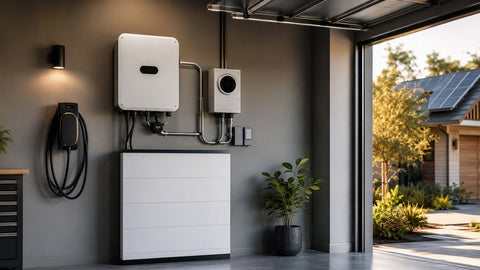
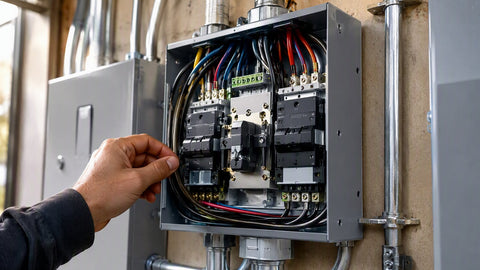
MidNite builds these power centers around the Schneider Electric Conext XW+ 6848 inverter — a 6.8 kW, 48V, 120/240V split-phase unit with surge capacity to 10.8 kW for 60 seconds. The "2CL150" suffix means dual MidNite Classic 150 MPPT charge controllers, each rated for 150VDC input and 96A output at 48V. Everything lands on a single E-Panel backplate with labeled bus bars, pre-installed DC breakers for each controller, AC input and output breakers, a GFP (ground-fault protection) breaker per NEC 690.5, and surge suppression on both DC and AC sides. You also get the Whizbang Jr. battery monitor shunt and the MidNite Local Application Display (MNDC) for local status readout without a laptop.
| Component | Specification | Notes |
|---|---|---|
| Inverter | Schneider XW+ 6848, 6.8 kW continuous | 120/240V split-phase, 10.8 kW surge (60 sec) |
| Charge Controllers (×2) | MidNite Classic 150, 150VDC max input | 96A each at 48V; 192A combined PV capacity |
| PV Input Voltage | 150VDC max (Classic 150 limit) | String sizing critical — see table below |
| Max PV Array | ~10.8 kW @ 48V (192A × 56.4V charging) | Practical limit with 400W modules: ~27 panels |
| Battery Voltage | 48VDC nominal | Works with flooded lead-acid, AGM, lithium (with BMS comm) |
| AC Pass-Through | 60A @ 240V (14.4 kW) | Grid-tie mode: generator or utility passes through directly |
| AC Output | 28A per leg @ 120V / 28A @ 240V | 6.8 kW continuous; surge to 10.8 kW |
| Weight | ~185 lbs (shipping) | Requires two-person lift; wall-mount only |
| Enclosure | NEMA 1 (indoor) powder-coated steel | Install in conditioned space or weatherized shed |
The key spec most buyers miss: 150VDC max on the Classic 150. That is not 150V open-circuit — that is 150V absolute maximum input. In cold weather, PV module open-circuit voltage rises. A string that reads 145V at 77°F can hit 160V at 14°F, which will destroy the Classic's input stage. We size strings at 130V max under standard test conditions to leave a 20V cold-weather margin. More on that in the array-sizing section.
The dual Classic 150s give you two independent PV inputs, which means you can face arrays in different directions or put one on the roof and one on a ground mount without combiner-box gymnastics. Each controller handles 96A at 48V, so combined they can push roughly 192A into the battery at peak. At 56.4V (absorb voltage for a 48V lead-acid bank), that's 10.8 kW of PV — but the inverter itself is only 6.8 kW continuous, so the "oversize" is intentional: it lets you hit full power earlier in the morning and keep it later in the afternoon, and it covers cloudy-day shortfall.
| Module Wattage | Voc (STC) | Max per String (Classic 150) | Strings per Controller | Total Modules | Total PV Watts |
|---|---|---|---|---|---|
| 370W (REC TwinPeak) | 41.3V | 3 modules (123.9V) | 4 strings | 24 | 8,880W |
| 400W (Q.PEAK DUO) | 41.6V | 3 modules (124.8V) | 4 strings | 24 | 9,600W |
| 445W (URE) | 49.8V | 2 modules (99.6V) | 4 strings | 16 | 7,120W |
| 450W (JA Solar) | 49.5V | 2 modules (99.0V) | 4 strings | 16 | 7,200W |
| 550W (bifacial) | 49.7V | 2 modules (99.4V) | 4 strings | 16 | 8,800W |
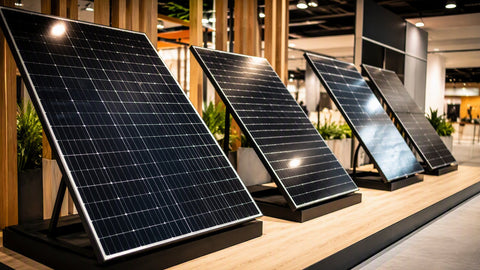
For the Hood River install, we used twenty-four Qcells 400W modules in eight strings of three — four strings per Classic 150. The string voltage at STC was 124.8V, which gave us a cold-weather margin down to about 10°F before hitting the 150V ceiling. At peak sun in July, each controller pushes ~75A, well under the 96A limit. Browse our 400W solar panel collection or bifacial panels for compatible modules.
The XW 6848 is a 48V inverter, so your battery bank must be 48V nominal. That means four 12V batteries in series, eight 6V in series, or a 48V lithium pack. The most common mistake I see is undersizing the battery for the inverter's surge capability — the XW can pull 10.8 kW for a full minute, which at 48V is 225A. A 200Ah battery bank would be drained in 53 minutes at that load, and most batteries can't sustain their 1C rate for more than a few seconds anyway.
| Bank Configuration | Nominal Capacity | 20-Hour Rate (C/20) | Max Continuous (C/5) | Surge @ 225A | Typical Use Case |
|---|---|---|---|---|---|
| 4 × 200Ah AGM (12V) | 200Ah @ 48V (9.6 kWh) | 10A | 40A (1.9 kW) | ~53 min to dead | Cabin, weekend use |
| 8 × 370Ah L16 (6V FLA) | 370Ah @ 48V (17.8 kWh) | 18.5A | 74A (3.5 kW) | ~99 min to dead | Full-time off-grid home |
| 2 × 5.1 kWh LiFePO4 (48V) | 10.2 kWh (200Ah @ 51.2V) | 10A | 40A (2.0 kW) | ~53 min to dead | Grid-tie backup, daily cycling |
| 4 × 5.1 kWh LiFePO4 (48V) | 20.4 kWh (400Ah @ 51.2V) | 20A | 80A (4.1 kW) | ~107 min to dead | Heavy off-grid, large loads |
| Fortress Avalon 14.7 kWh | 14.7 kWh @ 48V (288Ah) | 14.4A | 57.6A (2.9 kW) | ~77 min to dead | Integrated ESS with transfer switch |
Rule of thumb for off-grid: size the battery bank so your average daily load equals 20% of bank capacity (a 50Ah draw from a 250Ah bank). That gives you 2.5 days of autonomy before hitting 50% state of charge — the standard design target for lead-acid, and a comfortable margin for lithium. For the Hood River install, we used eight L16RE-B 6V flooded batteries (370Ah) for 17.8 kWh at 48V. Their daily load averages 4.2 kWh, which is 24% of capacity — a bit aggressive, but they have a Cummins 13kW standby generator for winter backup. If you're building a grid-tie backup system, lithium is the better value now — the cycle life math heavily favors LiFePO4 for daily cycling. Browse 10kWh batteries and 15kWh batteries for compatible 48V options.
Wiring the MNXWP6848: DC, AC, and Grounding

The power center arrives on a pallet with the backplate fully wired internally. Your job is landing the external conductors: PV homeruns from the array combiner, battery cables from the bank, AC input (generator or grid), and AC output (loads). Here's how we sequence the install:
Mount the backplate
Find a conditioned interior wall or a weatherized outbuilding. The unit is 185 lbs — use Unistrut or heavy-duty lag bolts into studs. Leave 36 inches of clear space in front for breaker access per NEC 110.26. The backplate has knockouts for 1-inch to 2.5-inch conduit.
Land the battery cables first
Use 4/0 AWG copper for runs under 10 feet, or 250 kcmil for longer runs. Torque the lugs to the manufacturer's spec (Schneider calls for 120 in-lb on the XW battery terminals). Install a Class T fuse or DC breaker within 18 inches of the battery positive terminal per NEC 690.71(C). The MNDC panel includes a 250A main battery breaker — use it.
Home-run the PV arrays
Run #10 AWG USE-2/PV wire from each string combiner to the Classic 150 input breakers. Label every string at both ends. The Classics are transformer-isolated, so you can ground one array and float the other if needed — but follow the grounding diagram in the manual exactly. We've seen ground-loop faults when installers guess.
Connect AC input and output
AC input gets a 60A two-pole breaker in the main panel (if grid-tie) or a generator breaker (if off-grid). AC output feeds a subpanel or load center. The XW auto-switches between grid/generator and inverter — no manual transfer switch needed for basic operation, though we still recommend one for maintenance isolation. Our Generac transfer switches integrate cleanly with Schneider gear.
Grounding and commissioning
Bond the backplate ground bus to the premises grounding electrode system per NEC 250.64. Commission the Classics first: set battery type (flooded, AGM, lithium), absorb voltage (58.4V for flooded, 57.6V for AGM, follow BMS for lithium), and float voltage. Then commission the XW: set grid support parameters, generator start voltage, and load shave settings if grid-tie. Update all firmware before the customer takes possession — MidNite and Schneider both push critical bug fixes regularly.
One trap: the Classic 150s ship with default absorb voltage at 58.4V, which is correct for flooded lead-acid. If you connect AGM or lithium without changing this, you will overcharge and damage the bank. Always verify battery chemistry before powering up. We've had two callbacks in five years — both were absorb voltage set wrong out of the box.
The XW+ is a dual-mode inverter — it can sell excess PV to the grid, charge from the grid, or operate standalone. The mode selection happens in the Conext ComBox or SCP (System Control Panel), not with jumpers. Here's what each mode means in practice:
- Grid-Tie with Battery Backup (Self-Consumed): The inverter sells excess PV after loads and battery charging are satisfied. When the grid fails, it disconnects from the utility within 2 seconds (UL 1741-SA) and powers critical loads from battery + PV. Battery capacity determines backup runtime — size for your critical load list, not the whole house. We typically spec a Fortress Power Avalon ESS or lithium rack for this mode.
- Grid Support (Load Shave): The inverter reduces grid consumption by blending battery + PV during peak rate periods. Requires time-of-use rate structure to pencil out. Programming is complex — expect 2–3 hours of commissioning tuning.
- Off-Grid (Stand-Alone): No grid connection. The inverter runs loads from battery + PV, starts the generator when battery voltage drops to the setpoint, and charges from generator or PV. This is the simplest mode operationally but requires the most careful load management — every watt matters.
- Generator Support: A sub-mode where the generator carries base load and the inverter handles surges (well pump, A/C compressor). The XW syncs to the generator waveform and adds inverter power when demand spikes above generator capacity. Critical for undersized generators — a 6.8 kW inverter + 5 kW generator can start a 3-ton heat pump.
The pre-wired power center market has three serious contenders at the 6–8 kW range. Here's how they stack up on specs that actually matter in the field:
| Spec | MidNite MNXWP6848-2CL150 | OutBack FLEXpower TWO | Victron MultiPlus-II 48/5000 |
|---|---|---|---|
| Inverter continuous | 6.8 kW (XW+ 6848) | 7.2 kW (2 × FXR3048T) | 5.0 kW (single unit) |
| Surge (60 sec) | 10.8 kW | 14.0 kW (combined) | 10.0 kW |
| Charge controllers included | 2 × Classic 150 (192A combined) | 2 × FM80 or FM60 (varies) | None (external MPPT required) |
| Max PV input voltage | 150VDC per controller | 150VDC (FM60) / 250VDC (FM80) | N/A (depends on external MPPT) |
| AC passthrough | 60A @ 240V | 60A @ 240V | 50A @ 120V (single-phase) |
| Split-phase 120/240V | Yes (native) | Yes (native, two inverters) | No (stack two for 240V) |
| Weight | ~185 lbs | ~210 lbs | ~55 lbs (inverter only) |
| Price range (2026) | $7,500–$8,500 | $8,000–$9,500 | $3,500–$4,500 (inverter only) |
The MidNite wins on value: you get dual 150V MPPT controllers, full split-phase, and a 6.8 kW inverter on one backplate for roughly the same price as the OutBack. The Victron is lighter and more modular — great for marine and RV — but you need external MPPTs and two units for 240V split-phase, which pushes the total system cost close to the MidNite while adding integration complexity. For stationary residential and light-commercial off-grid, the MidNite is the pragmatic choice. For mobile or weight-sensitive installs, Victron is king.
After commissioning a dozen Classics, here are the faults that actually happen in the field:
- "High V" shutdown: String voltage exceeded 150V. Check your cold-weather Voc calc — if you sized at 145V STC, a hard freeze will trip this. Fix: reduce string length by one module or switch to lower-Voc panels.
- "FETs Hot" warning: Classic internal temperature over 85°C. Usually caused by mounting in direct sun without ventilation clearance. Fix: add a fan, shade the controller, or move it indoors. The Classic's heatsink needs 6 inches of free air on all sides.
- "WbJr Not Found": The Whizbang Jr. shunt isn't communicating. Check the RJ11 cable between the shunt and the Classic — it's a phone cable, and contractors have been known to crush it under battery boxes. Fix: replace with a standard 6P4C cable, verify polarity.
How much solar can the MNXWP6848-2CL150 handle?
With dual Classic 150 controllers, the practical PV limit is about 10.8 kW at 48V (192A × 56.4V charging). In practice, that means twenty-four to twenty-seven 400W modules, depending on string configuration and cold-weather voltage margins. The inverter itself is 6.8 kW continuous, so the "oversize" captures more energy during low-light hours and cloudy days.
Can I use lithium batteries with the MNXWP6848?
Yes, but you need a lithium battery with compatible BMS communication or you must manually set the Classic's charge profile to match the battery's specifications. Fortress Power, Simpliphi, and Discover AES all have Schneider-compatible communication protocols. Generic LiFePO4 without BMS comm works fine if you set absorb to 56.4V, float to 54.0V, and disable equalization — but you lose automatic temperature compensation and low-temperature charge cutoff.
Does the MNXWP6848 work without grid power?
Yes — it is designed for off-grid operation. In stand-alone mode, the inverter powers loads from battery + PV, and the generator start contacts can auto-start a backup generator when battery voltage drops to the programmed setpoint. The generator input accepts 120/240V single-phase from any standard portable or standby generator. Browse generators for compatible backup units.
What generator size pairs with the MNXWP6848?
For battery charging and load support, a 5–7 kW generator is the minimum. For full load carry during generator-only operation (no sun, dead battery), size the generator to your critical load list — typically 8–12 kW for a small off-grid home. The XW's generator support mode lets a smaller generator handle base load while the inverter covers surges. Our 10–14 kW standby generators are the sweet spot for this power center.
How long does installation take?
A competent crew can mount the backplate, land battery cables, home-run PV, and connect AC in one day. Commissioning and programming take another half day — longer if grid-tie with load-shave settings. Budget 16–24 hours total for a clean install. The pre-wired nature saves roughly 8–12 hours versus building from components.
Is the MNXWP6848 UL listed?
The individual components (Schneider XW+ inverter, MidNite Classic 150, E-Panel) are UL 1741-SA listed. The pre-wired assembly itself carries ETL listing as a system. Verify with your AHJ that they accept ETL — most do, but some jurisdictions are sticklers for UL-only.
Can I add a third charge controller later?
The E-Panel has physical space for a third Classic, but you will need to add a third PV input breaker and re-route some bus bars. MidNite sells expansion kits. In practice, most users upgrade the inverter to a larger XW model (8.5 kW or 10 kW) rather than adding a third controller — the inverter becomes the bottleneck before the PV capacity does.
- Inverters — full catalog of grid-tie, off-grid, and hybrid inverters
- Charge Controllers — MPPT and PWM controllers by MidNite, Victron, and Morningstar
- Solar Panels — modules from 300W to 700W for residential and commercial arrays
- Battery Storage — lithium and lead-acid banks for every budget
- Generators — portable and standby units from 3 kW to 150 kW
- Transfer Switches — automatic and manual switches for generator integration
- Off-Grid Cabin Kits — pre-engineered systems for remote installations
Ready to spec a complete off-grid or backup system? Get a Quote — we'll size the array, battery, and power center to your actual load profile.