Calculating how many solar panels you need to generate 4,000 kWh of electricity per month requires understanding the relationship between system size, panel efficiency, and your local solar conditions. A monthly consumption of 4,000 kWh represents substantial energy demand—roughly three to four times the average American household—making accurate system sizing essential for achieving your energy independence goals.
Field note: Four thousand kWh a month is serious load — we see it on all-electric homes with two EVs and a pool, or small commercial shops with 3-phase compressors. I quoted a 35 kW system for a auto body shop in Indy last quarter that was pulling 4,200 kWh with their paint booth and air handler running full tilt.
Installing too few panels leaves you dependent on grid electricity and paying higher utility bills than necessary. Installing too many increases upfront costs without meaningful benefit. This comprehensive guide walks you through every step of the calculation process, from understanding daily energy requirements to selecting the right panel wattage and accounting for real-world efficiency factors that affect your final panel count.
In This Guide:
- Understanding 4,000 kWh Monthly Consumption
- Calculating Daily Production Requirements
- System Sizing: How Many Kilowatts Do You Need?
- Panel Counts by Wattage: Complete Breakdown
- Efficiency Factors That Affect Your Panel Count
- Roof Space and Installation Requirements
- Regional Variations: Sun Hours by Location
- Inverter Sizing for Large Systems
- Cost Analysis and ROI Considerations
- Frequently Asked Questions
Before calculating panel requirements, understanding what 4,000 kWh per month actually represents helps contextualize your system's scope. The average U.S. household consumes approximately 900-1,000 kWh monthly, meaning 4,000 kWh represents either a very large residence, a home with significant electric loads (such as electric vehicles, pool equipment, or electric heating), or a small commercial facility.
Who Uses 4,000 kWh Per Month?
Understanding typical scenarios helps ensure your solar system design matches your actual needs. Properties consuming 4,000 kWh monthly typically fall into several categories, each with unique energy demand profiles that may influence system design decisions beyond simple panel counts.
Field note: The biggest mistake I see on 4,000 kWh jobs? People forget the 20% soiling hit on flat commercial roofs. A panel that tests at 545W in our warehouse might only deliver 420W average in July if it's sitting under a layer of pollen and exhaust film.
| Property Type | Typical Energy Drivers | Monthly kWh Range |
|---|---|---|
| Large Single-Family Home | 4,000+ sq ft, central A/C, multiple refrigerators, pool pump | 2,500–4,500 kWh |
| Home with Electric Vehicle | EV charging (40–80 kWh/week adds 160–320 kWh/month per vehicle) | 1,500–4,000+ kWh |
| All-Electric Home | Heat pump HVAC, electric water heater, electric cooking, electric dryer | 2,000–5,000 kWh |
| Small Commercial Building | Office equipment, commercial HVAC, lighting, refrigeration | 3,000–8,000 kWh |
| Multi-Family Property | Common area loads, shared HVAC, laundry facilities | 2,500–6,000 kWh |
| Agricultural Operation | Irrigation pumps, refrigeration, equipment operation | 3,000–10,000+ kWh |
💡 Pro Tip: Review 12 Months of Utility Bills
Before sizing your system, gather your utility bills for the past 12 months. Monthly consumption varies seasonally—summer air conditioning and winter heating create peak demand periods. Design your system around your annual average or highest consumption months to ensure adequate production year-round.
Solar panels generate electricity during daylight hours, with output varying based on weather conditions and sun intensity throughout the day. Converting your monthly goal into daily production requirements provides the foundation for calculating system size and panel counts.
Step 1: Monthly to Daily Conversion
Divide your monthly consumption by the number of days to determine daily energy requirements. This baseline figure represents the electricity your solar system must generate each day to offset your utility consumption completely.
Field note: We shipped 88 panels of 445W to a client in Ohio last month for exactly this target. Their roof was marginal at 2,400 sq ft usable, so we went with 445W premium residential instead of 400W standard. Saved them 8 panels and about $400 in racking labor.
Daily Energy Calculation:
Daily kWh = Monthly kWh ÷ Days per Month
Example: 4,000 kWh ÷ 30 days = 133.3 kWh per day
Step 2: Understanding Peak Sun Hours
Solar panels don't produce their rated output continuously throughout the day. The concept of "peak sun hours" (PSH) standardizes solar production calculations by representing the number of hours when sunlight intensity averages 1,000 watts per square meter—the standard test condition for rating solar panel output. Most U.S. locations receive between 4 and 6 peak sun hours daily, depending on latitude, climate, and seasonal variation.
| Region | Average Peak Sun Hours | Example Locations |
|---|---|---|
| Southwest Desert | 6.0–7.0 hours | Phoenix, Las Vegas, Tucson, Albuquerque |
| Southern States | 5.0–6.0 hours | Miami, Houston, Atlanta, Dallas, Los Angeles |
| Mid-Atlantic / Midwest | 4.5–5.0 hours | Louisville, St. Louis, Indianapolis, Philadelphia |
| Northern States | 4.0–4.5 hours | Chicago, Detroit, Boston, Minneapolis, Portland OR |
| Pacific Northwest | 3.5–4.5 hours | Seattle, Portland, Eugene |
With daily production requirements established, you can now calculate the total system capacity needed—expressed in kilowatts (kW) of DC rated power. This figure represents the nameplate capacity of your solar array under standard test conditions, which then determines how many panels of a given wattage you'll need.
The System Sizing Formula
System size calculations must account for both your daily energy needs and local solar conditions. The formula divides daily kWh requirements by peak sun hours, then applies a derating factor to compensate for real-world efficiency losses.
System Size Formula:
System Size (kW) = Daily kWh ÷ Peak Sun Hours ÷ System Efficiency
Example (Louisville, KY area): 133.3 kWh ÷ 4.7 hours ÷ 0.80 = 35.5 kW system
System Size by Location
The following table demonstrates how location significantly impacts system sizing for the same 4,000 kWh monthly production goal. Properties in sunnier climates require smaller systems, while cloudier regions need additional capacity to achieve the same output.
| Location Example | Peak Sun Hours | System Size Needed | Relative Cost |
|---|---|---|---|
| Phoenix, AZ | 6.5 hours | 25.6 kW | Lowest |
| Dallas, TX | 5.5 hours | 30.3 kW | Low |
| Louisville, KY | 4.7 hours | 35.5 kW | Moderate |
| Chicago, IL | 4.2 hours | 39.7 kW | Higher |
| Seattle, WA | 3.8 hours | 43.9 kW | Highest |
Once you've determined your required system size, calculating panel counts becomes straightforward: divide total system wattage by individual panel wattage. Modern solar panels range from approximately 350 watts for budget residential options to 700+ watts for high-efficiency commercial modules, with mainstream residential panels typically falling in the 400–450 watt range.
Panel Count Formula
Panel Count Calculation:
Number of Panels = System Size (watts) ÷ Panel Wattage
Example: 35,500 watts ÷ 450 watts per panel = 79 panels
Panel Counts for 4,000 kWh Monthly Production
The following comprehensive table shows panel counts across different wattages and sun hour scenarios, helping you understand the range of configurations that can achieve your 4,000 kWh monthly goal.
| Panel Wattage | 4 Sun Hours(~42 kW system) | 5 Sun Hours(~33 kW system) | 6 Sun Hours(~28 kW system) |
|---|---|---|---|
| 350W (Budget) | 120 panels | 95 panels | 80 panels |
| 400W (Standard Residential) | 105 panels | 83 panels | 70 panels |
| 445W (Premium Residential) | 94 panels | 75 panels | 63 panels |
| 500W (High-Efficiency) | 84 panels | 67 panels | 56 panels |
| 545W (Commercial Grade) | 77 panels | 61 panels | 51 panels |
| 600W (Premium Commercial) | 70 panels | 55 panels | 47 panels |
| 700W (Utility-Scale) | 60 panels | 47 panels | 40 panels |
💡 Quick Reference: Most Common Configurations
For Louisville, Kentucky and similar Mid-Atlantic/Midwest locations with approximately 4.5–5 peak sun hours, producing 4,000 kWh monthly typically requires: 55–65 panels at 545W, 75–85 panels at 445W, or 85–95 panels at 400W. Higher-wattage panels reduce roof space requirements and installation labor.
Solar panels rarely operate at their rated nameplate capacity under real-world conditions. Understanding the factors that reduce actual output helps ensure your system is sized appropriately to meet your 4,000 kWh monthly target despite inevitable efficiency losses.
System Derating Factor Explained
The derating factor (also called system efficiency or performance ratio) accounts for all losses between panel DC output and actual AC energy delivered to your loads or the grid. A typical residential system operates at 75–85% of nameplate capacity, meaning a 30 kW nameplate system actually delivers 22.5–25.5 kW under optimal conditions.
| Loss Factor | Typical Loss | Description |
|---|---|---|
| Inverter Efficiency | 3–5% | DC to AC conversion losses in the inverter |
| Temperature Derating | 5–15% | Panel output decreases as temperature rises above 25°C/77°F |
| Wiring Losses | 1–3% | Resistance losses in DC and AC conductors |
| Soiling & Dust | 2–5% | Accumulation of dirt, pollen, bird droppings on panel surface |
| Shading | 0–25% | Trees, chimneys, neighboring structures blocking sunlight |
| Panel Mismatch | 1–3% | Slight manufacturing variations between panels |
| Age Degradation | 0.5–0.7%/year | Gradual output decline over panel lifetime |
Recommended Derating Factors by Installation Quality
| Installation Scenario | Derating Factor | When to Use |
|---|---|---|
| Optimal Installation | 0.85 (85%) | Unshaded, south-facing, optimal tilt, high-efficiency inverter, cool climate |
| Typical Residential | 0.80 (80%) | Minimal shading, good orientation, moderate climate |
| Compromised Site | 0.75 (75%) | Partial shading, east/west orientation, hot climate, longer wire runs |
| Challenging Site | 0.70 (70%) | Significant shading, suboptimal orientation, very hot climate |
⚠️ Important: Shading Has Outsized Impact
Even small amounts of shading can disproportionately reduce system output due to how solar panels are wired in series. A shadow covering just 10% of one panel can reduce that string's output by 30–50%. Always conduct a thorough shading analysis before finalizing system design, and consider microinverters or power optimizers for shaded installations.
A system producing 4,000 kWh monthly requires substantial roof space—more than many residential properties can accommodate. Understanding space requirements helps determine whether rooftop installation is feasible or if ground-mounted or carport alternatives should be considered.
Space Requirements by Panel Wattage
Higher-wattage panels generate more power per square foot, reducing total space requirements. The following table shows approximate roof space needed for 4,000 kWh monthly production in a typical 5 peak sun hour location.
| Panel Type | Wattage | Panel Dimensions | Panels Needed | Roof Space Required |
|---|---|---|---|---|
| 60-Cell Residential | 350W | 65" × 39" (~17.6 ft²) | ~95 panels | ~2,100 ft² |
| 66-Cell Standard | 400W | 69" × 41" (~19.6 ft²) | ~83 panels | ~2,050 ft² |
| 72-Cell Premium | 450W | 77" × 41" (~21.9 ft²) | ~74 panels | ~2,020 ft² |
| 78-Cell Commercial | 545W | 89" × 45" (~27.8 ft²) | ~61 panels | ~2,130 ft² |
| Large Format | 600W | 92" × 46" (~29.4 ft²) | ~55 panels | ~2,020 ft² |
Usable Roof Space Considerations
Total roof area rarely equals usable solar installation area. Building codes require setbacks from roof edges, fire access pathways, and clearances around roof penetrations. Additionally, HVAC equipment, vents, skylights, and chimneys further reduce available space.
Typical Roof Space Deductions:
- Fire setbacks: 3-foot clearance at ridge, 18-inch clearance at eaves and edges (varies by jurisdiction)
- Equipment clearances: 3-foot minimum around HVAC units, vents, and other penetrations
- Access pathways: 3-foot wide pathways for firefighter access (required in many jurisdictions)
- Structural limitations: Areas with inadequate roof structure for panel weight
- Shading zones: Areas receiving significant shade from trees, dormers, or neighboring structures
💡 Rule of Thumb: 60-70% Usable Space
On most residential roofs, expect only 60-70% of total roof area to be usable for solar panels after accounting for setbacks, obstructions, and shading. A 3,000 square foot roof might yield only 1,800-2,100 square feet of usable installation area. For 4,000 kWh monthly production, you'll likely need a minimum total roof area of 3,000-3,500 square feet.
Alternative Installation Options
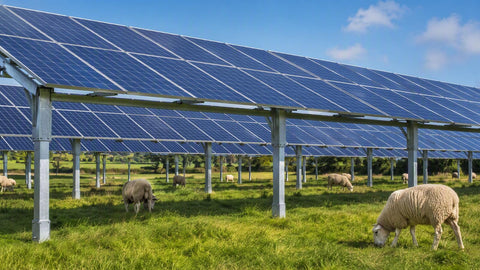
When roof space is insufficient, ground-mounted systems, carport structures, or multi-roof installations provide alternatives for achieving your 4,000 kWh monthly goal.
| Installation Type | Advantages | Considerations |
|---|---|---|
| Ground Mount | Optimal orientation, easy access for maintenance, no roof constraints | Requires land area, higher foundation costs, potential permitting challenges |
| Carport Structure | Dual purpose (vehicle shade + power), optimal tilt, near electrical service | Higher structural costs, engineering requirements, space limitations |
| Multi-Roof Split | Uses all available roof space, distributed across structures | Multiple electrical runs, more inverters, complex design |
| Tracking System | 20-40% more production per panel, reduces total panel count | Higher cost, mechanical maintenance, requires ground installation |
Solar resource availability varies significantly across the United States, directly impacting system sizing requirements. The same 4,000 kWh monthly goal requires substantially different system sizes depending on your location.
System Size Requirements by State
| State | Avg Sun Hours | System Size | Panels (450W) | Panels (545W) |
|---|---|---|---|---|
| Arizona | 6.5 hrs | 25.6 kW | 57 panels | 47 panels |
| California | 5.8 hrs | 28.7 kW | 64 panels | 53 panels |
| Texas | 5.5 hrs | 30.3 kW | 68 panels | 56 panels |
| Florida | 5.3 hrs | 31.4 kW | 70 panels | 58 panels |
| Kentucky | 4.7 hrs | 35.5 kW | 79 panels | 66 panels |
| New York | 4.4 hrs | 37.9 kW | 84 panels | 70 panels |
| Ohio | 4.2 hrs | 39.7 kW | 88 panels | 73 panels |
| Washington | 3.8 hrs | 43.9 kW | 98 panels | 81 panels |
Systems producing 4,000 kWh monthly require substantial inverter capacity to convert DC power from your panels to AC electricity for your home or grid export. Proper inverter sizing ensures efficient operation without bottlenecking your array's output potential.
Inverter Sizing Guidelines
Most solar installations use a DC-to-AC ratio between 1.1 and 1.3, meaning the inverter capacity is slightly smaller than the panel array's nameplate DC capacity. This ratio optimizes cost-effectiveness while maintaining excellent energy harvest.
Inverter Sizing for 30-40 kW Arrays:
- String Inverters: 25-36 kW capacity (single large unit or multiple smaller units)
- Microinverters: One unit per panel (matching panel wattage)
- Power Optimizers + Central Inverter: Optimizers at each panel + 25-36 kW central inverter
Inverter Options for Large Residential/Commercial Systems
| Inverter Type | Best For | Typical Configuration |
|---|---|---|
| Large String Inverter | Commercial, ground mount, unshaded roofs | Single 30-50 kW unit, 3-phase output |
| Multiple String Inverters | Residential with multiple roof planes | 3-4 units × 8-12 kW each |
| Microinverter Array | Complex roofs, partial shading, premium systems | 60-100+ microinverters (one per panel) |
| Optimizer + Central | Mixed conditions, moderate shading | Optimizer per panel + 1-2 central inverters |
A solar system producing 4,000 kWh monthly represents a significant investment. Understanding cost factors and return on investment helps ensure your solar project delivers meaningful financial benefits over its 25-30 year lifespan.
Estimated System Costs
Solar installation costs vary by location, installer, equipment quality, and site complexity. The following estimates provide general guidance for budgeting purposes.
| System Size | Cost Range (Before Incentives) | After 30% Federal Tax Credit |
|---|---|---|
| 25 kW (Sunny locations) | $50,000–$75,000 | $35,000–$52,500 |
| 30 kW (Moderate sun) | $60,000–$90,000 | $42,000–$63,000 |
| 35 kW (Kentucky typical) | $70,000–$105,000 | $49,000–$73,500 |
| 40 kW (Lower sun regions) | $80,000–$120,000 | $56,000–$84,000 |
Monthly Savings and Payback Period
With 4,000 kWh monthly production, your savings depend on local electricity rates and net metering policies. Higher utility rates accelerate payback, while favorable net metering ensures full credit for excess production.
| Electric Rate | Monthly Savings | Annual Savings | Est. Payback (after credit) |
|---|---|---|---|
| $0.10/kWh | $400 | $4,800 | 10–15 years |
| $0.12/kWh | $480 | $5,760 | 8–12 years |
| $0.15/kWh | $600 | $7,200 | 7–10 years |
| $0.20/kWh | $800 | $9,600 | 5–8 years |
| $0.30/kWh | $1,200 | $14,400 | 3–5 years |
📊 25-Year Value Projection
At $0.15/kWh with 3% annual rate increases, a system producing 4,000 kWh monthly generates approximately $250,000+ in lifetime electricity value—far exceeding the initial investment. Even accounting for panel degradation and maintenance, solar provides substantial long-term returns.
Related Products


Ready to Size Your Solar System?
Our team at PES Supply helps homeowners and businesses design solar systems that meet their specific energy goals. Contact us for equipment recommendations and project planning assistance.
Request a Quote Browse Solar PanelsHow many solar panels do I need for 4,000 kWh per month?
The number of panels depends on your location's sun hours and panel wattage. For typical U.S. locations (4-5 peak sun hours), expect to need 55–65 panels with 545W commercial-grade modules, 75–85 panels with 445W premium residential modules, or 85–100 panels with 400W standard modules. Sunnier locations require fewer panels, while cloudier regions need more.
What size solar system produces 4,000 kWh monthly?
A properly designed 30–40 kW solar system can generate approximately 4,000 kWh per month, depending on your location. Southwest desert locations may achieve this with 25-28 kW systems, while northern states might require 40-45 kW. The system size accounts for real-world efficiency factors including inverter losses, temperature derating, and soiling.
How much roof space is needed for 4,000 kWh monthly production?
Plan for approximately 2,000–2,800 square feet of usable roof space, depending on panel efficiency. Total roof area should be 3,000–3,500+ square feet to account for setbacks, obstructions, and fire code requirements. If roof space is insufficient, ground-mounted or carport systems provide alternatives.
Can solar panels fully cover 4,000 kWh monthly usage?
Yes, with proper system sizing, adequate installation space, and favorable net metering policies, solar can fully offset 4,000 kWh monthly consumption. However, production varies seasonally—summer months typically exceed targets while winter production falls short. Net metering allows credits from surplus months to offset deficit months for full annual coverage.
How much does a 30-40 kW solar system cost?
Before incentives, systems in this size range typically cost $60,000–$120,000 depending on equipment quality, installation complexity, and local labor rates. After the 30% federal Investment Tax Credit (ITC), net costs range from $42,000–$84,000. State and local incentives may further reduce costs. Commercial properties may qualify for accelerated depreciation benefits.
What is the payback period for a system this size?
Payback periods typically range from 5–15 years depending on electricity rates and incentives. Properties paying $0.15/kWh or more generally see payback within 7–10 years. With 25-30 year system lifespans, this means 15–20+ years of essentially free electricity after recovering your investment.
Should I use string inverters or microinverters for a large system?
For large residential or commercial systems, string inverters typically offer better cost-effectiveness and simpler maintenance. Choose microinverters if you have significant shading, complex roof geometry with multiple orientations, or desire panel-level monitoring. Three-phase string inverters are common for commercial installations, while multiple single-phase units work well for large residential systems.
How does battery storage affect system sizing?
If planning battery backup for self-consumption or outage protection, you may want to oversize your array to charge batteries during the day for evening use. For grid-tied systems without batteries, size your system to match annual consumption. For off-grid or backup applications, consider oversizing by 10–20% to ensure adequate battery charging capacity.
Producing 4,000 kWh per month with solar energy requires careful planning that accounts for your location's solar resource, available installation space, equipment selection, and budget. While the calculations may seem complex, the fundamental approach is straightforward: determine your daily production requirements, factor in local sun hours and system efficiency, then select panel wattages that fit your space constraints and budget.
For most locations in the continental United States, achieving 4,000 kWh monthly production requires a 30–40 kW system with 55–100 panels depending on panel wattage and local conditions. The substantial roof or ground space requirements mean this goal is most achievable for larger residential properties, commercial buildings, or installations that combine multiple mounting locations.
The Bottom Line
To produce 4,000 kWh monthly in typical U.S. conditions, plan for a 30–40 kW system with 55–100 solar panels depending on wattage, requiring approximately 2,000–2,800 square feet of usable installation space. With the federal tax credit and rising electricity rates, these large systems offer excellent long-term returns despite significant upfront investment.
About PES Supply
PES Supply provides high-quality solar equipment, electrical components, and expert guidance to homeowners, contractors, and businesses throughout Kentucky and surrounding regions. Our team combines deep product knowledge with practical installation experience to help customers design efficient, cost-effective solar systems.
📍 Location: 1507 Portland Ave, Louisville, KY, United States📞 Phone: +1 888-876-0007🌐 Website: www.portlandiaelectric.supply
Article: How Many Solar Panels Do I Need for 4,000 kWh Per Month?
Category: Solar System Sizing Guides
Last Updated: January 2025
Related Articles: How Many Solar Panels for 10,000 Watts? | Off-Grid Solar System Design Guide | kVA to kW Conversion Guide
Related Resources:
- Best Solar Panels 2026 — Buyer's Guide
- EG4 vs Tesla Powerwall
- Qcells vs Trina vs JA
- Solar Inverter Buyer's Guide
- Solar Battery Buyer's Guide
- 5kW Solar Kit
- 10kW Solar + Battery Kit
- Off-Grid Cabin Kit
- EG4 Batteries
- Qcells Solar Panels
- Trina Solar
- JA Solar
- REC Solar
- Mission Solar
- Sol-Ark Inverters
- SolarEdge Inverters
- Generac PWRcell
Calculate how much storage you need with our battery sizing calculator.
Check solar incentives available in your state.
Use our free solar system calculator to size your array.
Check out our Solar Panel Comparison Tool. Check out our Inverter Sizing Calculator.
Calculate your solar payback and 25-year savings with our Solar ROI Calculator. Follow our complete DIY solar installation guide for step-by-step instructions. Keep your system running at peak performance with our Solar Maintenance Guide.
Related Resources
- Solar System Calculator
- Battery Sizing Calculator
- Solar Panel Comparison Tool
- Inverter Sizing Calculator
- Solar ROI Calculator
- Solar Installation Guide
- Solar Maintenance Guide
- Solar Permitting Guide
- Battery Installation Guide
- NEC Code Compliance Guide
- Solar Panel Mounting Guide
- Grounding & Bonding Guide
- Solar Incentives by State
- Pro Account — Wholesale Pricing
- PowerLink Network — Contractor Program
What size wire do I need?
Wire sizing follows NEC Table 310.16 based on ampacity. A 20A circuit needs 12 AWG copper, a 30A circuit needs 10 AWG, and a 50A circuit needs 6 AWG.
Do I need a permit for electrical work?
Most electrical work requires a permit. Check with your local AHJ (Authority Having Jurisdiction). PES Supply provides spec sheets for permit submittals.
What is the NEC 125% rule?
NEC 210.19(A)(1) requires continuous loads (3+ hours) to be sized at 125% of the rated load. A 16A continuous load needs a 20A breaker (16 x 1.25 = 20A).
PES Supply carries 80,000+ products from 300+ manufacturers. One PO, one invoice, every trade covered.
Need help sizing? Our team can calculate loads, select equipment, and source everything from one PO.
Call (502) 790-0600
Related reading: Solar & Electrical Calculators