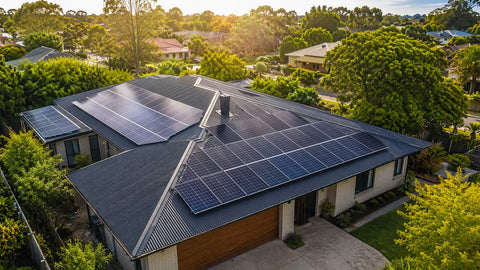
Thinking about adding solar panels to your home? One of the first questions you probably have is, “How do I calculate the right solar panel size for my house?” Getting this right is key.
Too small, and you won’t generate enough power. Too big, and you could waste money on panels you don’t need. In this guide, you’ll learn simple steps to figure out the perfect solar panel size tailored just for your energy needs.
Keep reading, and you’ll feel confident making a smart, cost-effective choice for your home and wallet.
Calculating the right solar panel size for a house starts with understanding energy needs. Assessing your energy needs is the first step. This helps to know how much electricity your home uses. Solar panels must produce enough energy to meet this usage. Careful measurement avoids buying too many or too few panels. This saves money and ensures proper power supply.
Calculating Monthly Electricity Usage
To find the correct solar panel size, start by checking your monthly electricity use. Look at your utility bills for the last year. They show how many kilowatt-hours (kWh) you use each month. Add these numbers to get your yearly usage. Divide by 12 to find the average monthly usage.
Here are simple steps to calculate monthly electricity usage:
- Collect your electricity bills for 12 months.
- Note the kWh used each month.
- Add all monthly kWh numbers for the total yearly use.
- Divide the total yearly kWh by 12 for the average monthly use.
Example of average monthly electricity use:
|
Month |
Electricity Used (kWh) |
|
January |
350 |
|
February |
300 |
|
March |
320 |
|
April |
280 |
|
May |
260 |
|
June |
400 |
|
July |
450 |
|
August |
430 |
|
September |
370 |
|
October |
300 |
|
November |
310 |
|
December |
360 |
This table shows how usage changes by month. Notice higher use in summer months due to cooling.
Identifying Peak Consumption Periods
Knowing when your home uses the most electricity is important. Peak consumption periods are times when energy use is highest. This can be during hot afternoons or cold evenings. Understanding these times helps to size your solar system correctly.
Steps to identify peak consumption periods:
- Check your hourly or daily electricity usage if available.
- Note times when appliances like air conditioners or heaters run more.
- Look for patterns over days or weeks.
- Consider lifestyle habits like cooking or laundry times.
Here is a simple example of daily energy use:
|
Time of Day |
Electricity Use (kW) |
|
6 AM - 9 AM |
1.2 |
|
9 AM - 12 PM |
0.8 |
|
12 PM - 3 PM |
1.5 |
|
3 PM - 6 PM |
2.0 |
|
6 PM - 9 PM |
2.5 |
|
9 PM - 12 AM |
1.0 |
Peak times here are from 3 PM to 9 PM. Solar panels should cover these high use hours.
Calculating the right solar panel size is important for your house. It depends a lot on sunlight availability. Sunlight changes in amount and strength during the day and year. Knowing this helps to choose the best size for your solar system. This guide explains how to check sunlight hours and think about seasonal changes for good solar panel sizing.
Measuring Sunlight Hours
Sunlight hours tell how long the sun shines on your place each day. This is important because solar panels need sunlight to make energy. To measure sunlight hours, you can:
- Use a solar pathfinder or sunlight meter.
- Check weather websites for average sunlight data.
- Look at your area’s solar radiation maps.
- Observe the sun’s path in your yard during different times.
Direct sunlight is best. Shaded areas reduce solar power. Roof angle and direction also matter. South-facing roofs get more sun in the northern hemisphere. East and west roofs get less but still useful sunlight. Flat roofs may need panel tilting.
Here is a simple table showing sunlight hours needed for common solar panel sizes:
|
Solar Panel Size (kW) |
Average Sunlight Hours Needed per Day |
|
3 kW |
4 to 6 hours |
|
5 kW |
5 to 7 hours |
|
7 kW |
6 to 8 hours |
Considering Seasonal Variations
Sunlight hours change with seasons. Days are longer in summer and shorter in winter. This affects how much solar energy you can get each month. To plan well, you must think about these changes.
Winter sunlight is weaker and lasts fewer hours. This means solar panels produce less energy then. Summer has more sunlight and stronger rays, so panels work better.
Here are some points to consider for seasonal changes:
- Check monthly sunlight data for your area.
- Plan solar panel size to cover low winter energy.
- Use batteries or grid backup for winter shortages.
- Adjust panel angle seasonally if possible.
Seasonal sunlight data example for a location:
|
Month |
Average Sunlight Hours per Day |
|
January |
3.5 hours |
|
April |
5.5 hours |
|
July |
7.0 hours |
|
October |
5.0 hours |
Understanding these variations helps to size your solar panels correctly. It ensures your house gets enough power all year long.
Calculating the right solar panel size for your house is important. It helps you get enough energy from the sun. One key step is determining system efficiency. This means knowing how well your solar system turns sunlight into electricity. Understanding this helps you pick the right panels and equipment. It also ensures your system meets your home's energy needs.
Panel Efficiency Ratings
Panel efficiency shows how much sunlight a solar panel changes into electricity. Higher efficiency means more power from the same sunlight amount. This is important if your roof space is small.
Solar panels have different efficiency ratings. They usually range from about 15% to 22%. Here is what you should know:
- Lower efficiency panels cost less but need more space.
- Higher efficiency panels are smaller but cost more.
- Efficiency depends on the panel type, like monocrystalline or polycrystalline.
Choosing the right panel means balancing cost, space, and power needs. Below is a simple comparison of panel types and efficiency:
|
Panel Type |
Typical Efficiency |
Cost |
Space Needed |
|
Monocrystalline |
18% - 22% |
Higher |
Less |
|
Polycrystalline |
15% - 17% |
Lower |
More |
Impact Of Inverter And Other Losses
Solar panels produce direct current (DC) electricity. Your home uses alternating current (AC). An inverter changes DC into AC. But this process causes some energy loss.
Other losses also affect your system’s efficiency. These can come from:
- Wiring resistance – energy lost in wires.
- Shading – trees or buildings block sunlight.
- Temperature – panels work less well when hot.
- Dust and dirt – reduce sunlight reaching panels.
On average, losses can reduce system efficiency by about 10% to 20%. The inverter itself typically has an efficiency between 90% and 98%. It is important to include these losses when calculating your solar panel size. This ensures your system produces enough power for your needs.
|
Loss Type |
Typical Loss Percentage |
|
Inverter Efficiency |
2% - 10% |
|
Wiring Losses |
2% - 3% |
|
Shading |
5% - 10% |
|
Temperature Effects |
5% - 15% |
|
Dust and Dirt |
2% - 5% |
Adding these losses helps to find the real output of the solar system. This makes your size calculation more accurate.
Calculating the right solar panel size for a house is important. It helps save money and energy. Choosing the right panel type affects how well the system works. Different panels have unique features and costs. Understanding these differences helps pick the best option. This guide explains common types of solar panels. It helps decide which panel suits your home and needs.
Monocrystalline Vs Polycrystalline
Monocrystalline and polycrystalline panels are the most common types. Both convert sunlight into electricity but differ in materials and efficiency.
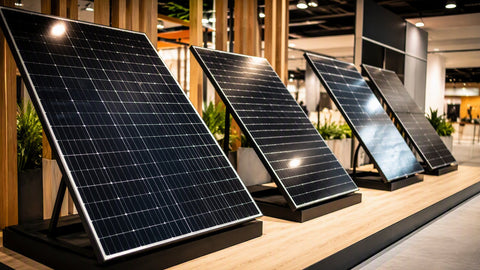
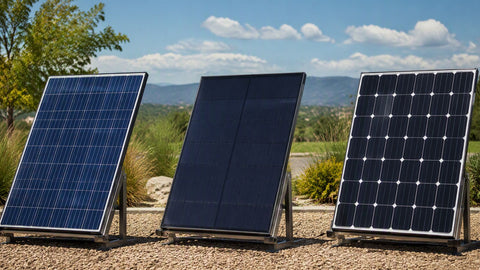
Monocrystalline panels are made from a single crystal of silicon. They have a uniform black color. These panels usually have higher efficiency, around 15-20%. They also perform better in low light conditions. They take less space because of their high power output.
Polycrystalline panels are made from multiple silicon crystals melted together. They have a blue, speckled look. These panels usually have efficiency between 13-16%. They cost less but need more space for the same power. They are less efficient in hot weather.
|
Feature |
Monocrystalline |
Polycrystalline |
|
Material |
Single silicon crystal |
Multiple silicon crystals |
|
Color |
Black |
Blue |
|
Efficiency |
15-20% |
13-16% |
|
Cost |
Higher |
Lower |
|
Space needed |
Less |
More |
Choose monocrystalline panels if space is limited and higher efficiency is needed. Polycrystalline panels suit larger roofs with lower budgets.
Flexible And Thin-film Options
Flexible and thin-film solar panels offer different benefits. They are less common but useful in certain cases.
Flexible panels are lightweight and bendable. They can fit on curved or uneven surfaces. These panels are easy to install but usually have lower efficiency, around 10-12%. They work well on boats, RVs, or unusual roofs.
Thin-film panels are made by layering solar cells on a surface. They are very thin and light. Thin-film panels have lower efficiency, about 10-13%. They perform better in low light and high temperatures. They are less expensive and can cover large areas.
|
Type |
Advantages |
Disadvantages |
Efficiency |
|
Flexible Panels |
Lightweight, bendable, easy to install |
Lower efficiency, less durable |
10-12% |
|
Thin-Film Panels |
Thin, light, good in heat and shade |
Lower efficiency, larger area needed |
10-13% |
Flexible and thin-film panels suit special needs. Regular panels are better for most homes because of higher efficiency.
Calculating the right solar panel size for a house is important. It helps save money and use energy wisely. Knowing how much power your house needs is the first step. Then, choosing the correct panel size makes sure your system works well. This process is called calculating required panel capacity. It involves simple math and understanding your home's energy use. This guide explains how to find the correct solar panel size for your house.
Formula For System Size
To find the right solar panel size, start with your energy use. Your energy use is how much electricity your house needs daily. Look at your electric bill to find this number. It is usually in kilowatt-hours (kWh). The formula to calculate your system size is:
System Size (kW) = Daily Energy Use (kWh) ÷ Peak Sun Hours
Peak sun hours are the number of hours sunlight is strong enough to make solar panels work well. This number changes by location.
Steps to calculate system size:
- Find your daily energy use from your electric bill.
- Check the average peak sun hours for your area.
- Divide daily energy use by peak sun hours.
This gives the size of the solar panel system in kilowatts (kW) needed for your house. For example, if you use 30 kWh daily and have 5 peak sun hours, your system size is 6 kW.
|
Daily Energy Use (kWh) |
Peak Sun Hours |
System Size (kW) |
|
20 |
4 |
5 |
|
25 |
5 |
5 |
|
30 |
6 |
5 |
Adjusting For Location And Usage
Solar panel size needs to change based on location and how you use energy. Some places get more sun, others less. This affects how many panels you need. Adjustments help make sure your system works well all year.
Factors to consider:
- Sunlight Hours: More sunlight means a smaller system size.
- Seasonal Changes: Winter days are shorter, so energy use may rise.
- Energy Habits: Using more electricity at night means battery storage might be needed.
- Roof Space: Limited space can limit panel size.
Use this table to see how sunlight affects system size:
|
Location |
Average Peak Sun Hours |
Adjustment Needed |
|
Sunny Area |
6 |
Smaller system size |
|
Cloudy Area |
3 |
Larger system size |
|
Mixed Weather |
4-5 |
Moderate system size |
Understanding your daily and seasonal energy use will help you pick the best size. You may want to add 10-20% more to cover extra use or cloudy days. This ensures your house gets enough power without wasting money on too many panels.
Calculating the right solar panel size helps save money and energy. The roof size and direction affect how many panels fit and work well. Knowing these details makes choosing panels easier. This guide explains how to think about your roof space and direction for solar panels.
Measuring Available Area
Start by finding the total roof space for solar panels. Measure the length and width of each roof section where panels can go. Multiply length by width to get the area in square feet or meters. Sum up all usable sections for the total available space.
Remember, not all roof space can hold panels. Some areas might be blocked by chimneys, vents, or shadows. Subtract these areas to find the true usable space.
- Measure each roof section separately.
- Exclude places with obstacles or shade.
- Convert all measurements to the same unit.
Use this simple formula:
|
Step |
Action |
Example |
|
1 |
Measure the length and width of the roof section |
20 ft × 15 ft |
|
2 |
Calculate area |
300 sq ft |
|
3 |
Subtract shaded or blocked areas |
50 sq ft |
|
4 |
Find usable area |
250 sq ft |
Knowing the usable area helps choose how many panels fit your roof.
Optimal Panel Placement
Panel placement affects how much sunlight your system gets. Panels work best facing south in the northern hemisphere. East or west-facing roofs work but produce less energy.
Roof angle matters too. Panels work better if the roof tilt matches your location's sun angle. Flat roofs need racks to set the right angle.
- Face panels south for most sunlight.
- Aim for 15 to 40 degrees tilt, depending on latitude.
- Avoid shadows from trees or buildings.
- Space panels to allow airflow and easy cleaning.
Sometimes, roof shape limits panel placement. Use the largest sunny area possible. A few panels placed well can produce more energy than many panels in shade.
Check these points before installing:
|
Factor |
Ideal Condition |
|
Roof Direction |
South-facing |
|
Roof Tilt |
15° to 40° |
|
Shade |
No shade during peak sun hours |
|
Panel Spacing |
Enough for airflow and maintenance |
Good panel placement can improve energy output by up to 25%. Plan carefully to get the most from your solar panels.
Calculating the right solar panel size for a house is key for good energy use. Battery storage adds another layer to consider. Batteries store extra energy for use when the sun is not shining. This helps keep power steady and saves money. Understanding battery needs helps to pick the right solar system size.
Sizing Batteries For Backup
Choosing the right battery size depends on how much energy is needed during power outages. Start by finding the average daily energy use in kilowatt-hours (kWh). Then decide how many hours or days of backup power are needed. This helps to know the total battery capacity required.
Key points to consider for battery sizing:
- Daily energy use: Check electricity bills to find average kWh per day.
- Backup duration: Decide how long the battery should provide power (e.g., 12 hours, 24 hours).
- Depth of discharge (DoD): Batteries should not be fully drained to last longer. Common DoD is 80%.
- Efficiency: Some energy is lost during charging and discharging. Usually around 90% efficiency.
Example table for battery size calculation:
|
Factor |
Value |
Notes |
|
Daily energy use |
10 kWh |
From utility bill |
|
Backup hours |
24 hours |
One day of backup |
|
Depth of Discharge (DoD) |
80% |
Safe battery usage level |
|
Efficiency |
90% |
Energy loss considered |
|
Battery capacity needed |
~14 kWh |
Calculated value |
This calculation shows a battery size of about 14 kWh is needed for 24 hours backup.
Integrating Storage With Panels
Combining solar panels and battery storage requires balance. Solar panels produce energy during the day. Batteries store extra energy for use at night or during cloudy days. Proper integration ensures energy is not wasted.
Steps to integrate storage with solar panels:
- Match panel output with battery size: Panels should produce enough extra energy to charge batteries fully.
- Use a charge controller: This device manages battery charging and protects battery life.
- Choose an inverter: It converts stored battery power from DC to AC for home use.
- Plan for energy use patterns: Know when energy is used most to optimize system design.
Example of daily solar energy and battery use:
|
Time |
Solar Panel Output (kWh) |
Battery Use (kWh) |
|
Day (6 AM - 6 PM) |
20 |
Charging |
|
Night (6 PM - 6 AM) |
0 |
10 (house use) |
Good integration means solar panels charge batteries enough during the day. Batteries then provide power at night. This reduces reliance on the electric grid and saves money.
Calculating the right solar panel size for a house helps save money and energy. It depends on factors like daily power use, sunlight hours, and roof space. Estimating costs and savings is important before buying solar panels. This helps plan the budget and see how much can be saved in the long run.
Initial Investment Breakdown
The initial cost of solar panels includes several key parts. Knowing these parts helps understand the total price better.
- Solar Panels: The main cost. Prices vary by quality and power output.
- Inverter: Converts solar energy to usable electricity for the home.
- Mounting Hardware: Holds panels securely on the roof.
- Installation: Labor cost for professionals to set up the system.
- Permits and Inspection: Fees for legal approval and safety checks.
Below is a sample cost estimate for a typical home solar system:
|
Item |
Estimated Cost (USD) |
|
Solar Panels (6 kW system) |
$7,000 |
|
Inverter |
$1,200 |
|
Mounting Hardware |
$600 |
|
Installation |
$2,000 |
|
Permits and Inspection |
$300 |
|
Total |
$11,100 |
Costs differ by location and system size. Getting multiple quotes is a good idea.
Calculating Long-term Benefits
Solar panels save money over many years. The benefits depend on electricity use, local rates, and sunlight.
Key long-term benefits include:
- Lower Electricity Bills: Use solar energy instead of paying for power.
- Energy Independence: Less reliance on the grid during outages.
- Increased Home Value: Solar homes often sell for more money.
- Environmental Impact: Clean energy reduces pollution and carbon footprint.
Calculating savings involves these steps:
- Find your average monthly electricity use (kWh).
- Estimate how many kWh your solar system will produce monthly.
- Multiply the solar kWh by your electricity rate to get savings.
- Subtract any maintenance or financing costs.
Example of yearly savings:
|
Item |
Value |
|
Electricity used per year |
8,000 kWh |
|
Solar production per year |
7,200 kWh |
|
Electricity rate |
$0.12 per kWh |
|
Annual savings |
$864 |
These savings grow as electricity prices rise. Solar panels pay back the initial cost over time.
How Do I Find My Home's Daily Energy Use?
Check your electricity bills for monthly kWh and divide by 30 for daily use.
What Factors Affect Solar Panel Size Needed?
Sunlight hours, roof space, energy use, and panel efficiency all matter.
How Many Solar Panels Will Power My House?
Divide daily energy use by panel wattage times sunlight hours for count.
Can Weather Impact Solar Panel Size Calculation?
Yes, less sun means larger panels to meet your energy needs.
Calculating the right solar panel size saves money and energy. Start by checking your daily electricity use. Think about your roof space and sunlight hours. Choose panels that fit your needs and budget. Small changes can make a big difference.
A good size means reliable power all year. Take time to plan carefully. Your home will benefit from clean, steady energy. Solar power can be simple and smart.
Related Resources:
- Best Solar Panels 2026 — Buyer's Guide
- EG4 vs Tesla Powerwall
- Qcells vs Trina vs JA
- Solar Inverter Buyer's Guide
- Solar Battery Buyer's Guide
- 5kW Solar Kit
- 10kW Solar + Battery Kit
- Off-Grid Cabin Kit
- EG4 Batteries
- Qcells Solar Panels
- Trina Solar
- JA Solar
- REC Solar
- Mission Solar
- Sol-Ark Inverters
- SolarEdge Inverters
- Generac PWRcell
Calculate how much storage you need with our battery sizing calculator.
Use our free solar system calculator to size your array.
Check out our Solar Panel Comparison Tool. Check out our Inverter Sizing Calculator.
Calculate your solar payback and 25-year savings with our Solar ROI Calculator. Follow our complete DIY solar installation guide for step-by-step instructions. Keep your system running at peak performance with our Solar Maintenance Guide.
Related Products


Related Resources
- Solar System Calculator
- Battery Sizing Calculator
- Solar Panel Comparison Tool
- Inverter Sizing Calculator
- Solar ROI Calculator
- Solar Installation Guide
- Solar Maintenance Guide
- Solar Permitting Guide
- Battery Installation Guide
- NEC Code Compliance Guide
- Solar Panel Mounting Guide
- Grounding & Bonding Guide
- Solar Incentives by State
- Pro Account — Wholesale Pricing
- PowerLink Network — Contractor Program
Related reading: Solar & Electrical Calculators
Real sizing story: I sized a 22 kW Generac system last month for a 3,200 sq ft ranch in Portland. Their usage was 18,400 kWh/year. Using the formula: 18,400 ÷ (3.8 × 365 × 0.82) = 16.2 kW. But they wanted to add two EVs and a heat pump — that adds ~6,000 kWh/year. We sized at 22 kW with 40 JA Solar 550W panels. The 200A panel couldn't handle it per the 120% rule, so we upgraded to a 400A service with dual 200A panels. Total project: $48,000 before the 30% ITC credit.
Common mistake we fix: Homeowners come in with a 10 kW quote from a national installer. We run the numbers and find they only need 7 kW — the extra 3 kW is pure margin for the sales rep. Always verify the math yourself. We give our customers the spreadsheet and show them every cell.
Off-grid reality: We built a cabin system near Mt. Hood last fall. The owner estimated 1,500 Wh/day. We measured actual loads: 2,800 Wh/day because of a chest freezer he forgot to mention. We sized a 3 kW array with 400Ah of LiFePO4. Now he has power through three cloudy days. The key is measuring, not guessing.
Shop Solar Sizing Equipment
- Complete Solar Kits — pre-sized for 5 kW to 20 kW homes
- Residential Starter Kits — 8 kW to 12 kW, plug-and-play
- Hybrid Inverters — solar + battery + grid, all-in-one
- Home Battery Storage — 10 kWh to 40 kWh LiFePO4 systems
- Charge Controllers — MPPT for off-grid and battery backup
- Home Backup Generators — natural gas and propane standby units
- EV Chargers — Level 2, 240V for home garages
- Off-Grid Cabin Kits — solar, battery, inverter in one package