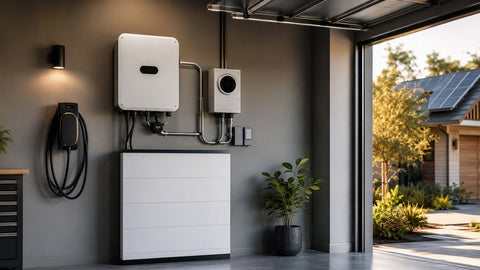
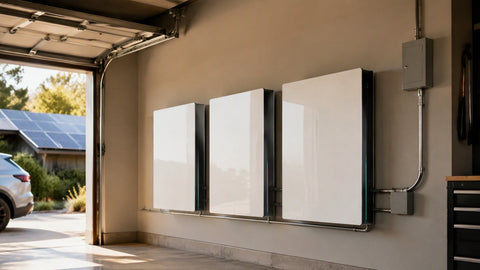
We hang a lot of batteries on garage walls, and the FranklinWH aPower line has become one of the units our crews actually ask for by name. The reason is simple: the inverter is already inside the box. No separate hybrid inverter to mount, no extra gutter full of DC conduit between two cabinets, no wondering which brand's battery talks to which brand's inverter this month. One enclosure, one set of AC lugs, one commissioning app. This guide breaks down what the FranklinWH power battery with a built-in advanced inverter actually is, how the aPower 2 differs from the original aPower, how to size a bank, what the wiring and breaker math looks like under the NEC, and where it fits against the other big names in home storage.

What the FranklinWH aPower Actually Is
Franklin Whole Home (FranklinWH) is a San Jose-based energy storage company founded by former Tesla and SolarEdge engineers, and their pitch is whole-home backup without the ecosystem lock-in. The aPower is their battery. The aGate is their smart electrical panel controller. Together they form an AC-coupled storage system that can sit next to almost any existing solar array, any generator, or no solar at all.
The phrase "built-in advanced inverter" is the part worth slowing down on. Each aPower carries its own battery inverter inside the enclosure. DC from the lithium iron phosphate (LFP) cells gets inverted to 120/240V split-phase AC right there in the battery cabinet. That design choice has three consequences in the field:
- True AC coupling. The battery connects to your home through a breaker, like any other load or source. Your existing string inverter, microinverters, or even a neighbor-brand hybrid stays untouched.
- No high-voltage DC runs between boxes. We pull one AC circuit per battery. Less conduit, fewer conductors, faster rough-in.
- Stacking is additive power, not just capacity. Every aPower you add brings its own inverter, so continuous output scales with each unit.
aPower 2 vs. Original aPower: Spec Comparison
FranklinWH launched the original aPower in 2022 and followed with the aPower 2. Both are LFP chemistry, both carry the inverter in-box, and both are managed by the aGate. The second generation roughly doubles the power and nudges capacity up. Per FranklinWH's published datasheets, here's how they line up:
| Specification | aPower (Gen 1) | aPower 2 |
|---|---|---|
| Usable capacity per unit | 13.6 kWh | 15 kWh |
| Continuous AC output | 5 kW | 10 kW |
| Battery chemistry | LFP (lithium iron phosphate) | LFP (lithium iron phosphate) |
| Coupling | AC (built-in inverter) | AC (built-in inverter) |
| Output voltage | 120/240V split-phase | 120/240V split-phase |
| Max units per aGate | Up to 15 (204 kWh) | Up to 15 (225 kWh) |
| Warranty | 12 years | 12 years |
| Mounting | Wall or floor, indoor/outdoor (NEMA 3R-type enclosure) | Wall or floor, indoor/outdoor |
| Generator integration | Yes, via aGate | Yes, via aGate |
Always pull the current datasheet before you stamp a design — manufacturers revise ratings, and the number on a one-year-old PDF won't win an argument with an AHJ. But the architecture story stays the same across revisions: capacity and power scale per unit, LFP chemistry trades a little energy density for a lot of thermal stability and cycle life, and the 12-year warranty is among the longest standard terms in residential storage.
For context, a single aPower 2 at 10 kW continuous can start and run most central air conditioners up to about 4 tons with a soft start, run a well pump, and keep the kitchen alive simultaneously. That's the threshold where "backup battery" becomes "whole-home battery" for the average 2,500-square-foot house.
Why LFP Chemistry Matters in a Garage
LFP cells don't use nickel or cobalt. They run cooler, tolerate deeper daily discharge, and resist thermal runaway far better than the NMC chemistry used in earlier generations of home batteries. In plain terms: LFP is the chemistry we're comfortable bolting to a garage wall next to a water heater and a shelf of paint cans. Cycle life is the other dividend — LFP home batteries are routinely rated for 6,000+ cycles to 70–80% remaining capacity, which pencils out to 15+ years of daily cycling before the degradation curve gets interesting.
Sizing: How Many aPower Units Does a House Need?
Sizing storage is a two-axis problem. Axis one is energy (kWh): how long do you want to ride through an outage? Axis two is power (kW): what has to run at the same time? Homeowners almost always ask about axis one and forget axis two exists until the compressor kicks and everything goes dark.
Here's the math we run on every quote. Take the critical loads list, add up the running watts, apply a 25% headroom factor for motor starts and power-factor slop, and that gives you required continuous kW. Then estimate overnight and cloudy-day consumption in kWh. Divide by 15 kWh (or 13.6 for Gen 1), round up, and you have your unit count.
| Home Profile | Typical Critical Loads | Peak Simultaneous Draw | Nightly Consumption | Recommended Configuration |
|---|---|---|---|---|
| Essentials only (fridge, lights, internet, furnace blower, some outlets) | 1.5–3 kW running | ~4 kW with fridge start | 8–12 kWh | 1× aPower 2 (15 kWh / 10 kW) |
| Essentials + well pump + 3-ton AC (soft start) | 4–6 kW running | ~8 kW | 15–22 kWh | 2× aPower 2 (30 kWh / 20 kW) |
| Whole home + EV charging + 4–5-ton AC | 7–10 kW running | 12–16 kW | 25–40 kWh | 3× aPower 2 (45 kWh / 30 kW) |
| Large estate / light commercial | 10–15 kW running | 18–25 kW | 40–70 kWh | 4–5× aPower 2 (60–75 kWh / 40–50 kW) |
One field note: the aGate performs automatic load management, shedding lower-priority circuits when the battery bank approaches its limits. That feature rescues marginal one-battery designs more often than sales literature admits, but we still size for the load list, not for the software. For a deeper walkthrough of the arithmetic, see our home battery bank sizing guide and the battery backup runtime calculator.
Wiring and Breaker Math Under the NEC
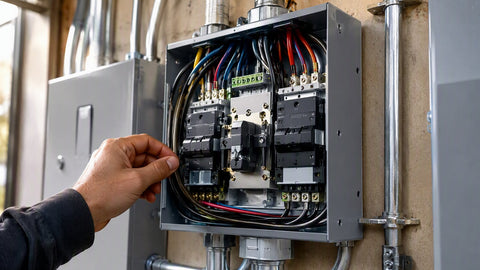
Each aPower 2 lands on a dedicated 2-pole breaker. At 10 kW continuous on 240V, that's 41.7 amps. Continuous loads and sources get sized at 125% per NEC 210.20/215.3 logic applied to the interconnect, so the conductor ampacity target lands at roughly 52 amps. Per NEC 240.6(A), the next standard overcurrent device sizes are 50A and 60A — and since 41.7 × 1.25 = 52.1A exceeds 50A, you're pulling wire for a 60A breaker.
| Design Element | Calculation | Result | NEC Reference |
|---|---|---|---|
| Rated continuous output current | 10,000 W ÷ 240 V | 41.7 A | — |
| Continuous sizing factor | 41.7 A × 1.25 | 52.1 A minimum ampacity | NEC 210.20(A), 705.28 |
| Standard breaker selection | Next size above 52.1 A | 60 A 2-pole | NEC 240.6(A) |
| Copper conductor, 75°C termination | THHN/THWN-2 in conduit | 6 AWG (65 A @ 75°C) | NEC 310.16 |
| Equipment ground | Sized by 60 A OCPD | 10 AWG copper | NEC 250.122 |
| Two units, load-side tap | 2 × 41.7 A × 1.25 | 104 A → 100–125 A subpanel or tap per 705.12 | NEC 705.12(B) |
We've pulled thousands of feet of 6 AWG THHN through 3/4" EMT for exactly this circuit — three current-carrying conductors plus ground, no derating headache, and it pulls clean. Multi-unit installs get their own storage subpanel; trying to backfeed three batteries through a 100A main panel's breaker spaces is how you end up doing 120% rule math at 4 p.m. on a Friday. If you want the broader wire-sizing context, our NEC wire sizing guide with ampacity charts covers the full method.
The aGate: The Other Half of the System
The aPower gets the marketing photos, but the aGate does the thinking. It's a service-rated intelligent panel that sits between the utility meter and your main panel, and it handles:
- Automatic transfer. Grid failure to battery power in a fraction of a second — fast enough that desktop computers and networking gear don't blink.
- Load management. Configurable circuit priorities with automatic shedding of heavy loads (EV charger, water heater, range) when storage runs low.
- Generator integration. The aGate starts a connected standby generator when the battery hits a set reserve, then uses generator power to recharge the batteries and carry the house. This hybrid behavior is a genuine differentiator for off-grid and storm-belt customers.
- Solar aggregation. AC-coupled solar from any inverter brand gets measured, managed, and kept alive during outages by frequency-shift control.
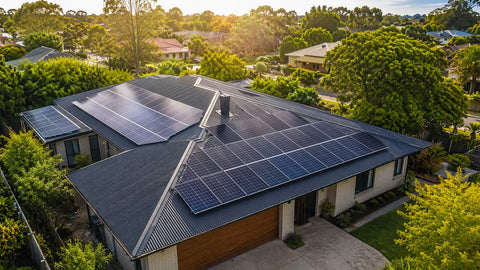
That last point deserves emphasis for retrofit work: because the aGate frequency-shifts to throttle AC-coupled solar during outages, existing Enphase microinverter systems and older string inverters keep producing while the grid is down. No rewiring the array. For customers who already own solar, that's often the difference between a storage quote that pencils and one that doesn't.
FranklinWH aPower 2 vs. the Main Alternatives

Nobody buys storage in a vacuum. Here's how the aPower 2 stacks up against the units we quote against it most often, using published specs at the time of writing:
| System | Usable Capacity | Continuous Power | Chemistry | Coupling | Warranty |
|---|---|---|---|---|---|
| FranklinWH aPower 2 | 15 kWh | 10 kW | LFP | AC (inverter in-box) | 12 years |
| Tesla Powerwall 3 | 13.5 kWh | 11.5 kW | LFP | Hybrid (integrated solar inverter) | 10 years |
| Enphase IQ Battery 5P | 5 kWh | 3.84 kW | LFP | AC (microinverter-based) | 15 years |
| EG4 PowerPro / WallMount | 14.3 kWh | 12 kW (paired inverter) | LFP | DC/hybrid with EG4 inverter | 10 years |
| Generac PWRcell 2 | 18 kWh (cabinet) | 10 kW | NMC/LFP modules | DC/hybrid | 10 years |
The Powerwall 3 comparison comes up in every kitchen-table conversation. Tesla's integrated solar inverter is a real cost saver on new construction with no existing solar. But in retrofit — where the array already exists — the Franklin's AC architecture avoids touching a working system, the 12-year warranty beats Tesla's 10, and the aGate's generator integration is cleaner than Tesla's third-party workarounds. We sell and install both. The honest answer is that retrofit jobs with existing solar or existing generators lean Franklin; new builds starting from zero lean Powerwall 3. See our EG4 vs. Tesla Powerwall comparison for the budget end of the same argument, and the Generac PWRcell cost guide if you're already in the Generac ecosystem.
Installed Cost: What to Budget
Pricing moves with the market, but current turnkey ranges we see across the industry:
| Configuration | Equipment (typical) | Installed Range (before incentives) | Effective Cost After 30% Federal ITC |
|---|---|---|---|
| 1× aPower 2 + aGate | $11,000–$13,500 | $15,000–$19,000 | $10,500–$13,300 |
| 2× aPower 2 + aGate | $20,000–$24,000 | $25,000–$30,000 | $17,500–$21,000 |
| 3× aPower 2 + aGate | $29,000–$34,000 | $35,000–$41,000 | $24,500–$28,700 |
| Storage added to existing solar (retrofit premium) | — | +$0–$2,000 (AC coupling keeps it low) | — |
The 30% federal Investment Tax Credit applies to standalone storage now — no solar purchase required — which changed the retrofit economics completely. Batteries installed with at least 3 kWh of capacity qualify. Labor, the aGate, and wiring all ride into the credit basis. Run your own numbers with your CPA, obviously, but that's the structure.
Installation: What Actually Happens on Site
A two-battery Franklin install with an aGate is typically a two-day job for a three-person crew, plus inspection. Day one: mount the aGate at the meter, pull feeders, set battery enclosures, land branch circuits. Day two: terminate, label everything per NEC 705.10 and 690 signage requirements, commission through the FranklinWH app, run the failover test. The failover test is the fun part — we kill the main breaker in front of the homeowner and watch their reaction when nothing in the house so much as flickers.
Practical notes our crews have learned the hard way:
- Wall-mounting a ~400 lb battery cabinet means finding structure. We carry 2× blocking and lag into doubled studs or set the floor-stand kit on a level pad. Don't let anyone talk you into toggler anchors.
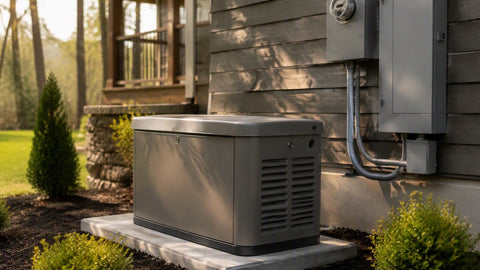
- Outdoor installs need working clearances per NEC 110.26 — 36" in front of the aGate — and we keep batteries out of direct afternoon sun in hot climates even though the enclosure is rated for it. Cooler batteries live longer.
- Commission early in the day. Firmware updates over a rural LTE connection will eat your afternoon if you start at 3 p.m.
Monitoring, App Behavior, and Storm Watch
The FranklinWH app shows per-circuit consumption, solar production, battery state of charge, and grid status on one screen, and it lets the homeowner set operating modes: self-consumption, backup reserve, and time-of-use arbitrage. The mode that matters in hurricane and wildfire country is the storm-watch-style behavior, where the system holds a full charge when severe weather is forecast instead of cycling for bill savings. We've had customers ride out three-day ice-storm outages on two batteries plus a 200A service worth of rooftop solar, and the app history afterward reads like a metronome — charge by day, discharge by night, never touch the reserve floor.
One honest gripe from the field: the app's historical data export is thin. If you're the spreadsheet type who wants hourly CSVs for a year of runtime, you'll be pulling numbers into a home energy monitor of your own. For 95% of homeowners the in-app charts are plenty.
Cold Climates, Hot Garages, and Altitude
LFP chemistry has one well-known weakness: it can't accept a charge below freezing without internal heating. The aPower handles this with a built-in thermal management system that warms the cells from stored energy when temperatures drop. In practice, outdoor units in Minnesota and Colorado keep working through winter, but you lose a sliver of capacity to self-heating on the coldest mornings. Indoor mounting in a conditioned garage eliminates the issue entirely.
Heat is the quieter enemy. Sustained ambient temperatures above 100°F accelerate every lithium chemistry's calendar aging, so in Phoenix and Las Vegas we push hard for garage mounting over west-facing exterior walls, and we leave the manufacturer's clearance specs as minimums, not targets. Altitude matters too — convection cooling thins out with the air, and installs above about 6,500 feet should confirm derating guidance with FranklinWH engineering before final sign-off.
Permitting and Interconnection Paperwork
Storage permits go through the same AHJ and utility channels as solar, with two extra documents: the battery's UL 9540 listing (the aPower carries it, which is the listing your inspector actually wants to see — UL 9540A is the fire test data behind it) and a line diagram showing the aGate as the interconnection point. Utilities increasingly want the storage system listed on the interconnection agreement even when it never exports. Build that into your project timeline; some utilities take four to eight weeks to amend an existing solar agreement for added storage.
Setback rules deserve a pre-install check. Many jurisdictions adopted the IFC/NFPA 855 spacing rules — typically three feet between battery units and specific clearances from doors, windows, and property lines. We tape out the wall layout with the homeowner before we order anything, because moving a location after the permit drawings are stamped is a change-order conversation nobody enjoys. Garages with gas-fired appliances also trigger ignition-source clearance questions in some jurisdictions; the answer is usually elevation or separation, but ask the AHJ before the install, not at inspection.
Mistakes We See on FranklinWH Jobs
After enough of these installs, the same errors repeat. First: undersizing on power, not energy. A homeowner reads "15 kWh" and pictures two days of backup, then discovers one battery can't start the 4-ton condenser and the well pump at the same time. Energy is the fuel tank; power is the engine. Size both.
Second: skipping the soft start on big air conditioners. A 10 kW inverter has real muscle, but a locked-rotor surge from an old reciprocating compressor can still trip it. A soft-start kit on the condenser is cheap insurance and we treat it as standard on any battery-backed AC circuit.
Third: putting the aGate in a spot that fails working clearance. Inspectors measure from the face of the equipment. A water heater creep or a new shelving unit in front of the panel is a red tag at final. Tape it out, photograph it, and keep the 36-inch bubble sacred.
Fourth: ignoring the generator settings when a standby unit is in the mix. The aGate needs to know the generator's real capacity so it doesn't try to charge batteries at a rate that overloads the gen set. We commission that handshake with the generator actually running under load — not on paper.
None of these are exotic. They're the difference between a system that disappears into the background of someone's life and one that generates service calls every season. And they're all caught by the same discipline: a commissioning checklist worked line by line, with the homeowner watching, before the crew leaves the driveway.
Who Should Buy a FranklinWH — and Who Shouldn't
Buy it if you have existing solar you want to keep, an existing generator you want to integrate, a need for true whole-home backup, or a preference for the longest standard warranty in the class. Think twice if you're building new with no solar yet (the Powerwall 3's integrated solar inverter saves real money in that scenario), if you're in a budget-constrained partial-backup situation (an EG4-style LFP rack battery with a hybrid inverter costs half as much), or if your usage pattern is pure bill arbitrage with no backup requirement — smaller modular batteries fit that job better.
Browse our FranklinWH energy storage collection for current stock and pricing, check alternatives in battery storage, and if you'd rather have a human do the sizing math, request a quote — we specced and shipped hundreds of these systems and we'll tell you straight whether one battery or three is the honest answer for your load list. For maintenance habits that protect your investment once it's on the wall, read how to extend solar battery life, and for sizing storage against larger arrays, our battery count guide for a 4,000W solar system applies the same math at a different scale.