Tulsa's energy story has always been written in infrastructure — the city that oil built now sits in the middle of one of the strongest combined renewable resources in the country, with the same storm exposure that makes backup power a household conversation rather than a hobbyist one. Between the Arkansas River corridor's development boom, the ongoing rehab of midtown's historic housing stock, and a commercial base that runs from aviation maintenance to data operations, Tulsa homeowners, contractors, businesses, and utilities all need the same thing: equipment that matches the climate, sized with real math, delivered on schedule. This guide covers the complete energy-solutions picture for the Tulsa metro — solar, storage, and generation — with the local numbers that actually govern decisions here.

My first Tulsa-area project was a battery retrofit on a midtown ranch near Brookside whose owner had lived through the 2007 ice storm — nine days without power, in a gas-heated house, with a furnace blower that would not run without electricity. She did not want to talk about payback periods. She wanted to talk about never again. Both conversations are the right one, and Tulsa is a place where you have them in the same meeting.
Tulsa's solar resource and what it produces
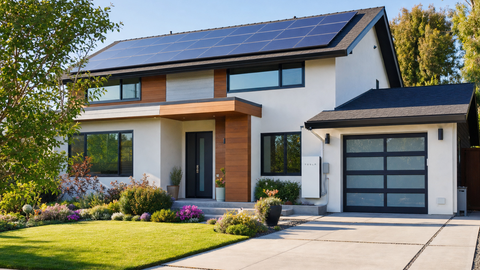
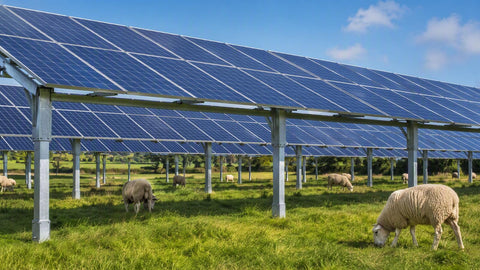
Tulsa averages about 5.0–5.3 peak sun hours per day annually — essentially identical to Oklahoma City, a touch cloudier in spring storm season, and notably productive in the long, clear autumns. A well-sited residential array here yields roughly 1,500–1,600 kWh per installed kW per year after losses. That production lands against PSO (Public Service Company of Oklahoma) residential rates in the $0.11–$0.13/kWh range — lower than coastal markets, which means honest Tulsa paybacks run a year or two longer than the national advertising suggests, and we say so up front.
| System size | Est. annual production (Tulsa) | Annual value @ $0.12/kWh | Typical installed cost (pre-ITC) | Net after 30% ITC |
|---|---|---|---|---|
| 5 kW | ~7,750 kWh | ~$930 | $12,500–$14,500 | $8,750–$10,150 |
| 8 kW | ~12,400 kWh | ~$1,490 | $19,200–$22,400 | $13,440–$15,680 |
| 12 kW | ~18,600 kWh | ~$2,230 | $27,600–$32,400 | $19,320–$22,680 |
| 16 kW | ~24,800 kWh | ~$2,980 | $35,200–$41,600 | $24,640–$29,120 |
Payback on the 8 kW case works out to roughly nine to eleven years at current rates — slower than California, faster than the system's 25-year warranty by a wide margin, and materially better once you add the resilience value Tulsans price into everything after living through the region's ice history. PSO's distributed-generation tariff credits exports below retail, so we size Tulsa systems toward self-consumption and home-load coverage rather than maximum export — typically 100–110% of annual usage, not the 150% arrays of the old net-metering era.
Midtown roof stock: the Tulsa-specific challenge
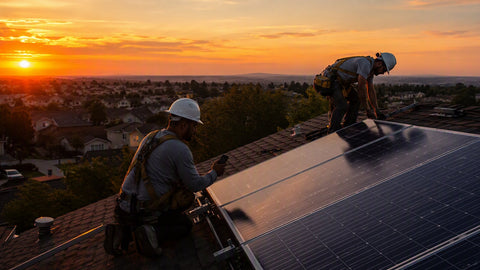
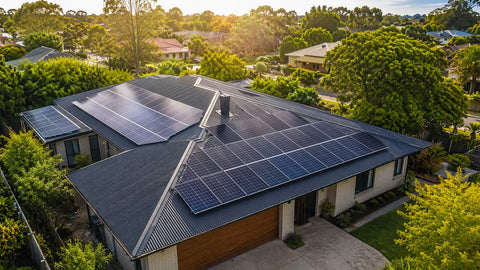
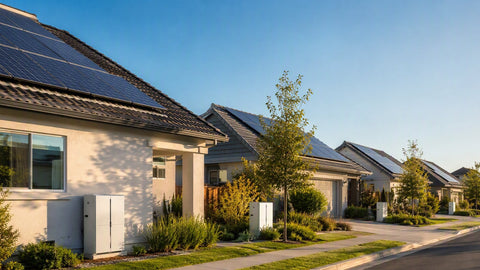
Tulsa's most charming neighborhoods — the 1920s–1930s Tudor and Craftsman blocks of Maple Ridge, Tracy Park, and the Florence Park area — are also its trickiest solar roofs: steep pitches, hips and gables everywhere, mature canopy oaks, and slate or tile surfaces that demand specialized attachment. The honest guidance we give: shaded historic roofs sometimes just do not pencil, and the right answer for those homes is often a smaller east-west array, a garage rooftop, or a ground mount on the alley side where the lot allows. Post-war ranches in south Tulsa, Broken Arrow, and Owasso are the opposite story — long unobstructed planes, simple composition shingle, ideal wind-engineering territory. Knowing which housing stock you are standing on before the design starts is the difference between a clean quote and a callback.
Ice, wind, and the case for layered backup
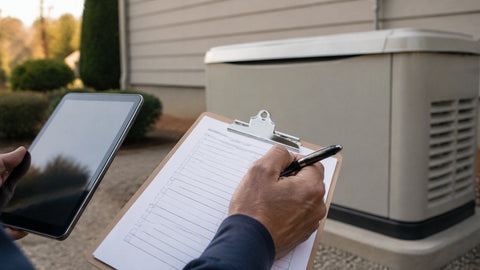
Tulsa's grid failures come from ice loading and straight-line wind: the 2007 ice storm cut power to hundreds of thousands of PSO customers for up to two weeks, and severe-thunderstorm wind events take down distribution feeders several times a decade. Resilience design here means planning for multi-day winter outages with heavy heating loads — the hardest residential backup scenario there is, because a gas furnace still needs 600–900 W of electricity for its blower and controls, and heat strips or heat pumps demand far more.
| Winter outage load | Running watts | Daily energy (8 hrs runtime) | Covered by |
|---|---|---|---|
| Gas furnace blower + controls | 600–900 W | ~6 kWh | 10 kWh battery overnight; any generator |
| Refrigerator + freezer | 150–250 W (cycling) | ~2 kWh | Battery or generator, trivially |
| Lighting, devices, internet | 200–400 W | ~2.5 kWh | Battery |
| Electric heat strips (10 kW) | 10,000 W | 80 kWh | Whole-home standby generator only |
| Heat pump (3-ton, cold) | 3,000–4,500 W | 28–36 kWh | 18–26 kW standby generator |
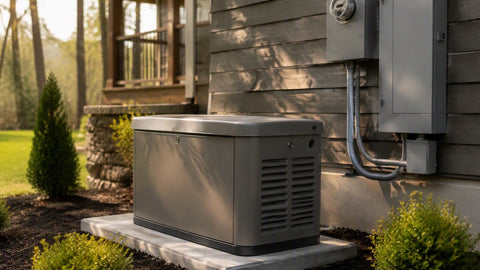
Read the last two rows carefully — they are the entire sizing argument for Tulsa. A battery handles the furnace-and-fridge scenario beautifully through a one-night outage. An all-electric home in a week-long ice event needs a generator, full stop; no residential battery bank carries 30 kWh per day of heat for a week. The layered architecture that works here: solar for the economics, a 10–14 kWh battery for the silent overnight hours and the short outages, and an 18–26 kW natural-gas standby unit for the deep events. Natural gas service in Tulsa, buried and pressure-fed, historically stays live through ice storms that destroy overhead electric service — that asymmetry is the whole reason NG standby units anchor Oklahoma resilience plans. Fuel-wise, a 22 kW unit at half load burns roughly 200–250 cubic feet of gas per hour — a few dollars an hour of whole-house power when the neighborhood is dark.
The electrical math inspectors check
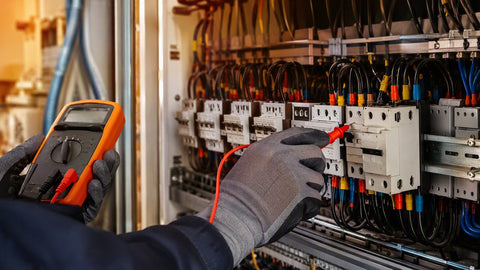
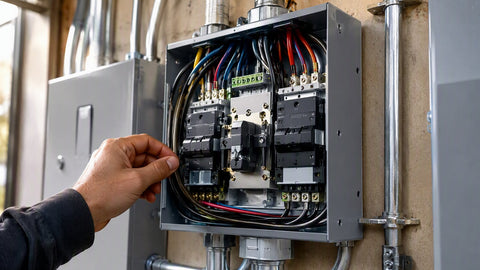
Tulsa permits under Oklahoma's adopted NEC cycle, and the recurring calculations are the ones worth doing before you buy hardware. A 10 kW inverter: 10,000 ÷ 240 V = 41.7 A; at the 125% continuous factor of NEC 705.28, that is 52.1 A, which means 6 AWG copper (65 A at 75°C per Table 310.16) and a 60 A breaker from the 240.6(A) standard sizes. The 120% busbar rule of 705.12 allows only 40 A of solar on a standard 200 A panel with a 200 A main — so that 10 kW inverter does not fit a load-side connection, and the design goes to a supply-side tap or a panel with a 225 A bus and 175 A main. I see this exact boundary crossed constantly on Tulsa quotes from out-of-state installers who assume the inverter breaker just lands anywhere; local electricians who do the tap correctly the first time are worth their dispatch fee.
| Design element | Calculation | Code basis | Result |
|---|---|---|---|
| PV string, 13.9 A Isc | 13.9 × 1.56 = 21.7 A | NEC 690.8 | 10 AWG Cu / 25 A breaker |
| 7.6 kW inverter | 31.7 × 1.25 = 39.6 A | NEC 705.28 | 8 AWG Cu / 40 A — fits 120% rule |
| 10 kW inverter | 41.7 × 1.25 = 52.1 A | NEC 705.28 | 6 AWG Cu / 60 A — supply-side tap required on 200 A panel |
| String Voc, 10 × 49.2 V @ −15°C | 492 × 1.14 = 561 V | NEC 690.7 Table | Under 600 V — passes Tulsa design temps |
That last row matters more in Tulsa than people expect: northeastern Oklahoma design minimums run colder than the southern half of the state, and the 1.14 voltage correction factor at −15°C has killed more than one ambitious 11-module string design at plan check.
Commercial and industrial: aviation, data, and the corridor
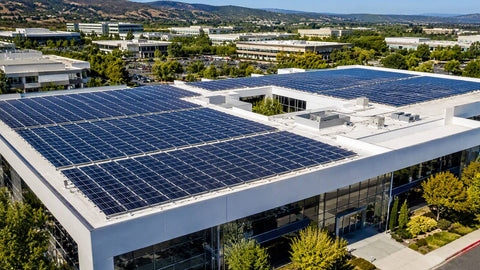
Tulsa's commercial energy market runs on aviation maintenance around the airport, a growing data-operations presence, and the small-manufacturing belt along the Broken Arrow corridor — all flat-roofed, high-reliability loads. Commercial systems here price at $1.70–$2.30 per watt installed for the 100–500 kW class, netting to roughly half that after the 30% ITC and MACRS depreciation for tax-paying entities. The demand-charge picture in PSO commercial tariffs is moderate by national standards, which means Tulsa C&I solar pays on energy offset and tax engineering rather than peak shaving — though the aviation and data customers increasingly add battery blocks for ride-through, not rate arbitrage. When your load is a hangar full of avionics test benches, the value of never seeing a voltage sag is not on the tariff sheet.
How PES Supply supports Tulsa projects
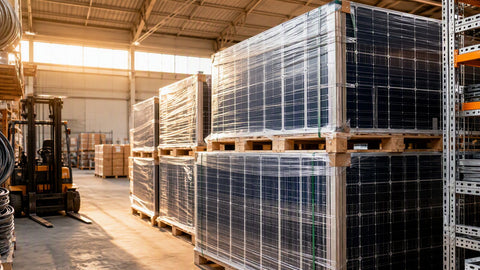
Homeowners get complete kits sized from actual PSO bills — not square-footage guesses — plus the battery and generator layers matched to the outage tables above. Contractors get pallet pricing, weekly freight into the metro covering Broken Arrow, Owasso, Bixby, Jenks, and Sand Springs, and same-day answers on spec questions. Businesses get commercial procurement with the freight and documentation handled end to end. And every customer gets the thing that actually differentiates a supplier: when the forecast says ice, we answer the phone with stock on hand, because the week before the storm is when this market's real buying happens. I have loaded emergency generator pallets for Tulsa customers with freezing rain already falling in the panhandle; the time to buy the hardware is before that week, and the time to choose the supplier is before you need the favor.
Storm country module selection
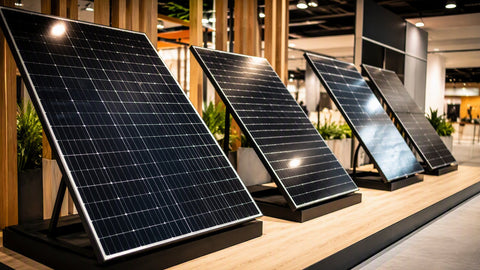
Tulsa sits at the northern edge of the hail corridor, and the module spec conversation here mirrors Oklahoma City's: standard certification covers one-inch hail at 51 mph, premium hail-tested glass extends the envelope, and anything beyond that is an insurance event for the whole roof, not a solar-specific failure. Wind engineering carries equal weight locally — Tulsa County design wind speeds run 115 mph and up, and the racking attachment schedule in the permit set needs to match the actual exposure category of the site, open lots and hilltop sites included. The cost delta between an adequate racking spec and a conservative one is a few hundred dollars on a residential job; the delta between either of them and an underspecified import kit is a roof full of missing modules in a May storm. We stock the engineered lines for a reason, and this metro is the reason.
| Tulsa storm scenario | Design response | Cost impact | Outcome |
|---|---|---|---|
| Routine severe thunderstorm (60–75 mph gusts) | Standard engineered racking, code wind load | Baseline | Non-event |
| High-wind warning event (80–100 mph) | Correct exposure-category engineering, full attachment schedule | +$200–$500 on residential job | Non-event with proper spec |
| Hail ≤1 inch | Any UL 61730 certified module | Baseline | No damage expected |
| Hail 1–1.75 inch | Premium hail-tested module spec | +$0.03–$0.08/W | Largely protected |
| Historic ice/wind catastrophe | Layered backup + insurance | Resilience architecture | Home stays powered; roof claim if needed |
Financing and incentives for Tulsa projects

The 30% federal Investment Tax Credit anchors Tulsa project economics for solar and storage alike, with MACRS depreciation stacking on top for businesses. Oklahoma adds no blockbuster state incentive, but two local realities close the gap: installation labor prices well below coastal markets, and roof-work costs among the lowest in the country — a combination that pulls installed residential pricing toward $2.40–$2.80/W when national averages sit higher. Financing through Tulsa's strong local credit-union network is routine, and loan payments on an 8 kW system typically land within $10–$25 per month of the PSO bill they replace — close enough that the rate-escalation curve does the rest. Our financing pre-qualification exists so that comparison happens with your actual numbers in the first conversation, not the fifth.
Utilities, developers, and the utility-scale context
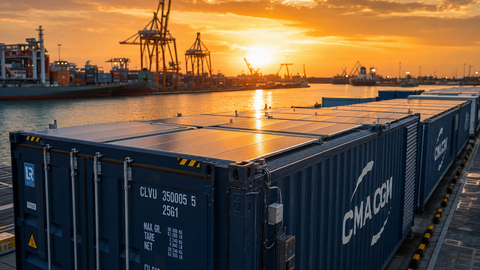
Northeastern Oklahoma's grid is quietly becoming a renewables heavyweight — wind generation supplies over 40% of the state's electricity, and solar development along the corridor accelerates every interconnection cycle. For Tulsa-area utilities and developers, the practical needs are procurement depth and documentation rigor: container-scale module and inverter supply with the traceability packages that EPC contracts demand, BESS blocks in the 100 kWh to MWh classes with utility-grade commissioning support, and delivery scheduling that respects construction sequencing rather than warehouse convenience. PES Supply's commercial and utility desk exists for exactly this tier of buyer — the one where a missed delivery window costs a crane crew, not an afternoon.
How a Tulsa project flows
The sequence matches the one we run across Oklahoma: twelve months of PSO bills first, roof and panel photos second, equipment selection third, scheduled delivery fourth, commissioning support through inspection week fifth. Tulsa's permitting turnaround runs one to three weeks for residential plan check across the metro's jurisdictions, and the inspectors are consistent about the same three items statewide — the 120% rule arithmetic, rapid-shutdown labeling, and grounding continuity. Get those right on paper and Tulsa inspections are a formality; get them wrong and you meet the corrections list. Our technical team answers those questions during inspection week because that is when the answer is worth something.
Battery storage sizing for Tulsa homes
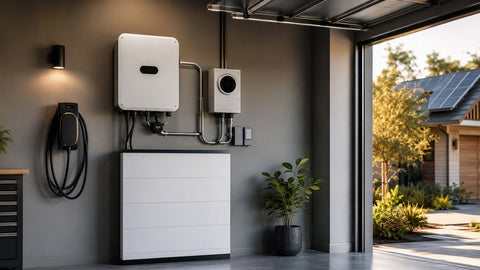
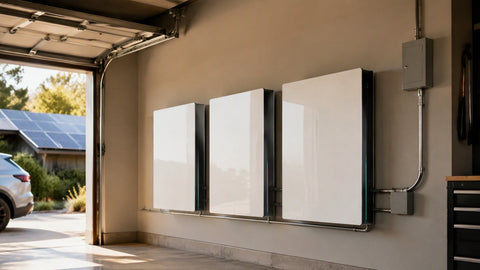
The storage question in Tulsa splits cleanly by outage philosophy. For rate-and-overnight coverage — riding PSO's evening peak and covering a midnight-to-dawn window — 10–13.5 kWh handles the typical household's 8–12 kWh overnight draw with margin. For genuine ice-event resilience, storage is the front half of the layered answer: the battery carries the silent hours and the transfer-switch-free instant response, and the generator carries the heating loads that would drain any battery by lunchtime. We size Tulsa banks against the sunset-to-sunrise load number from the customer's actual interval data where PSO shares it, and against the 6–8 kWh furnace-plus-essentials figure where it does not. Either way, the arithmetic beats the guess — a battery sized to the real night is never the wrong size.
EV charging arrives in Green Country
Tulsa's EV adoption curve is following the national pattern with a local accent: trucks first. A Lightning or a Silverado EV in a Tulsa driveway adds 4,000–6,000 kWh of annual load, which is half an average home's consumption arriving on one 240 V circuit. That circuit — a 40 A continuous Level 2 charge load — needs a 50 A breaker and 6 AWG copper under NEC 625 and Table 310.16, and on older midtown panels with 100 A services it often forces the service-upgrade conversation we describe above. The solar pairing is the elegant part: an EV added to a solar-equipped Tulsa home is roughly 3 more kW of array, and charging scheduled to midday turns the truck into a self-consumption asset that PSO's below-retail export credit cannot touch. Fleet and workplace charging along the BA corridor is scaling the same way — canopies, chargers, and increasingly the battery blocks that keep demand charges from eating the business case.
For the contractors who build all of this
Tulsa's installer community is compact, competent, and chronically busy after every storm season — and the suppliers that serve it well are the ones that respect the schedule. Weekly freight into the metro, pallet pricing that holds for thirty days so quotes do not expire mid-negotiation, will-call flexibility when a job moves up, and a technical line staffed by people who can check a string-voltage calculation in real time: those four things decide who gets the call when a crew is standing on a roof waiting on an answer. We built our Oklahoma operation around exactly those four commitments, because in this market your reputation with fifteen contractors is worth more than any advertising budget ever printed.
The Arkansas corridor builds electric
Tulsa's growth is concentrating along the river — the Gathering Place effect, the southward development push through Jenks and Bixby, and the new-construction subdivisions rising across Wagoner County all share one electrical trait: they are being built all-electric-ready from the slab up, with 200 A services, EV conduit, and heat-pump HVAC as standard spec. That building stock is the metro's solar future. A new all-electric home in Bixby uses 14,000–19,000 kWh per year, and its owners discover within one summer that the efficient heat pump that sold the house also runs a serious meter. The builders we work with along the corridor increasingly pre-wire for solar and battery even when the panels wait for the buyer — the conduit and the panel space cost almost nothing at rough-in and save a wall-full of retrofit labor later. If you are buying new construction in the corridor this year, ask the builder which side of the roof they left clean for the array. The good ones have an answer ready.
Frequently asked questions
Is solar worth it in Tulsa? Yes, with honest expectations. Tulsa's 5.0–5.3 daily peak sun hours yield roughly 1,500–1,600 kWh per kW annually. An 8 kW system nets $13,400–$15,700 after the federal credit and pays back in about 9–11 years at PSO rates — against 25-year equipment warranties and rising rates.
What backup power does a Tulsa home need for ice storms? Layered: a 10–14 kWh battery for overnight essential loads and short outages, and an 18–26 kW natural-gas standby generator for multi-day events. Electric heating loads of 28–80 kWh per day exceed what any residential battery bank can carry for a week.
Can historic midtown Tulsa homes go solar? Sometimes. Steep hip roofs, mature tree canopy, and slate surfaces constrain many pre-war homes. South Tulsa and the suburbs' ranch stock is ideal. Garage rooftops, east-west arrays, and ground mounts solve many midtown situations.
Does PSO offer net metering? PSO credits distributed-generation exports below retail rates under its tariff, so Tulsa systems are best sized to 100–110% of annual consumption with battery storage, rather than oversized for export.
How big a solar system does a typical Tulsa home need? Divide annual kWh by roughly 1,550. A home using 12,000 kWh per year needs about 7.7 kW — eighteen modern 440 W modules — on approximately 380 square feet of unshaded roof.
Does PES Supply deliver to Tulsa? Yes — solar kits, batteries, standby generators, and BOS components ship throughout the Tulsa metro including Broken Arrow, Owasso, Bixby, Jenks, and Sand Springs, with flatbed freight coordination for commercial orders.
The bottom line
Tulsa rewards the prepared: strong sun for the economics, ice-and-wind exposure for the motivation, moderate rates that demand honest math, and a housing stock that splits cleanly between easy ranch roofs and characterful midtown challenges. Size from the bill, layer the backup for the deep freeze, do the NEC math before the permit set, and the system does its job for decades. That is the complete energy solution for this city — and it is exactly what we stock and ship into the metro every week.
PES Supply serves Tulsa with solar panels, complete solar kits, hybrid inverters, 10 kWh batteries, 20–28 kW standby generators, automatic transfer switches, and racking and mounting. Local resources: Tulsa power solutions, system calculator, incentives by state, generator sizing guide, whole-home generator sizing, and financing pre-qualification.