Buy Whole House Generator: The Essential Buyers Guide for Reliable Home Power
Sizing math, fuel choices, transfer switches, NEC code requirements, real 2026 costs, and the step-by-step buying process — from equipment people who do this every day.

A whole house generator is the single most resilience-per-dollar upgrade a homeowner can make in outage-prone America — and one of the easiest purchases to get wrong. Buy too small and you're choosing between the AC and the refrigerator during the next ice storm. Buy too big and you overspent on equipment, gas plumbing, and copper that a load calculation would have eliminated. Buy from the wrong channel and you discover at year three that nobody within 100 miles services the brand.
We sell standby generators across every residential size class, from 10–14kW starter units through 80kW estate machines, and I've guided hundreds of homeowners through this exact decision. This guide is the conversation we have at the counter, written down: how to size correctly, which fuel makes sense for your property, what the electrical code requires, what it costs installed in 2026, and the buying sequence that avoids the classic mistakes.
Sizing is where most purchases go sideways, because square-footage rules of thumb ignore the loads that actually decide the answer. A 2,500 sq ft home with gas heat and a 3-ton AC needs something completely different from the same square footage with electric resistance heat, a well pump, and a Level 2 EV charger. The correct method adds your coincident loads — the things that genuinely run at the same time — and then checks motor starting surge, because a central air conditioner can demand two to three times its running wattage for the first second or two.
| Home Profile | Typical Critical Loads | Recommended Size Class |
|---|---|---|
| Up to 1,800 sq ft, gas heat, no EV | Fridge, lights, furnace blower, sump, outlets | 10–14kW class |
| 1,800–3,000 sq ft, 3–4 ton AC | Above + central AC, water heater, more circuits | 17–22kW class |
| 3,000–4,500 sq ft, 4–5 ton AC, EV | Above + Level 2 charging, second fridge, office | 24–26kW class |
| 4,500+ sq ft, all-electric or multi-AC | Multiple HVAC, pool, guest house, shop | 30–48kW class |
Two things I tell every sizing caller. First, get your utility's 12-month demand history if available — measured peak demand beats estimated peak demand every time, and I've watched real data move buyers down a full size class with zero lifestyle compromise. Second, decide your philosophy: managed (a smaller generator plus load-shedding modules that pause the water heater while the AC runs) or uncompromised (a larger generator that runs everything, always). Managed saves $2,000–$4,000 up front; uncompromised buys silence from your family during outages. Both are legitimate. Our whole-home sizing guide and the generator sizing walkthrough go deeper on the arithmetic.
| Factor | Natural Gas | Propane (LP) | Diesel |
|---|---|---|---|
| Runtime | Unlimited (utility-fed) | Tank-limited (days to weeks) | Tank-limited (days) |
| Fuel cost per hour (20kW class, half load) | ≈$2–4 | ≈$4–7 | ≈$4–6 |
| Storage requirement | None | 250–1,000 gal tank(s) | On-site tank + fuel maintenance |
| Output penalty | None on quality units (some brands derate ~10%) | Full rating typical | Full rating |
| Best for | Suburban homes on gas service | Rural properties beyond the gas main | Off-grid, commercial, no-gas sites |
Natural gas is the default answer wherever a gas main exists: no tank, no deliveries, no fuel going stale, and runtime measured in weeks rather than gallons. Propane is the rural workhorse — and tank sizing becomes the design exercise, since a whole-home set at half load burns roughly 1.5–2.5 gallons per hour in the 20–26kW class. A 500-gallon tank (400 usable gallons) buys about a week of typical outage duty; serious ice-belt and hurricane-belt properties step up to 1,000-gallon storage. Diesel barely exists in residential standby below 50kW, and for good reason: stored diesel needs polishing and rotation, and the fuel itself can become the reliability problem. Compare configurations in our natural gas and propane generator collections by size class.
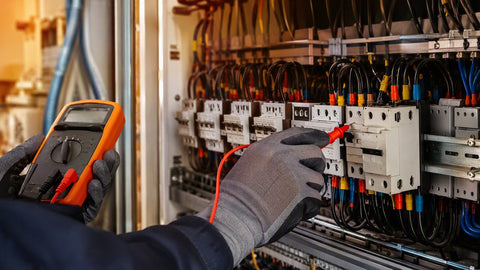
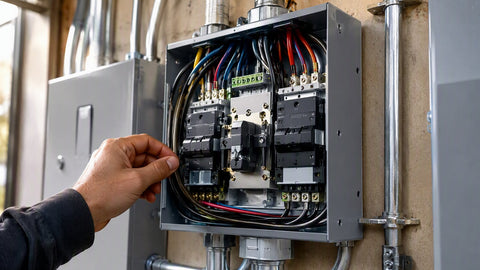
The automatic transfer switch (ATS) is the brain of the system — it senses the outage, starts the generator, and moves your home's load to generator power in about ten seconds, then reverses the sequence when the utility returns. Two decisions matter here. Service-rated whole-home ATS (typically 200A, installed between the meter and your main panel) versus load-center ATS (powers a selected-circuits subpanel). Whole-home switching is the modern default and the configuration most buyers actually want; load-center switching still makes sense when a smaller generator covers a critical subset of circuits.
| Design Element | Code Basis | 22–26kW Typical Result |
|---|---|---|
| Generator output current | kW ÷ 240 V | 92–108 A |
| Feeder conductor ampacity | NEC 445.13 (≥115% of nameplate) | ≥106–125 A → 1–1/0 AWG CU (75°C) |
| Generator breaker | NEC 240.6(A) standard sizes | 100–125 A |
| Equipment grounding conductor | NEC Table 250.122 | 8–6 AWG CU |
| Transfer switch | UL 1008 listed; sized to service | 200 A service-rated ATS |
Every one of these rows gets verified at inspection, which is why permits and licensed electricians aren't optional extras — they're how you get a system your insurance company and your future home buyer both respect. Our NEC ampacity guide has the wire tables, and the ATS category shows the switching gear itself.
Never backfeed through a dryer outlet
Improvised generator connections through a dryer or range receptacle — "suicide cords" — kill utility linemen and burn down houses every storm season. Interlocked breakers and transfer switches exist precisely because the code forbids un-switched paralleling with the grid. Any installer who suggests skipping the transfer equipment is not saving you money; they're transferring lethal risk to you and your utility's crew.
| Cost Component | 22–26kW Class (2026) | 30–48kW Class (2026) |
|---|---|---|
| Generator unit | $5,500 – $8,500 | $9,000 – $18,000 |
| Transfer switch | $800 – $1,500 | $1,000 – $3,500 |
| Installation labor & materials | $2,500 – $5,000 | $4,000 – $9,000 |
| Pad | $300 – $1,200 | $500 – $2,000 |
| Gas line / meter work | $500 – $2,500 | $800 – $3,500 |
| Permits & inspection | $200 – $800 | $400 – $1,500 |
| Turnkey total | $9,800 – $19,500 | $15,700 – $37,500 |
The gas line row surprises people most, so a word on it: a 22–26kW generator at full load draws roughly 250–350 ft³/hr of natural gas — frequently more than the furnace, water heater, and range combined. Many homes need a meter upgrade from the utility, and some need a larger service line. It's a modest cost but a real schedule item, and it belongs in the quote conversation from day one rather than as an installation-week surprise.
Financing note: most dealers offer promotional financing on residential standby packages, and some utilities and states run resilience or medical-baseline rebate programs worth a few hundred to a few thousand dollars. Ask both questions before signing — the answer changes seasonally and locally, and buyers who ask routinely pay meaningfully less than buyers who never think to ask at all.
Against the turnkey total, weigh what an outage actually costs your household: hotel nights at surge pricing, a refrigerator and freezer of food, a flooded basement if the sump dies, frozen pipes, and — for the growing work-from-home population — lost billable days. Most of our customers in storm corridors describe the payback as "the first three-day outage." Resale value matters too: a permitted, professionally installed standby system is a listing feature that appraisers and buyers both recognize.
The residential standby market is led by a handful of serious manufacturers, and at the counter level the honest hierarchy of decision factors goes: who services it within 50 miles of your address, what the warranty actually covers (labor included or parts-only), lead time, and only then the spec-sheet differences. We carry multiple lines — Generac, the Briggs & Stratton dealer-exclusive series, Cummins, and Champion among them — precisely because the right answer varies by region and by house. A brand with a strong factory-authorized dealer in your county beats a marginally better spec sheet with no local support every single time, because the unit you own for fifteen years is the unit someone has to fix in year nine.
Smart Features, Monitoring, and Home Integration
Feature checklists worth confirming on any model: Wi-Fi monitoring (you want the fault alert, not the surprise), a cold-weather kit if you see real winters (battery warmer and oil warmer — browse cold weather kits), aluminum or properly coated steel enclosure in coastal air, and a sound rating under about 67 dB if neighbors or an HOA are in the picture.
The Buying Sequence: Six Steps From Decision to Done

How the purchase should run
- Step 1 — Load calculation. List coincident loads, check motor starting surge, pull utility demand data if available. Output: a size class.
- Step 2 — Fuel decision. Confirm gas service capacity with your utility, or plan propane storage. Output: a fuel and a gas-work scope.
- Step 3 — Site plan. Pad location with manufacturer clearances, exhaust away from openings, service access, noise-to-property-line check. Output: a placement drawing.
- Step 4 — Quotes. Get turnkey quotes from two or three factory-authorized installers with identical scope: unit, ATS type, gas work, pad, permits. Output: a real comparison.
- Step 5 — Order and permits. Place the equipment order and submit permits the same week; open the utility gas work order immediately. Output: a schedule.
- Step 6 — Commissioning. Startup by an authorized tech, full transfer test, exercise schedule set, monitoring app configured, warranty registered. Output: a system you own instead of a box you hope in.
Warranty registration is step six for a reason: most manufacturers require registration within a defined window after startup, and some extended coverage tiers require documented dealer commissioning. The paperwork takes ten minutes and protects a five-figure asset — put it on the commissioning checklist, not on the someday list.
Timeline expectations: a straightforward residential install runs three to six weeks from order to commissioning in normal seasons. After a major storm announcement, lead times stretch as everyone in the region makes the same phone call on the same day. The best time to buy a generator has always been the quiet season before you need it.
Portable/Inverter Generators
A word on portable generators as the "budget whole-home" option: a portable unit with a manual transfer switch or interlock kit is a legitimate middle path for tight budgets — a few thousand dollars all-in for critical-circuit coverage. What it is not is automatic, weatherproof, or safe to run anywhere near an open window. Carbon monoxide from portables kills people every storm season, and the machine that requires you to go outside in the storm to start it is the machine that doesn't get started at 2 a.m. in freezing rain. If the budget genuinely can't stretch to standby, buy the interlock and the CO detectors with the portable, and treat it as the bridge it is.
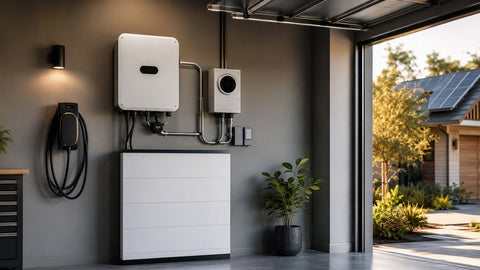
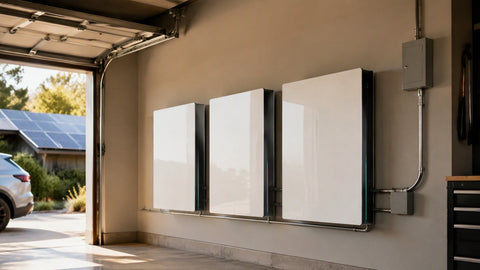
One more comparison worth making explicitly, because half our callers arrive having researched batteries first. A whole-home battery system (10–30 kWh) is silent, instant, solar-pairable, and superb for outages measured in hours. A fuel-fired standby generator is the only residential technology that carries central air conditioning through outages measured in days, at a lower installed cost per sustained kilowatt than batteries. In extended-outage territory — Gulf Coast, ice belt, wildfire PSPS zones — the generator wins the primary role and batteries become the complement. Our battery runtime calculator quantifies the battery side honestly if you're weighing both.
The purchase price is the cover charge; ownership cost is the subscription. Budget honestly for three recurring items. Annual maintenance: an oil-and-filter service with a full inspection runs a few hundred dollars through a dealer, less if you're mechanically inclined and the warranty permits owner service — read that clause before assuming. Battery replacement every 3–4 years: the generator battery lives outdoors through temperature extremes and is still the number-one no-start cause we troubleshoot; a $150 proactive swap beats a midnight service call during an ice storm by any measure. Monitoring subscriptions: most Wi-Fi monitoring on current units carries a modest annual fee after a trial period, and it's worth it — the alert that says "exercise failed" in October is the reason the generator starts in January.
Fuel cost during actual outages is smaller than people fear. A 22–26kW unit at realistic cycling loads on natural gas typically burns $50–$100 per day at full-time operation; most outages run partial days and part load. Compare that against one night of surge-priced hotel rooms for a family of four plus a restocked refrigerator, and the operating cost of backup power is the cheapest line in the household resilience budget. Extended-event discipline on propane systems: check the tank gauge daily and call the supplier at 50%, not at 20% — delivery trucks get scarce exactly when everyone needs them.
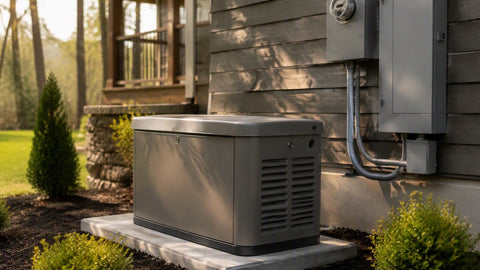
Standby generators live outside, run unattended, and occasionally announce themselves at 3 a.m. — which makes placement a relationship decision as much as an engineering one. Modern air-cooled residential units run in the low-to-mid 60s dB at 23 feet, roughly central-AC loudness; liquid-cooled units run quieter. But "quiet" is directional and reflective: exhaust pointed at a neighbor's bedroom window across a narrow side yard sounds very different from the same unit exhausting toward your own backyard fence line. Walk the placement with these filters: manufacturer clearances from walls, windows, and combustible vegetation; exhaust aimed at the most tolerant direction; flood elevation if you're anywhere near a floodplain (a generator that drowns in a hurricane is the worst kind of irony); and service access for the technician who will visit twice a year for fifteen years. HOA covenants and local noise ordinances sometimes dictate setbacks or screening — check before the pad is poured, because moving a set generator is a crane day, not a weekend project.
After enough seasons of equipment sales, the failure patterns repeat with almost comic regularity. Mistake one: sizing off square footage instead of loads — the 1,600 sq ft all-electric house needs more than the 3,000 sq ft gas-heated house. Mistake two: buying on box price and discovering at install that the quote excluded the transfer switch, the gas line, and the permit — compare turnkey scope to turnkey scope, always. Mistake three: choosing a brand with no local service channel because it was $400 cheaper online. Mistake four: ignoring the gas meter question until installation week, then waiting six weeks on the utility while the generator sits on a pallet. Mistake five: skipping the commissioning transfer test — the system that has never actually carried the house is a hypothesis, not a backup plan. Every one of these is free to avoid at purchase time and expensive to fix afterward. I'd rather lose a sale to a correct sizing conversation than win one to a callback six months later; the former customer comes back, and the latter one tells the neighborhood.
What size generator do I need to run my whole house? Most 2,000–3,500 sq ft homes land in the 22–26kW class with whole-home transfer. The honest answer comes from a load calculation: add coincident loads, check AC starting surge, and pull your utility's demand history if available. Homes with electric heat or multiple AC systems often need 30kW+; modest gas-heated homes can run beautifully on 14–18kW with load management.
How much does a whole house generator cost installed in 2026? The mainstream 22–26kW class runs roughly $9,800–$19,500 turnkey — unit, 200A transfer switch, pad, gas work, permits, and commissioning. Larger 30–48kW estate systems run $15,700–$37,500. The gas utility work and long electrical runs are the usual variables.
Is natural gas or propane better for a home standby generator? Natural gas wherever utility service exists — unlimited runtime, lowest operating cost, no deliveries. Propane for rural properties, with tank storage sized to your autonomy target: a 500-gallon tank typically carries a week of outage duty in the 20–26kW class.
How long does a whole house generator last? Air-cooled residential units commonly deliver 10–15 years with annual maintenance; liquid-cooled units 15–25. The maintenance that decides longevity is unglamorous: annual oil service, coolant checks on liquid-cooled models, a battery replaced every 3–4 years, and verified weekly exercise cycles.
Do I need a permit for a standby generator? Yes, essentially everywhere — electrical permit at minimum, usually mechanical/plumbing for the gas work, and sometimes zoning review for placement. Permitted installation is also what keeps your homeowner's insurance and equipment warranty unambiguous. Any contractor proposing to skip permits is proposing to transfer their liability to you.
Can I install a whole house generator myself? The equipment set is within a skilled DIYer's reach; the electrical interconnection and gas plumbing are not legal DIY territory in most jurisdictions and are genuinely dangerous when done wrong. The transfer switch work in particular involves utility-fault-level energy. Hire the licensed trades; your contribution to the project is the sizing homework and the site plan.
Get a Straight Sizing Answer
Tell us your square footage, heating fuel, AC tonnage, and whether you have gas service — we'll tell you the size class we'd put on our own house, quote real equipment, and point you at installers who do this right.
Browse Home Backup Generators