For homeowners and businesses alike, power reliability is not just a luxury; it's a necessity. Whether you're trying to keep your business running during a storm or ensuring the safety of your home during a grid failure, a standby generator is an essential part of the energy security plan. The Briggs & Stratton 076850 Liquid-Cooled 48kW Fortress LPV/NG Standby Generator is one of the leading products in this category, offering high performance, reliability, and flexibility.
In this blog, we will explore the key features, advantages, and applications of this high-power standby generator, explaining why it’s an ideal solution for both residential and commercial power backup needs. We’ll also cover the fuel flexibility, durability, and ease of installation that make it stand out in the competitive market of standby generators.
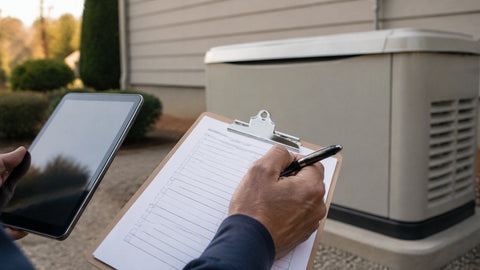
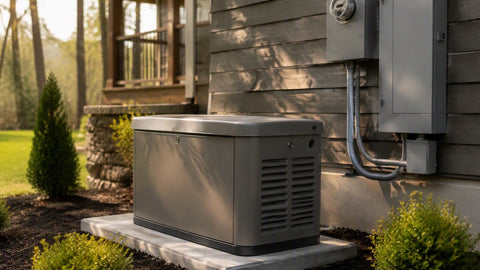
The Briggs & Stratton 076850 is a 48kW liquid-cooled standby generator designed for use with liquid propane (LP) or natural gas (NG). It offers a perfect combination of reliable power output and fuel efficiency, making it an excellent choice for both residential and light commercial applications. The Fortress series of generators from Briggs & Stratton is known for its superior performance, quiet operation, and durability, ensuring that when the grid goes down, you remain connected, comfortable, and powered.
This model is equipped with a liquid-cooled engine, which allows it to run at optimal temperatures for longer periods compared to air-cooled generators, making it a preferred choice for those who require a more heavy-duty solution. The 48kW power output is suitable for larger homes, small to medium-sized businesses, or any property with higher energy demands.
2.1. Liquid-Cooled Engine for Enhanced Durability and Efficiency
The liquid-cooled engine in the Briggs & Stratton 076850 ensures that the generator runs smoothly for longer periods without overheating. Unlike air-cooled engines, liquid-cooled systems are more efficient at maintaining optimal temperatures, reducing wear and tear. This results in:
- Lower operational costs due to less frequent maintenance.
- Increased lifespan of the generator, making it a sound investment for the long term.
- Quieter operation, as the engine remains cooler and runs more efficiently.
2.2. 48kW Power Output for Reliable Performance
With a 48kW output, the Briggs & Stratton 076850 is capable of running essential appliances and systems in larger homes, small businesses, and even medium-sized commercial operations. It can power:
- HVAC systems
- Lighting and security systems
- Water heaters
- Home or office appliances
- Medical equipment
This makes it a perfect choice for multi-function buildings, ensuring that no matter the load, you’ll have consistent power when you need it most.
2.3. Flexible Fuel Options: LP and NG
The 076850 is designed to run on both liquid propane (LP) and natural gas (NG). This flexibility provides customers with a choice of fuel based on availability, cost, and local conditions. Both fuels are highly efficient and available in most regions, providing greater flexibility for installation:
- Natural gas (NG) is typically more convenient and cost-effective if you are already connected to a natural gas line.
- Liquid propane (LP) is ideal for properties that may not have natural gas access, offering a longer shelf life for fuel storage.
2.4. Advanced Control System with Smart Technology
The Briggs & Stratton 076850 comes equipped with an advanced control system that provides real-time information on the status of the generator, including:
- Voltage and current readings
- Power output
- Fuel levels
- Service alerts
The generator is compatible with remote monitoring solutions, allowing you to keep track of the system’s performance via your smartphone or computer. This smart technology ensures that you can address any issues before they turn into problems, providing peace of mind knowing your backup system is always ready.
3.1. Reliability and Peace of Mind
The Briggs & Stratton 076850 offers uninterrupted power during power outages, ensuring that you remain connected to your essential systems. Whether you’re running critical medical equipment, maintaining your business operations, or keeping your family safe, the 48kW Fortress generator offers reliable backup power, even during extended outages.
The liquid-cooled engine and long-run fuel capabilities ensure that the generator operates smoothly during extended power loss, providing confidence that your energy needs are covered at all times.
3.2. Quiet Operation
Compared to air-cooled generators, the liquid-cooled design of the Briggs & Stratton 076850 results in quieter operation. This is a particularly important feature for residential areas or businesses in urban or suburban settings with noise restrictions. You can enjoy power without the disruptive sound often associated with traditional generators.
3.3. Long-Term Investment
With its durable design, low maintenance needs, and high power output, the Briggs & Stratton 076850 is built to last. It is designed to operate effectively for years, with a low annual cost of ownership. Its high-quality components and superior cooling system increase the generator’s lifespan, making it a reliable, long-term investment.
4.1. Residential Applications
For homeowners, the Briggs & Stratton 076850 offers the peace of mind that comes with knowing your family will remain safe and comfortable during power outages. Its ability to power multiple systems, such as air conditioning, lights, security systems, and medical equipment, ensures you are never without essential services.
4.2. Small to Medium-Sized Businesses
For small businesses, such as retail stores, offices, or light manufacturing facilities, having an efficient and reliable standby power source is crucial. The 48kW Fortress generator provides enough power to keep operations running during blackouts, minimizing downtime and ensuring that customers and employees are not affected by power loss.
4.3. Commercial and Industrial Use
The Briggs & Stratton 076850 is also suitable for medium-sized commercial and industrial applications, where energy demand can fluctuate. It ensures that business-critical operations continue running smoothly, even when the grid fails, allowing seamless transitions between grid and generator power.
5.1. Easy Installation Process
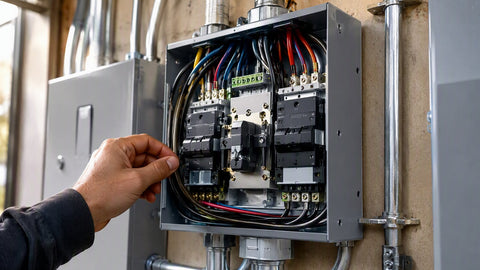
The Briggs & Stratton 076850 is designed with ease of installation in mind. It comes with comprehensive installation instructions, and professional installers can have it up and running in no time. The generator is also compatible with most automatic transfer switches (ATS), ensuring a quick and seamless transition from grid power to backup power.
5.2. Minimal Maintenance Requirements
With its liquid-cooled engine and advanced components, the 076850 requires minimal maintenance. Regular maintenance includes:
- Oil changes
- Air filter replacements
- Battery checks
- Fuel system inspections
Thanks to its high-quality construction, the 076850 can operate for long periods without significant wear, ensuring it will provide reliable backup power when you need it most.
The Briggs & Stratton 076850 Liquid-Cooled 48kW Fortress LPV/NG Standby Generator stands as a top-tier solution for anyone needing reliable, efficient backup power. Whether for residential use, small businesses, or industrial applications, this generator is engineered to deliver high performance and peace of mind during power outages.
With flexible fuel options, a liquid-cooled design, and exceptional durability, the 076850 provides a quiet, efficient, and long-lasting power solution. Its modular design makes it easy to scale and integrate into any energy system, and the advanced monitoring system keeps you informed of its status at all times.
For anyone looking to secure reliable, sustainable backup power, the Briggs & Stratton 076850 is the perfect solution. It is more than just a generator—it's a reliable partner in energy security and peace of mind.
Related Resources:
- Best Solar Panels 2026 — Buyer's Guide
- EG4 vs Tesla Powerwall
- Qcells vs Trina vs JA
- Solar Inverter Buyer's Guide
- Solar Battery Buyer's Guide
- 5kW Solar Kit
- 10kW Solar + Battery Kit
- Off-Grid Cabin Kit
- EG4 Batteries
- Qcells Solar Panels
- Trina Solar
- JA Solar
- REC Solar
- Mission Solar
- Sol-Ark Inverters
- SolarEdge Inverters
- Generac PWRcell
Calculate how much storage you need with our battery sizing calculator.
Check solar incentives available in your state.
Use our free solar system calculator to size your array.
Check out our Solar Panel Comparison Tool. Check out our Inverter Sizing Calculator.
Calculate your solar payback and 25-year savings with our Solar ROI Calculator. Follow our complete DIY solar installation guide for step-by-step instructions. Keep your system running at peak performance with our Solar Maintenance Guide.
Related Products

Briggs and Stratton 076850 Liquid Cooled 48kW Fortress LPV/NG Standby Generator
View
Related Resources
- Solar System Calculator
- Battery Sizing Calculator
- Solar Panel Comparison Tool
- Inverter Sizing Calculator
- Solar ROI Calculator
- Solar Installation Guide
- Solar Maintenance Guide
- Solar Permitting Guide
- Battery Installation Guide
- NEC Code Compliance Guide
- Solar Panel Mounting Guide
- Grounding & Bonding Guide
- Solar Incentives by State
- Pro Account — Wholesale Pricing
- PowerLink Network — Contractor Program
Field notes from our generator desk
- I've specced enough 48kW installs to say this clearly: the generator is the easy half of the job. The transfer switch strategy and the fuel plan are where these projects succeed or fail — a 400A service-entrance ATS and a properly sized tank are not upgrade options, they're the design.
- A customer once asked me why his neighbor's air-cooled 22kW couldn't just be doubled up instead of buying one liquid-cooled 48kW. Two engines, two maintenance schedules, two failure points, and no synchronized load sharing. One liquid-cooled engine wins every time at this size.
- I remind every buyer that the Fortress line's quiet operation isn't a luxury feature — on commercial sites with noise ordinances and residential adjacency, it's the difference between a permit and a complaint.
Forty-eight kilowatts is the threshold where backup power stops being about essentials and becomes whole-facility coverage. To make that concrete, here is how typical loads stack against a 48kW unit — remember that motor-starting inrush, not running watts, is what sizes the generator, and the liquid-cooled engine's reserve capacity is what absorbs it.
| Load | Typical Running Draw | Starting Surge | Notes for 48kW Planning |
|---|---|---|---|
| Central HVAC, 5-ton compressor | ~5–6kW | 2–3× running for seconds | Multiple units stagger-start through the ATS or load-management modules |
| Large home full panel (200A service) | 10–25kW typical coincident | — | One 48kW covers even large estates with margin |
| Commercial refrigeration bank | 3–8kW per bank | High inrush per compressor | Grocery, restaurant, cold storage — the loads that can't wait |
| Office / retail lighting + circuits | 5–15kW | Minimal | Easy load for this class |
| Well pump / sump / process pumps | 1.5–4kW each | 3–5× running | Rural and light-industrial sites stack several |
| Medical / lab equipment | 2–10kW | Varies | Verify sensitive-load requirements; pair with UPS where needed |
| Server room / IT closet | 3–12kW | — | Continuous, clean load; the 076850's liquid-cooled stability suits it |
The planning rule our team applies: sum your realistic coincident running loads, then confirm the largest motor-start can be absorbed on top of the running total. At 48kW with liquid-cooled transient response, most residential and light-commercial combinations pass with room to spare — which is exactly the point of buying this class instead of stretching a smaller air-cooled unit to its limit.
The 076850 runs on either liquid propane or natural gas, and the choice is usually made by the site, not the buyer. What each fuel means in practice on this platform:
| Factor | Liquid Propane (LP) | Natural Gas (NG) |
|---|---|---|
| Energy content | ~91,500 BTU/gal | ~1,030 BTU/ft³ |
| Fuel supply | On-site tank — total energy independence | Utility pipeline — no storage, no refueling, ever |
| Runtime limit | Tank capacity (days to weeks) | Effectively unlimited while gas service holds |
| Output rating | Full rated output | Typically a modest derate versus LP — verify the NG rating on the spec sheet |
| Cold-weather behavior | Vaporization drops in deep cold; tank sizing must include delivery-rate margin | Unaffected by ambient temperature at the generator |
| Disaster resilience | Fully independent of utilities | Depends on gas-main pressure; historically very reliable but not guaranteed |
| Best fit | Rural properties, agricultural sites, facilities without gas service | Suburban and urban commercial sites with existing gas infrastructure |
For LP installs, consumption planning at this output class runs roughly 4.3–4.8 gal/hr at half load and 7–8 gal/hr at full load (typical published figures for the 48kW liquid-cooled class — confirm the exact model's data plate). Against the 80% usable-fill rule, a 500-gallon tank delivers about 400 usable gallons: roughly 83–93 hours at half load, around three and a half to four days of continuous duty. A 1,000-gallon tank doubles that to a full week. Sites expecting extended outage exposure should treat 1,000 gallons as the design point, not the upgrade.
A 48kW liquid-cooled unit is commercial installation territory even on residential property. The checklist our contractors work from:
- Pad and placement: A level concrete pad rated for the unit's wet weight, with manufacturer-specified clearances from structures, windows, and combustibles. Local amendments to NFPA 37 (stationary combustion engines) govern siting — the AHJ's setback table wins any argument.
- Transfer switch: At this capacity, plan on a service-entrance-rated ATS at 200A or 400A depending on the service, sized per NEC 702. Load-management modules let the unit carry larger services by shedding discretionary loads.
- Fuel plumbing: LP runs require properly sized regulators and line for the full-load BTU demand with vaporization margin; NG runs require utility confirmation of adequate meter capacity and pressure — a standard residential meter often cannot feed 48kW, and the utility upgrade lead time belongs in the project schedule.
- Electrical permits and inspection: Generator, ATS, and fuel work each pull permits in most jurisdictions. Our NEC compliance guide and grounding and bonding guide cover the inspection-side details that fail first-time installs.
- Commissioning: Full-load operational test, transfer timing verification, exercise schedule programming, and customer walkthrough — including what the alarms sound like and who to call.
| Maintenance Item | Typical Interval (Liquid-Cooled) | Field Note |
|---|---|---|
| Weekly self-exercise | Automatic, 10–20 min | Confirm it ran — a silent unit is a warning, not a success |
| Oil & filter | Break-in at ~25 hrs, then 100–200 hrs or annually | Annual minimum even with low run hours |
| Coolant | Inspect level monthly; replace per manual (typically 2–3 years) | The liquid-cooling advantage only works with coolant in it |
| Air filter & plugs | 200 hrs / annually; plugs 300–400 hrs | Storm-season prep items |
| Battery | Inspect quarterly; replace every 3–4 years | Still the #1 no-start cause, even at 48kW |
| Fuel system | Annual regulator, connection, and leak inspection | Include the tank gauge and first-stage regulator on LP systems |
| Load test | Annually | Run it under real load, not just idle exercise, before storm season |
Buyers comparing this unit against alternatives in the class should also read our Generac vs. Kohler generator comparison for the competitive context. The summary view:
| Decision Factor | Air-Cooled 20–26kW Class | 076850 Liquid-Cooled 48kW |
|---|---|---|
| Best-fit property | Typical single-family homes | Large estates, multi-structure properties, light commercial |
| Extended-run capability | Multi-day runs with derating in heat | Continuous duty at rated output, day after day |
| Noise profile | Noticeable at property line | Quieter per kW; suited to noise-ordinance sites |
| Maintenance rhythm | Standard residential schedule | Commercial schedule with coolant and valve service |
| Installed cost | Lower entry point | Higher, but one unit replaces multiple smaller ones |
| ATS strategy | Often load-shed subpanels | Service-entrance 200A/400A whole-facility transfer |
Sites pairing generation with storage can review the hybrid approach in our solar battery buyer's guide. For a system quote covering the generator, ATS, fuel work, and commissioning, request a quote — we supply the full bill of materials, not just the headline unit. Smaller applications can step down to units like the Briggs & Stratton 30kW, and the full range lives in our generators catalog.
What can a 48kW generator actually power?
A 48kW liquid-cooled standby generator covers a large home's entire panel — HVAC, well pumps, refrigeration, and all circuits simultaneously — or a small-to-medium commercial facility including refrigeration banks, lighting, office loads, and IT infrastructure. The sizing check that matters is motor-starting inrush on top of coincident running load, and this class carries that margin comfortably for most residential and light-commercial sites.
What is the difference between the LPV and NG configurations?
The 076850 platform runs on either liquid propane or natural gas. LP provides total fuel independence via an on-site tank; NG provides unlimited runtime from the utility line, typically with a modest output derate versus LP. The choice follows site infrastructure — rural and agricultural sites without gas service run LP, suburban commercial sites with gas mains usually run NG.
How long will it run on a propane tank?
At typical consumption for the 48kW liquid-cooled class — roughly 4.3 to 4.8 gallons per hour at half load — a 500-gallon tank (400 usable gallons under the 80% fill rule) delivers about 83 to 93 hours of continuous runtime, and a 1,000-gallon tank about a week. Verify exact consumption against the model's data plate at your expected load.
Why liquid-cooled instead of air-cooled at this size?
Liquid cooling holds stable engine temperature through extended multi-day runs and heavy loading where air-cooled engines heat-soak and derate. It also runs quieter — important for noise-ordinance compliance on commercial and residential-adjacent sites — and extends engine life. Above roughly 22–26kW, liquid cooling stops being a luxury and becomes the professional choice.
What does installation involve?
A concrete pad with code clearances per NFPA 37 and the manufacturer's specs, a service-entrance-rated automatic transfer switch at 200A or 400A, fuel plumbing sized for full-load demand (including a possible gas-meter upgrade on NG), and permits for generator, electrical, and fuel work. Plan four to eight weeks from order to commissioned system depending on utility and inspection timelines.
Is a 48kW generator overkill for a normal house?
For a typical 2,000-square-foot home, yes — a 20–26kW air-cooled unit covers it. The 076850 earns its place on large estates with multiple HVAC systems and high coincident loads, multi-structure properties, home businesses with equipment that cannot lose power, and light-commercial facilities. When in doubt, size from a load calculation rather than square footage.
PES Supply carries 80,000+ products from 300+ manufacturers. One PO, one invoice, every trade covered.
Need help sizing? Our team can calculate loads, select equipment, and source everything from one PO.
Call (502) 790-0600
Related reading: Generac vs Kohler Generators Compared