This guide is for project developers, EPCs, and procurement managers navigating the high-stakes world of grid-scale energy projects. We will break down the critical technologies, financial models, and development hurdles you face today. The goal is to provide a real-world playbook for making informed decisions on system design, brand choice, procurement, and compliance to drive project success and ROI.
At its core, utility-scale energy storage refers to large, high-capacity systems designed to store electricity and inject it back into the power grid exactly when it's needed most. These aren't just backup power sources; they are active, dynamic assets that play a hands-on role in grid stability and reliability, especially as new regulations and IRA incentives accelerate project timelines.
Defining the Role of Grid-Scale Storage
For developers, EPCs, and procurement officers, understanding these systems is central to successfully navigating the modern energy market. These projects are built to solve real problems, from managing grid strain during a heatwave to helping states meet aggressive renewable energy goals. Utility-scale storage provides the flexibility our power system needs to become truly resilient.
To understand their value, it helps to look at what they actually do on the grid. While their capabilities are broad, their most common functions have a direct impact on both the operational and financial health of our power system.
The table below outlines how these systems serve different stakeholders, from grid operators to utilities, providing a clear framework for project planning.
Key Functions of Utility-Scale Energy Storage
| Application | Description | Primary Beneficiary |
|---|---|---|
| Renewable Energy Integration | Stores excess solar or wind power generated during peak production and dispatches it when the sun isn't shining or the wind isn't blowing. | Grid Operators & Developers |
| Grid Stability & Frequency Regulation | Responds instantly to fluctuations in grid frequency, helping maintain the tight 60 Hz standard required for safe, reliable power delivery under evolving grid codes. | Grid Operators & Utilities |
| Peak Shaving & Demand Response | Discharges stored energy during high-demand periods to reduce grid strain and avoid firing up expensive, inefficient "peaker" power plants. | Utilities & Consumers |
Each of these functions helps transform intermittent resources into predictable, dispatchable power, making the grid stronger and more cost-effective.
In essence, utility-scale energy storage acts as a strategic reserve of power, ready to be deployed in milliseconds. This rapid response is what makes it one of the most powerful tools for building a reliable and affordable energy future.
Market Momentum and Project Urgency
The push for these projects isn't just theoretical; it's driven by explosive market growth and mounting pressure on our grid infrastructure. The U.S. utility-scale energy storage market is expanding at a breakneck pace, with record-breaking installations reported in early 2025.
In the first quarter alone, the U.S. brought over 2 GW of energy storage capacity online. Utility-scale projects made up more than 1.5 GW of that—a remarkable 57% jump compared to the same period in 2024. This isn't just happening in traditional hotspots like Texas and California, either. The growth is spreading to states like Indiana, signaling a true nationwide trend. You can discover more insights about this record-breaking growth and what it means for the U.S. grid.
Expert Tip for Procurement & EPCs: This market acceleration means that securing your supply chain is more critical than ever. Lead times for transformers and switchgear can exceed 18 months, and production slots for Tier 1 battery systems are fiercely competitive. A partner like PES Supply leverages bulk purchasing power and deep vendor relationships with brands like BYD and Sungrow to secure critical components. Our in-stock inventory and freight optimization services are designed to de-risk your project timeline and prevent costly delays.
Core Technologies Powering Grid-Scale Storage
Once a project moves from a bid to a commissioned asset, developers and EPCs have to get practical about technology. At the heart of nearly every utility-scale energy storage project today, you'll find Battery Energy Storage Systems (BESS), with a huge focus on specific lithium-ion chemistries.
Getting the technology choice right is absolutely critical. This isn't just an academic debate; picking the wrong chemistry can sink a project's ROI, shorten its lifespan, and create headaches with site footprints and safety compliance. For a developer, this decision directly impacts whether revenue streams like frequency regulation or energy arbitrage are even viable. For an EPC, it shapes construction complexity and defines long-term O&M needs.
Lithium-Ion: The Dominant Force
Right now, lithium-ion batteries are the undisputed workhorse of the grid-scale market. They pack a lot of power into a small space (high energy density), they're efficient, and their costs have been dropping fast. But "lithium-ion" is a broad term. The real decision comes down to two leading chemistries: LFP and NMC.
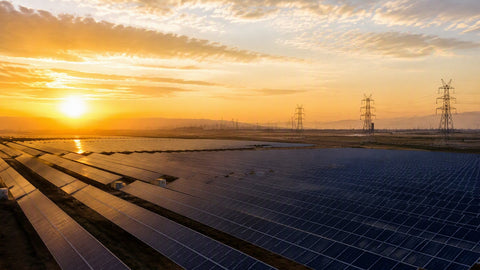
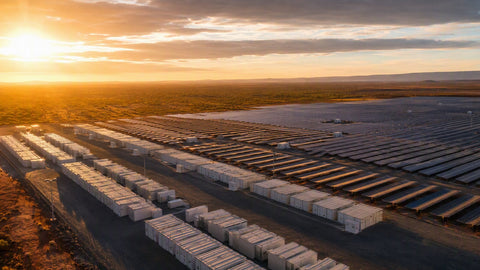
This image gives you a sense of how these massive battery systems fit into the bigger utility picture.
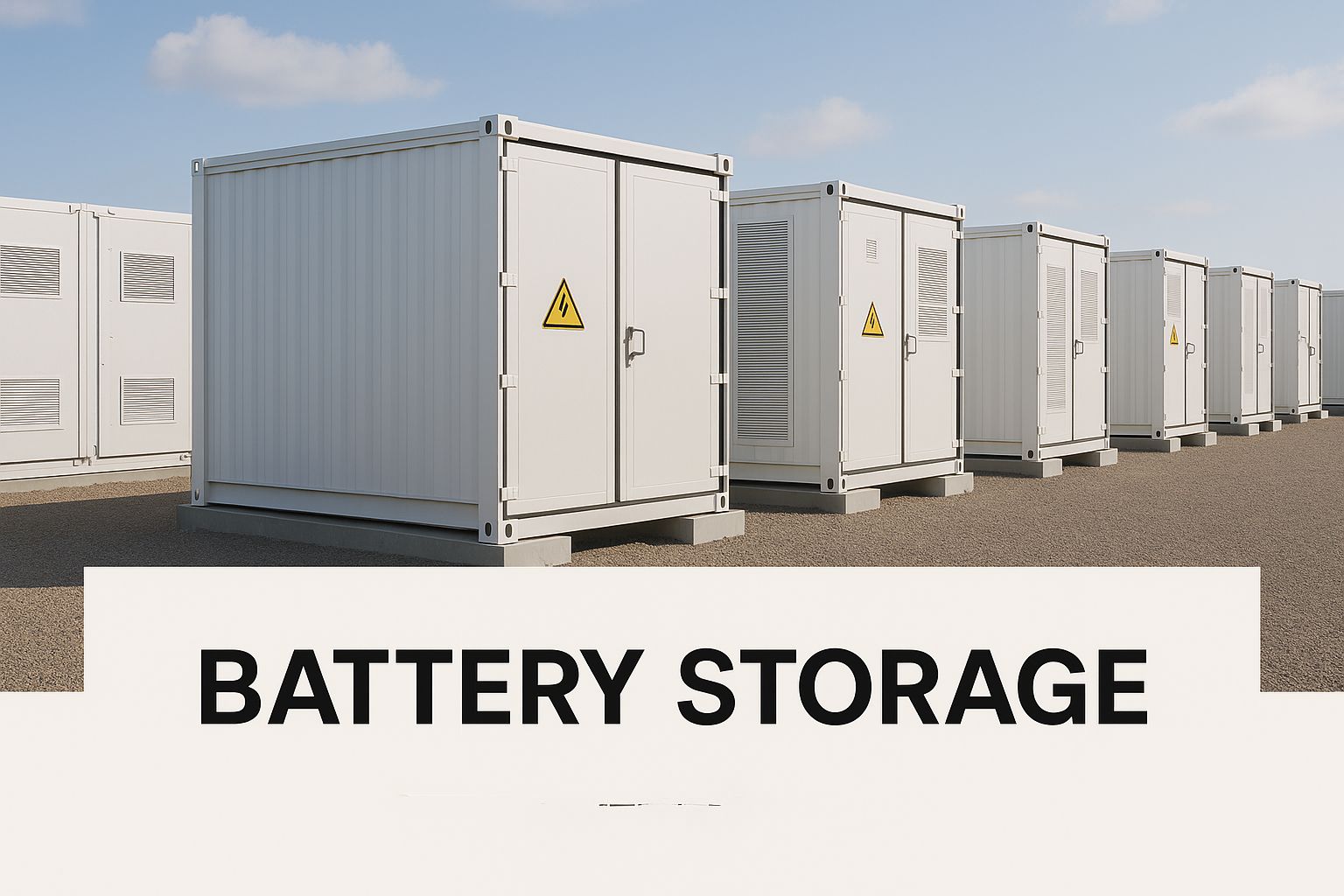
You can see the sheer scale of the battery racks, which have become central components in a modern, flexible grid.
- Lithium Iron Phosphate (LFP): This has quickly become the go-to choice for stationary storage. LFP batteries are known for their outstanding safety record (far less prone to thermal runaway) and incredibly long cycle life, making them perfect for the daily high-frequency cycling required for grid services.
- Nickel Manganese Cobalt (NMC): The main advantage of NMC is its higher energy density, allowing more energy storage in a smaller footprint. This is a huge plus for projects where land is expensive or limited. The trade-off is a typically higher price, a shorter cycle life, and more complex thermal management requirements compared to LFP.
A Pro-Tip for Developers: If your project is built around long-term, high-frequency use—think renewable energy shifting or providing grid services day in and day out—LFP is the new standard. Top-tier suppliers like BYD and Sungrow are all-in on LFP for their utility-scale products for a reason: its durability and lower lifetime cost. The initial price difference is often quickly erased by LFP’s longevity and lower operational risk.
Beyond Lithium-Ion: What's on the Horizon?
While lithium-ion wears the crown, other technologies are finding their niche, especially for long-duration storage (8+ hours).
- Flow Batteries: These systems store energy in external tanks of liquid electrolyte. This design allows for independent scaling of power and energy and offers an extremely long cycle life with minimal degradation, making them a serious contender for applications needing 8+ hours of storage.
- Mechanical Storage: This category uses basic physics—like gravity—to store potential energy. Pumped-storage hydropower is the classic example, but newer concepts like compressed-air energy storage (CAES) and gravity-based systems are gaining ground for very long-duration needs where local geology is favorable.
Deploying and maintaining these systems demands a solid grasp of their electrical architecture. For a primer on this essential skill, a practical guide to understanding electrical diagrams can be incredibly helpful.
The market's confidence in these technologies is clear. The chart below shows just how much investment is pouring into the sector, proving these assets are becoming more and more bankable.
This data shows a strong, sustained rise in global energy storage installations, which is exactly what investors and developers want to see. As you dig deeper into specific project needs, you can get a more detailed look at all the parts that make up a full BESS in our comprehensive guide to energy storage systems. Nailing the technology choice from the start is the first and most important step toward building a successful, profitable utility-scale asset.
Sizing the BESS: Matching Capacity and Duration to the Application
Every utility-scale energy storage design starts with two numbers: power capacity in megawatts (MW), which is set by the power conversion system (PCS), and energy capacity in megawatt-hours (MWh), which is set by the battery blocks. The ratio between them is the storage duration, and it must match the revenue model. A frequency-regulation asset may only need 1 hour of duration, while a capacity-market or solar-firming asset typically needs 4 hours or more.
Sizing the DC side also has to account for depth of discharge (DoD). Most LFP systems operate at roughly 90% DoD, so the DC nameplate has to be larger than the usable AC energy the project is contracted to deliver. The table below shows the math for a 100 MW PCS block across common durations.
| Storage Duration | Usable AC Energy (MWh) | DC Nameplate @ 90% DoD (MWh) | Daily Throughput @ 1 Cycle/Day (MWh) | Annual Throughput (GWh) |
|---|---|---|---|---|
| 1 hour | 100 | 111 | 100 | 36.5 |
| 2 hours | 200 | 222 | 200 | 73 |
| 4 hours | 400 | 444 | 400 | 146 |
| 8 hours | 800 | 889 | 800 | 292 |
The DC nameplate is simply the usable AC energy divided by 0.90, and annual throughput assumes one full equivalent cycle per day, 365 days a year. Real projects also carry a reserve margin and plan for augmentation, but this is the arithmetic every financial model starts from. For the building blocks themselves, see our containerized MWh-scale BESS systems and utility-scale grid-balancing storage solutions.
Installer Note: On a 60 MWh LFP project I helped commission in Central Oregon, we sized the DC block about 12% oversize on day one. That decision looked expensive in the bid phase, but by year three the degradation curve had eaten most of the cushion, and the project was still meeting its contracted capacity without an early augmentation event. I always push developers to model degradation against their capacity obligations before value-engineering the DC block down.
PCS and Inverter Sizing Under NEC 690.8 and 705
The PCS is where the battery's DC power becomes grid-ready AC power, and its sizing is a code exercise as much as an engineering one. NEC 690.8 requires circuit conductors and overcurrent protection devices for continuous inverter output to be sized at 125% of the inverter's maximum continuous output current. NEC Article 705 then governs how that PCS interconnects with the utility supply: 705.12 covers load-side connections (including the well-known 120% busbar rule, where the sum of power-source overcurrent devices on a busbar cannot exceed 120% of the busbar rating), while 705.11 covers supply-side taps. For battery systems specifically, NEC Article 706 (Energy Storage Systems) adds BESS-specific requirements on disconnects, signage, and spacing, and UL 9540 listing anchors the equipment approval.
The table below runs the NEC 690.8 math for typical PCS block ratings. Continuous output current is calculated as apparent power divided by (√3 × AC voltage).
| PCS Block Rating | AC Voltage (3-Phase) | Continuous Output Current | NEC 690.8 Sizing Current (×125%) | Minimum OCPD (NEC 240.6 Standard Size) |
|---|---|---|---|---|
| 1.0 MVA | 480 V | 1,203 A | 1,504 A | 1,600 A |
| 1.5 MVA | 480 V | 1,804 A | 2,256 A | 2,500 A |
| 2.0 MVA | 480 V | 2,406 A | 3,007 A | 4,000 A |
| 3.4 MVA | 600 V | 3,272 A | 4,091 A | 5,000 A |
For overcurrent devices rated above 800 A, NEC 240.4(C) requires the conductor ampacity to equal or exceed the OCPD rating, which is why most utility-scale designs step up to medium-voltage collection quickly instead of running enormous low-voltage feeders. As a 705.12 example: a 4,000 A switchboard busbar allows a maximum of 4,800 A (120%) of combined source overcurrent devices. We stock the supporting hardware for these builds, from 350 kW to 1 MW utility inverters to transformers and circuit breakers. For deeper code walks, see our guides on NEC 690 disconnect and overcurrent protection, NEC wire sizing and ampacity, and our NEC code compliance guide.
Installer Note: I have had an AHJ red-tag a commissioning because the EPC sized the PCS output conductors at nameplate current instead of 125% of it. The fix meant pulling new feeders and re-terminating switchgear—three weeks of schedule gone over a calculation that takes five minutes. NEC 690.8 is one of the first things I check on any plan set now, right alongside the 705.12 busbar math.
Cycle Life, Throughput, and Augmentation Planning
Cycle life is where the LFP-versus-NMC decision stops being theoretical. The real economic measure is lifetime energy throughput: how many megawatt-hours the battery will actually deliver before it degrades to its end-of-life capacity (typically 80% of nameplate). The comparison below assumes a 100 MWh nameplate block cycled once per day at 90% DoD, with typical rated cycle lives for each chemistry.
| Metric | LFP (Prismatic) | NMC |
|---|---|---|
| Rated cycle life to 80% capacity | ~6,000 cycles | ~3,000 cycles |
| Operating DoD assumption | 90% | 90% |
| Usable throughput per cycle (100 MWh nameplate) | 90 MWh | 90 MWh |
| Lifetime energy throughput | 540 GWh | 270 GWh |
| Implied service years @ 1 cycle/day | 16.4 years | 8.2 years |
| DC-side capex assumption | $150/kWh | $185/kWh |
| Levelized throughput cost (capex ÷ lifetime kWh) | $0.028/kWh | $0.069/kWh |
That last row is the one that matters: LFP's longer cycle life more than offsets its per-kWh price advantage, delivering roughly 2.5x the lifetime throughput per capex dollar in this example. It is why virtually every Tier 1 utility product line has standardized on LFP chemistry, and why our LiFePO4 battery inventory is the fastest-moving part of our storage catalog. Augmentation—adding modules over the asset's life to offset degradation—should still be budgeted as a planned operating cost, typically starting around year 8 to 10 on a daily-cycling LFP asset. For smaller-scale comparisons, our battery bank sizing guide covers the same throughput math at the residential and commercial scale.
The Business Case for Utility-Scale Storage
Connecting advanced technology to the bottom line is what turns a utility-scale energy storage project from a concept into a bankable asset. For developers, investors, and EPCs, the financial viability of these systems is a matter of smart, strategic planning. These projects are becoming cornerstone investments, driven by powerful market forces and major financial incentives that carve out a clear path to profitability.
The global hunger for these systems is a solid indicator of their financial health. We're seeing explosive growth in installed capacity, a boom fueled by the accelerating shift to renewables. Projections for 2025 are staggering, estimating the global installed capacity will hit approximately 86 GW with an energy storage volume of 221 GWh. That’s a year-over-year jump of 27% in capacity and 36% in stored energy.
This growth is built on real-world performance. The average storage duration is now around 2.6 hours per installation, showing just how far system design has come.
What Does a Utility-Scale BESS Actually Cost?
For a modern 4-hour LFP system (using a 100 MW / 400 MWh project as the reference), all-in installed costs in the U.S. generally land between $293 and $450 per kWh of AC-rated energy capacity, depending on site conditions, interconnection scope, and equipment selection. That puts the reference project between roughly $117 million and $180 million before incentives—which is why the 30% ITC has such an outsized effect on project economics.
| Cost Component | Low ($/kWh) | High ($/kWh) | Share of Total (Midpoint) |
|---|---|---|---|
| Battery racks & containers (DC) | $130 | $170 | 40% |
| PCS / inverters | $35 | $55 | 12% |
| Transformers & MV switchgear | $20 | $35 | 7% |
| Electrical BOS (cabling, combiners, grounding) | $25 | $40 | 9% |
| Civil & site work | $20 | $35 | 7% |
| EPC labor & project management | $40 | $70 | 15% |
| Permitting, interconnection & studies | $15 | $30 | 6% |
| Controls, SCADA & commissioning | $8 | $15 | 3% |
| Total installed cost | $293 | $450 | ~100% |
Two things stand out in this breakdown. First, the DC battery block is still the single largest line item at roughly 40% of total cost, which is why cell pricing and manufacturer allocation matter so much. Second, the "soft" categories—EPC management, permitting, interconnection studies—add up to more than a fifth of the budget, and they are the hardest to compress. For the generation side of a hybrid plant's economics, our guide to commercial solar installation costs uses the same cost-stack approach.
Installer Note: On the last three utility bids I have supported, the number that moved the most between estimate and final contract was not the batteries—it was the step-up transformer and the MV switchgear, where lead times pushed pricing up mid-negotiation. My rule now: lock the transformer price and production slot at notice to proceed, not at financial close. On one project, waiting 90 days added over $400,000 to that single line item.
Stacking Revenue for Maximum ROI
The secret to unlocking the full financial power of utility-scale storage is revenue stacking. This is where a single BESS asset is used to provide multiple grid services, with each one generating its own income stream. Instead of relying on one source of cash, savvy asset owners design their projects to capture several at once.
For large industrial consumers, utility-scale storage can be transformative, helping to slash peak demand charges and streamline operations. Tools like industrial energy consumption calculators can offer a glimpse into the potential savings.
Here are the primary ways these assets make money:
- Energy Arbitrage: The classic "buy low, sell high" model. BESS units charge when electricity is cheap (midday, when solar floods the grid) and sell that power back when prices spike during evening peak demand.
- Ancillary Services: Grid operators pay premium rates for services that ensure grid stability. This includes frequency regulation, where batteries make millisecond-fast adjustments, or providing spinning reserves—on-demand power ready to deploy if a power plant trips offline.
- Capacity Payments: In many markets, asset owners get paid just for being available to deliver power during peak times. This provides a predictable, long-term revenue stream that investors love.
If you're new to this, getting a handle on these income streams is crucial. You can get a solid primer on the fundamentals by checking out our article on what an energy storage system is.
The table below breaks down how these revenue streams align with different project goals and technologies, offering a roadmap for developers and EPCs.
Revenue Streams vs Project Goals Comparison
| Revenue Stream | Primary Function | Typical Duration Requirement | Best-Fit Technology |
|---|---|---|---|
| Energy Arbitrage | Time-shifting energy to capture price spreads. | 2-6 hours | Lithium-ion (NMC, LFP) |
| Ancillary Services | Rapid response for grid stability (e.g., frequency regulation). | <1 hour | Lithium-ion (high-power), Flywheels |
| Capacity Payments | Ensuring resource availability during peak demand. | 4+ hours | Lithium-ion, Flow Batteries |
| Renewables Firming | Smoothing out variable wind/solar output. | 1-4 hours | Lithium-ion |
| Black Start | Restoring power to the grid after a major outage. | 1-2 hours | Lithium-ion |
Matching the right technology to your target revenue streams is fundamental to building a profitable and effective project.
Policy Drivers and Financial Incentives
Government policy is a massive catalyst for this entire business case. The Inflation Reduction Act (IRA) was a watershed policy shift, making standalone storage projects eligible for the 30% Investment Tax Credit (ITC) for the first time. This single move unlocked billions in investment capital practically overnight.
Compliance Watchout: Navigating NEC and UL Standards While the ITC opens doors, cashing in on it demands strict adherence to U.S. standards. The National Electrical Code (NEC) and UL standards (like UL 9540 for BESS safety) are non-negotiable. Getting this wrong can lead to failed inspections, crippling project delays, and even voided warranties—putting the entire investment on the line. A partner like PES Supply provides that essential compliance backstop, ensuring every component and system design meets these tough requirements from day one. Our PowerLink service can even connect you with qualified installers who are experts in local code.
On top of federal incentives, state-level mandates like Renewable Portfolio Standards (RPS) create guaranteed demand for clean, dispatchable power. When you stack these diverse revenue streams and capitalize on powerful policy incentives, utility-scale storage projects present a clear and compelling business case.
Navigating Utility-Scale Project Development
Getting a utility-scale energy storage project from a concept on a whiteboard to a commissioned, revenue-generating asset is a serious undertaking. This is the real-world playbook for developers and EPCs, breaking down the entire lifecycle into distinct, manageable stages. True success hinges on navigating each phase with precision while keeping a sharp eye out for the significant risks that can derail a project.
The whole process demands meticulous planning, from scouting the perfect plot of land to finally flipping the switch. Every step builds on the one before it, and one mistake early on can create a costly domino effect, blowing up timelines and budgets. This is exactly where a strategic, forward-thinking approach—and a solid network of partners—really pays off.
Site Selection and Feasibility
The very first, and arguably most critical, decision is where to build. A great site is much more than just a patch of open land. You need the right topography, favorable zoning, and—most importantly—to be right next to a substation with enough available capacity to connect to the grid. Developers have to run exhaustive feasibility studies to check for environmental hurdles, tricky geotechnical conditions, and any potential pushback from the local community.
A classic rookie mistake is underestimating just how critical a preliminary grid study is. Before you sink any serious cash into a project, you absolutely have to know if the local grid can even handle the new power you want to inject. This initial check prevents you from wasting time and money on a site that’s a non-starter from an engineering perspective.
Interconnection and Permitting
Once you've locked in a site, the race to get into the utility interconnection queue begins. This is often the longest, most unpredictable part of the entire development journey.
Critical Mistake to Avoid: Underestimating the Queue The interconnection queue isn't a simple "first-come, first-served" line; it's a complex, multi-year maze of studies managed by the grid operator. In busy regions like MISO or PJM, you could be waiting for several years. If you don't bake these massive delays into your project timeline, you've essentially killed your financial model before a single shovel ever hits the dirt.
At the same time, you're kicking off the permitting process. This means getting the green light from a web of local, state, and sometimes federal agencies. It requires incredibly detailed applications covering everything from environmental impact reports to public safety plans, demanding tight coordination between your legal, engineering, and community outreach teams.
Procurement and Supply Chain Management
With permits finally in hand and an interconnection agreement secured, all eyes turn to procurement. Right now, this stage is a massive source of project risk. The biggest headache? Long-lead-time equipment.
Locking down these critical components as early as possible is non-negotiable if you want to keep your project on track:
- Transformers: Lead times for the large, high-voltage step-up transformers you'll need can easily stretch beyond 12-18 months. Ordering this iron has to be a top priority the moment your technical specs are finalized.
- Switchgear: Custom-built switchgear and circuit breakers are the gatekeepers that safely connect your battery system to the grid. Just like transformers, they come with long manufacturing timelines.
- Battery Systems: While lead times for battery blocks have gotten better, securing a production slot from a Tier 1 manufacturer like BYD or Sungrow still requires serious advance planning, especially when you're ordering enough for a multi-megawatt-hour project.
This is where a dedicated supply chain partner like PES Supply becomes a force multiplier for developers and EPCs. We tap into our deep supplier relationships and bulk purchasing power to secure allocations for these critical, hard-to-get items. Our expertise in freight optimization and access to in-stock inventory from our nationwide hubs can slash lead times and take the risk of costly project delays off the table. By letting us handle the logistical headaches, your team can stay focused on construction and commissioning. You can request a bulk quote to see how we can help de-risk your project's procurement timeline.
Construction and Commissioning
The final sprint is all about turning blueprints into a functioning physical asset. The construction phase covers everything from site prep and pouring concrete pads to installing the battery containers, inverters, and all the cabling that ties it together. Once the last bolt is tightened, the project moves into commissioning.
This is a highly technical process where engineers rigorously test every single component and system. They have to ensure everything operates safely and meets the exact performance standards laid out in the interconnection agreement. After a successful commissioning, the utility gives the final "permission to operate," and the asset officially starts its life on the grid.
Global Market Trends and Future Outlook
For a long time, the story of utility-scale energy storage was mostly about the United States and China. That's changing. A truly global expansion is happening right now, opening up massive opportunities for developers, investors, and strategic planners who are willing to look beyond the usual markets.
What we're seeing isn't just slow and steady growth; it's a fundamental redrawing of the world's energy map. The reasons are pretty universal: technology costs are dropping, decarbonization goals are getting more aggressive, and everyone needs a stable grid as we lean more heavily on renewables like wind and solar.
Emerging Hotspots and Global Growth
While the U.S. and China are still the heavyweights, a whole new set of players are jumping into the ring. Emerging markets are now rolling out gigawatt-hour-scale projects, which shows a serious commitment to building a resilient energy future.
The numbers are staggering. In 2025 alone, the world is expected to add a record 94 GW or 247 GWh of energy storage—that's a 35% jump from previous years. This explosion of activity is being fueled by new hotspots like Saudi Arabia, South Africa, Australia, the Netherlands, Chile, and the UK. If you want to dig deeper, you can learn more about these global energy storage growth findings and see why this trend is expected to continue through 2035.
This diversification is exciting, but it also means you can't use a one-size-fits-all approach. A winning global strategy depends on really understanding the local regulations, grid needs, and incentives in each region.
The Shift to Hybrid Power Plants
One of the biggest trends shaping the future is the rise of hybrid power plants. Instead of adding storage as an afterthought, developers are now building massive solar or wind farms with battery systems integrated from day one. This isn't just about convenience; it's a fundamentally better way to build a power plant.
By pairing generation with storage, these hybrid plants can deliver reliable, dispatchable power—just like a traditional fossil fuel plant, but without the emissions. They can soak up cheap renewable energy that might otherwise go to waste and sell it back to the grid when demand (and prices) are high. This completely changes the financial picture of a project. Getting a handle on the economics is key, and our guide on commercial solar installation costs offers great insights into the generation side of this equation.
The Future of Storage Technology and Operations
Looking ahead, a few key innovations are set to define the next generation of utility-scale storage. If you're a developer or investor, you need to have these on your radar.
- Long-Duration Energy Storage (LDES): Today's 4-hour lithium-ion batteries are the workhorses of the industry, but we're quickly moving toward systems that can discharge for 8, 12, or even over 100 hours. Technologies like flow batteries and advanced mechanical storage will be crucial for replacing old-school baseload power plants and keeping the lights on during multi-day weather events.
- AI-Driven Optimization: The simple days of "buy low, sell high" are over. The future of battery trading is all about artificial intelligence. AI algorithms can crunch thousands of data points—weather forecasts, grid demand, market prices—to make split-second decisions about when to charge or discharge. This is how you squeeze every last drop of revenue out of complex ancillary service markets.
Expert Tip: Future-Proofing Your Projects The grid never stands still. To make sure your utility-scale storage asset stays valuable for years to come, you have to design it for change. That means keeping a close eye on evolving grid codes and market rules. A battery built for today's frequency regulation market might need to pivot to a capacity market in five years. Build your system with modular hardware and software that can be easily updated to chase new revenue streams as they pop up.
The future of utility-scale energy storage is global, dynamic, and full of opportunity. For those who are ready to dive into new markets, build hybrid projects, and embrace next-gen tech, the chance to build the backbone of our modern grid has never been greater.
Common Questions About Utility-Scale Storage
Here are some of the most critical questions we hear from developers, EPCs, and investors, with straightforward, field-tested answers to help you navigate the complexities of utility-scale energy storage.
What Are the Biggest Risks in a Utility-Scale Storage Project?
Any big energy project comes with risk, but in the storage world, three issues consistently rise to the top: interconnection, supply chain, and market revenue. If you don't get ahead of these, any one of them can sink a project's financial viability.
- Interconnection Delays: This is the big one. Getting a project connected to the grid can be a long, painful process. In regions like MISO or CAISO, the utility queues are notoriously backed up. It's not uncommon for a project to get stuck for years just waiting for studies, which throws project timelines and financial models completely out of whack.
- Supply Chain Disruptions: The global appetite for batteries and other key components is massive. Trying to lock down long-lead-time equipment—think high-voltage transformers, switchgear, or even Tier 1 battery cells from top manufacturers like BYD or Sungrow—is a real fight. One delayed shipment can bring the whole construction schedule to a halt.
- Market Revenue Volatility: Your revenue is often tied to energy markets, especially from ancillary services and energy arbitrage. These markets can swing wildly based on grid demand, weather, and regulatory shifts. Your financial projections have to be rock-solid, built on models that account for this volatility, or you risk the project not being profitable down the line.
The best way to handle these risks is with deep industry knowledge and the right partners. Teaming up with an experienced distributor who has secured equipment allocations, can optimize freight, and knows how to work with utilities is one of the smartest moves you can make to de-risk a project.
How Do I Choose Between LFP and NMC Battery Chemistries?
Deciding between Lithium Iron Phosphate (LFP) and Nickel Manganese Cobalt (NMC) isn't just a technical spec check; it's a fundamental business decision driven by your project's specific goals.
For most modern utility-scale projects, LFP is the new standard. Its safety profile is far superior, it has a much longer cycle life, and its thermal stability is excellent. This makes it the perfect workhorse for the daily, frequent cycling required for most grid applications. If you’re making money by shifting renewable energy or providing daily grid services, LFP delivers the reliability and longevity you need for a healthy ROI.
NMC batteries, on the other hand, shine on energy density. You can simply pack more storage capacity into a smaller space. This can be decisive for projects where land is tight or real estate costs are sky-high. The trade-off? NMC has a shorter cycle life, costs more upfront, and requires more sophisticated (and expensive) thermal management to operate safely.
What Is the Typical Lifespan of a Utility-Scale Battery System?
A utility-scale Battery Energy Storage System (BESS) is generally designed to last 15 to 20 years. But that's not a guarantee. The actual operational life really depends on the battery chemistry (LFP usually wins on longevity), the depth and frequency of cycling, and the quality of your thermal management system.
Most Tier 1 manufacturers will offer performance warranties that cover 10 to 15 years. These warranties are crucial—they guarantee the battery will still hold a certain percentage of its original capacity, typically around 70%, by the time the warranty period ends.
One term every developer needs to know is augmentation. This is the planned process of adding new battery cells or modules to the system over its lifetime. It’s done to counteract the natural degradation that all batteries experience and to ensure the project can still meet its power capacity obligations years down the road. Sophisticated financial models always include augmentation as a standard operating cost.
How Does the ITC Apply to Standalone Storage?
The Inflation Reduction Act (IRA) was a massive deal for utility-scale energy storage in the U.S. It completely changed the financial landscape by making standalone storage projects—those not built alongside a solar farm or wind turbine—eligible for the Investment Tax Credit (ITC) for the very first time.
This was a landmark change. The ITC starts with a base credit of 6%, but projects can easily get to a 30% credit just by meeting prevailing wage and apprenticeship labor rules.
And it gets even better. There are "adders" that can stack on top of that 30%:
- A 10% bonus for using a certain amount of domestic content (American-made steel, iron, and other manufactured products).
- A 10% bonus if the project is located in a designated "energy community," which often includes areas with a history tied to the fossil fuel industry.
This powerful financial carrot has suddenly made standalone storage projects pencil out in many more markets across the country, unlocking billions in new investment and turbocharging the deployment of these critical grid assets.
What Is the Difference Between Power Capacity (MW) and Energy Capacity (MWh)?
Power capacity, measured in megawatts, is the rate at which the system can charge or discharge—think of it as the size of the pipe. Energy capacity, measured in megawatt-hours, is the total amount of electricity the system can hold—the size of the tank. A 100 MW / 400 MWh system can discharge at its full 100 MW rate for 4 hours before it is empty. Getting this distinction right is the foundation of every sizing, revenue, and interconnection decision on a project.
How Long Does It Take to Build a Utility-Scale Battery Project?
From first site control to permission to operate, most U.S. utility-scale storage projects take two to five years, and the interconnection queue is almost always the longest pole in the tent. Physical construction and commissioning typically run 12 to 18 months once equipment is on site. The projects that hit their dates are the ones that secure interconnection position early, order long-lead equipment like transformers at notice to proceed, and keep permitting packages complete and accurate the first time through.
PES Supply is your strategic partner for navigating every stage of a utility-scale project. From securing Tier 1 equipment and managing complex logistics to ensuring full compliance with IRA and NEC standards, we provide the expertise and in-stock inventory to bring your project to life.
Request a Bulk Quote and let our experts de-risk your supply chain.
Calculate how much storage you need with our battery sizing calculator.
Check solar incentives available in your state.
Use our free solar system calculator to size your array.
Check out our Solar Panel Comparison Tool. Check out our Inverter Sizing Calculator.
Calculate your solar payback and 25-year savings with our Solar ROI Calculator. Follow our complete DIY solar installation guide for step-by-step instructions. Keep your system running at peak performance with our Solar Maintenance Guide.
Related Resources
- Solar System Calculator
- Battery Sizing Calculator
- Solar Panel Comparison Tool
- Inverter Sizing Calculator
- Solar ROI Calculator
- Solar Installation Guide
- Solar Maintenance Guide
- Solar Permitting Guide
- Battery Installation Guide
- NEC Code Compliance Guide
- Solar Panel Mounting Guide
- Grounding & Bonding Guide
- Solar Incentives by State
- Utility-Scale Battery Storage Solutions
- Containerized BESS (MWh-Scale)
- NEC 690 Disconnect & Overcurrent Protection Guide