LADWP and Investor-Owned Utility RFPs — A Bidder's Guide for Electrical and Renewable Equipment Supply
Responding to Los Angeles Department of Water and Power, Southern California Edison, PG&E, ConEd, Duke, TVA, and other large utility solicitations for transformers, switchgear, wire, PV, and battery storage. Includes real bid patterns, EPC ordinance considerations, LABAVN registration for LADWP, and the packaging PES uses to satisfy utility-grade documentation requirements.

Utility procurement — public power, investor-owned, and rural electric cooperatives — is legally and operationally distinct from federal, state, or municipal procurement. A large investor-owned utility like Pacific Gas & Electric or Consolidated Edison is a private company; a large public utility like Los Angeles Department of Water and Power (LADWP) or Sacramento Municipal Utility District (SMUD) is a municipally owned entity subject to city procurement rules plus additional utility-specific requirements. Federal Power Marketing Administrations like Western Area Power Administration (WAPA) and Tennessee Valley Authority (TVA) are federal government corporations with their own procurement frameworks.
What all of them share:
- Long product-qualification cycles (6–24 months for new equipment approvals)
- Prequalified vendor lists (PQVLs) that gatekeep who can bid on major categories
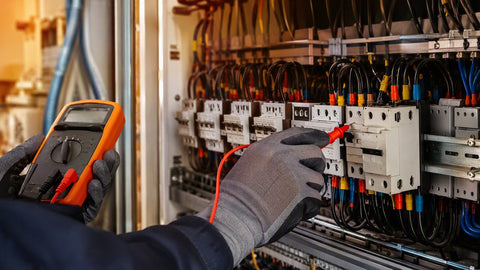
- Utility-grade documentation requirements (type test reports, factory inspection witnesses, IEEE compliance certifications) that exceed anything a typical commercial job requires
- Reliability-focused warranty terms (5-year workmanship warranties are common; some categories demand 10+ years)
- Serious liquidated damages for late delivery — utilities cannot afford stockouts on operationally critical equipment
- Cybersecurity certifications for OT/ICS-connected equipment (NERC CIP for bulk-electric-system assets; utility-specific extensions for distribution)
For electrical distributors and manufacturers targeting utility work, the two most important structural facts to understand are: (1) getting on the prequalified vendor list is a separate multi-month project from bidding any individual solicitation, and (2) utility RFPs have compliance requirements deeper than most federal RFPs — they'll ask for type test reports going back 20 years for the exact product design being offered.
LADWP is the largest municipal utility in the United States, serving Los Angeles with electricity, water, and public power. Per LADWP's Vendors and Bidders page, LADWP's Supply Chain Services solicits goods and services through:
- Formal solicitations posted on LABAVN (Los Angeles Business Assistance Virtual Network)
- Informal quotes for lower-dollar procurements
- Cooperative purchasing (for eligible categories)
- Sole-source procurements (rare, requiring justification)
Vendors register at LABAVN — the shared procurement portal for LADWP, the City of Los Angeles, and other City departments. Registration is free and required to bid.
EPC Ordinance and Contract Provisions
LADWP contracts are subject to a large stack of Los Angeles City ordinances that get bundled into contract awards. Two of the most impactful for electrical contractors:
- Council File 16-0096 (2016) — Local hire and workforce requirements for LADWP construction projects, including apprenticeship utilization targets.
- Council File 20-0845 (2020) — Extensions and refinements to labor standards for LADWP contracts.
Bidders should read the Section 01000 Boilerplate Provisions that ship with LADWP construction solicitations — they codify local hire, prevailing wage, apprenticeship, contractor responsibility, and non-discrimination requirements that apply to every award.
LADWP's Renewable and Clean-Energy Solicitations
LADWP has ambitious 100% carbon-free-by-2035 goals under the LA100 study and has been an active solicitor for solar, energy storage, and grid-modernization equipment. Recent solicitation categories include:
- Utility-scale solar and battery storage EPC contracts (Eland Solar, Beacon Solar, etc.)
- Distribution transformer supply contracts (multiple award vehicles)
- Overhead conductor and underground cable master agreements
- Substation switchgear and protective relaying
- Distribution automation and grid-modernization equipment
- Meters and metering infrastructure
Distribution equipment for LADWP is subject to LADWP's own materials standards (equivalent to but distinct from IEEE, ANSI, or NEMA), and equipment must be on the LADWP-approved list before it can be used in the system. Getting on that list is a multi-month process involving type test reports, factory inspection, and sometimes on-site samples. Distributors selling LADWP-approved equipment work through the specific manufacturers who have completed the approval process.
Southern California Edison (SCE), Pacific Gas & Electric (PG&E), and San Diego Gas & Electric (SDG&E) are the three large investor-owned utilities in California. Each has a similar procurement pattern:
- Supplier Diversity Registration. IOUs are subject to California Public Utilities Commission (CPUC) General Order 156, which requires utility procurement plans that target 21.5% Women/Minority/Disabled Veteran Business Enterprise participation (recently increased). Registering as a diverse supplier through the utility's supplier diversity program provides visibility to sourcing managers.
- Master Supply Agreements. For high-volume commodity categories (wire, cable, transformers, meters, pole hardware), IOUs establish master supply agreements with prequalified manufacturers and distributors. These agreements can last 3-5 years with annual pricing updates.
- Category-specific RFPs. For specialized equipment (utility-scale battery storage, specific transformer designs, grid modernization technology), IOUs issue category-specific RFPs.
- Resource Adequacy and Long-Term Procurement Plan Solicitations. For utility-scale generation and storage, IOUs run large resource RFPs with 10–20-year offtake terms — very different from equipment supply RFPs.
The single most important structural fact about IOU electrical procurement: getting on the approved manufacturer/distributor list is 80% of the sales cycle. Once you're on the list, bidding is competitive but achievable; before you're on the list, you can't quote. IOUs have written product-approval processes for every category, and the entry step is often a formal application backed by type test reports, financial statements, references, and sometimes an on-site audit.
Distributors selling IOU-approved equipment work with the manufacturers who have completed each utility's approval. PES's role for many customers is sourcing the specific IOU-approved SKU from an in-stock position when the utility distributor has run out — a common gap in high-demand cycles like storm response.
Consolidated Edison (New York City, Westchester), National Grid (upstate NY, MA, RI), Eversource (CT, MA, NH), and other Northeast utilities have their own supplier qualification processes and their own catalog of approved equipment. Key patterns:
- NY State-specific requirements. New York's Clean Energy Standard, Climate Leadership and Community Protection Act (CLCPA), and Public Service Commission orders drive procurement priorities toward decarbonization. Utilities in NY are increasing procurement of grid-modernization equipment, energy storage, DER integration technology, and EV charging infrastructure.
- MTA and Port Authority. Beyond the utilities themselves, major transit and infrastructure agencies (MTA, Port Authority of NY and NJ, Amtrak) procure large volumes of electrical equipment for their operations. Their procurement processes resemble utility procurement more than typical municipal buying.
- Winter reliability focus. Northeast utilities have stringent storm-response and cold-weather-reliability requirements. Equipment specifications may include cold-weather ratings and reliability testing that other regions don't demand.
Distributor entry for Northeast utility work typically starts with getting on the utility's approved manufacturer list for specific product categories, then either bidding directly for stocking programs or working with utility-approved distributors as an upstream source. PES has active supply relationships with utility distributors serving the Northeast market.
Duke Energy (Carolinas, Florida, Midwest), Southern Company subsidiaries (Georgia Power, Alabama Power, Mississippi Power), Dominion Energy, and TVA cover most of the Southeast utility procurement. Structural notes:
- TVA — a federal utility. Tennessee Valley Authority is a federal government corporation with a mixed procurement environment. TVA has its own procurement code (separate from FAR) but is subject to some federal domestic-preference requirements. TVA procurement operates through its Supplier Portal at supplier.tva.com.
- Duke's centralized procurement. Duke Energy operates centralized sourcing for its multi-state footprint, with category-specific master agreements and a Supplier Diversity program.
- Southern Company subsidiaries. Southern Company subsidiaries retain some procurement independence but coordinate on major categories through Southern Company Services.
- Storm restoration and mutual assistance. Southeast utilities have particularly demanding storm-response requirements. Vendors on approved supplier lists may be called for emergency deliveries after hurricanes and severe weather. Ability to deliver on 24-72 hour notice is often a scoring factor.
Duke Energy and TVA both publish supplier registration and diversity information through their procurement portals — the initial registration step for either is a straightforward online form followed by category-specific qualification submissions.
A utility RFP response has structural differences from a federal or municipal response that catch first-time utility bidders off guard:
| Element | Federal / Municipal RFP | Utility RFP |
|---|---|---|
| Prequalification | System for Award Management (SAM) or local vendor registry | Utility-specific PQVL with per-category approvals |
| Product qualification | Meet the technical spec at delivery | Product must be on the utility's approved product list — often a 6–24 month qualification cycle |
| Type testing | Not typically required | Complete type test reports required for many categories — 20 years of history for the exact design |
| Factory inspection | Not typical | Witnessed factory inspection often required for large transformers, switchgear |
| Warranty | Solicitation-defined; typically 1–2 years | Category-defined; 5-10 years common for major equipment |
| Liquidated damages | Sometimes included | Almost always included; significant per-day amounts |
| Delivery lead time | Solicitation-defined | Product-specific — utility equipment can have 6-24 month lead times |
| Substitute equipment during warranty | Contract-specified | Often prohibited or requires re-approval — cannot substitute across the approved product boundary |
| Cybersecurity | Section 889, CMMC (DoD) | NERC CIP for BES assets; utility-specific extensions |
The single biggest first-time-utility-bidder mistake: bidding a product that isn't on the utility's approved list. Even if your product is technically superior, meets every stated spec, and comes at half the price, if it isn't on the approved list at time of award, you can't deliver — and the utility rejects the bid at evaluation. Confirm approved-product status before spending time on the bid.
-
1
Confirm you're on the applicable prequalified vendor list
Some utilities restrict solicitation access to PQVL members. Even when solicitations are open, being on the PQVL is often scored favorably or required for award. Registration on LABAVN is the entry point for LADWP; each other utility has its own portal.
-
2
Confirm every product SKU is on the utility's approved product list
Ask the utility's technical or category manager for the current approved list for your product category. For distribution transformers, this is often called the 'Approved Transformer Manufacturers List' or similar. For solar/storage, it's an approved OEM list. If your product isn't on the list, the earliest path to bidding is submitting an approval request — a separate 6-24 month cycle.
-
3
Verify type test report availability for every proposed SKU
Type test reports from an independent testing laboratory (KEMA, DOBLE, Powertech, etc.) are usually required for the specific product design being offered. Confirm the OEM has current reports for the SKU in the proposed quantity range. Some utilities require reports witnessed by their own engineers.
-
4
Read the full solicitation for utility-specific compliance elements
Beyond the technical spec, look for cybersecurity requirements (NERC CIP for BES-connected equipment), supplier diversity commitments, prevailing wage/labor terms (for LA-region utilities, especially), buy-America overlays (which may attach to federally-funded utility work), and mutual assistance/storm response availability.
-
5
Model liquidated damages and delivery risk carefully
Utility contracts typically have per-day LDs for late delivery, often $1,000-$10,000/day for large equipment. Model the LD exposure against your OEM's committed lead time with buffer. For long-lead items (transformers, switchgear), place production order commitments before bid submission when possible.
-
6
Package the bid with utility-grade documentation
Every proposed product should include: full type test reports, IEEE/ANSI/NEMA compliance certifications, factory inspection availability, materials country-of-origin documentation, cybersecurity attestations for applicable equipment, and warranty terms in writing from the OEM.
-
7
Address diversity spend targets in the bid narrative
Where the utility has a supplier diversity target (LADWP, most IOUs), address how your team meets it — either through your own diverse ownership status or through subcontracting/subsourcing arrangements. Diversity spend is often a scoring factor or a mandatory participation goal.
-
8
Attend the pre-bid conference
Utility pre-bid conferences often reveal solicitation-specific requirements not obvious from the RFP text — approved substitute rules, delivery schedule flexibility, and specific product design preferences. Attend live when possible.
-
9
Submit through the utility's designated channel with confirmation
Utility bids typically must be submitted through a specific portal or physically to a designated address. Late bids are almost always non-responsive. Get a submission receipt or confirmation email.
-
10
Post-award, execute the compliance chain
After award, most utilities require pre-production submittals (drawings, materials specs, test plans), factory witness inspections at defined milestones, and delivery documentation. The compliance chain doesn't end at bid submission — it runs through delivery and warranty periods.
Registered distributors and contractors buying through PES for utility work receive:
- Approved-product-list mapping. Which of our SKUs are on which utilities' approved lists (LADWP, SCE, PG&E, ConEd, National Grid, Duke, TVA, and others). We flag SKUs actively approved vs. under application vs. not currently pursuing approval.
- Type test reports. Full type test documentation from OEMs, indexed to the SKU offered.
- IEEE/ANSI/NEMA compliance certifications. Standards compliance letters and third-party test lab certifications.
- Factory inspection availability. Which OEM plants can host factory inspection witnesses on what schedules for which products.
- Country of origin and BAA/TAA/BABA status. Applicable when the utility work is federally funded (WAPA, TVA direct work, IRA-funded utility grid modernization).
- Cybersecurity attestation. NERC CIP applicability, ICS/OT security posture, supply chain risk management (SP 800-161) alignment.
- Warranty and reliability history. Field performance data on stocked SKUs with utility deployment history.
- Delivery commitment terms. Written OEM lead time commitments backed by stocking allocations.
The documentation pack is designed to satisfy the "utility-grade documentation" expectation in a single bundle — reducing the effort a bidder has to spend chasing paperwork from multiple manufacturers and independent test labs in the 30-day window most utility RFPs allow for response.
Storm response is a distinct utility procurement mode. When Hurricane Ida, Ian, Ida, or any similar event hits, affected utilities need immediate delivery of transformers, poles, wire, connectors, and reclosers to restore service. Standard bid processes don't apply — utilities call the manufacturers and distributors on their pre-approved emergency supplier lists and place orders under emergency purchase authority.
Getting on the emergency supplier list requires:
- Being on the utility's regular approved supplier list for the relevant categories
- Demonstrating capacity to deliver on 24-72 hour notice
- Having stocking inventory or reserved OEM allocations sufficient to satisfy typical emergency call volumes
- Signing pre-negotiated emergency purchase terms (typically fixed markups over pre-agreed base prices, expedited freight, and stipulated delivery commitments)
Mutual assistance among utilities amplifies emergency demand — when a major storm hits Florida, utilities from as far as Michigan send crews and equipment. Suppliers on multiple utilities' emergency lists get the most volume.
For distributors, emergency response is high-margin, high-service work. Utilities in emergency mode buy what's available at prices reflective of the immediate need. Distributors with warehouse inventory of storm-response SKUs (specific transformer sizes, standard conductor gauges, common connectors) capture disproportionate share of emergency spend.
Beyond the large IOUs and major public power authorities, roughly 2,000 municipal electric utilities and 850 rural electric cooperatives serve U.S. customers. These smaller utilities are important procurement targets and follow their own patterns:
- American Public Power Association (APPA) and Utility Purchasing Cooperatives. Municipal utilities frequently procure through joint action agencies (JAAs) and public power cooperatives. Examples include the American Municipal Power (AMP) network in the Midwest, the Municipal Electric Authority of Georgia (MEAG), and the Florida Municipal Power Agency (FMPA). These cooperatives run joint procurements for member utilities and can substantially lower per-unit cost through aggregation.
- National Rural Electric Cooperative Association (NRECA) and Federated Cooperatives. Rural electric cooperatives procure through their own networks, including federated purchasing organizations like United Utility Supply Cooperative (UUSC). NRECA and its members are strong participants in solar and battery storage procurement, driven by member demand for distributed resources.
- State Public Service Commission Filings. For IOU procurement of long-lead capital equipment (transformers, transmission-scale switchgear), state PSC filings often disclose upcoming procurements ahead of formal RFP release. Monitoring PSC filings gives vendors visibility 6-12 months before solicitation.
- RUS-funded procurement. Rural cooperatives with USDA Rural Utilities Service (RUS) financing are subject to RUS procurement rules, which impose Buy American and BABA-adjacent requirements on federally supported infrastructure work. Products delivered to RUS-financed borrowers must satisfy applicable domestic-content rules.
Distributors targeting the public power and cooperative segment should register with the relevant JAAs and cooperatives, attend industry events (APPA Engineering & Operations, NRECA CONNECT, PowerLine Bare Hand & Rubber Glove events), and build relationships with member-utility engineering managers who set specifications for their systems.
Utility procurement of solar and battery storage has grown from niche to primary category over the last five years. Every major utility now runs solar and storage solicitations, but the procurement mechanics differ from traditional equipment supply.
Two very different modes:
- Utility-owned equipment supply. The utility procures modules, inverters, batteries, transformers, and racking directly for utility-owned solar or storage installations. Traditional supply RFP with utility-grade documentation requirements. Approved-product-list dynamics apply.
- PPA/tolling agreements with third-party developers. The utility contracts with a developer for a fully-installed solar/storage plant delivering energy or capacity over 10-25 years. The utility isn't buying the equipment; it's buying the energy or the tolling rights. Developers procure equipment from their own supply chain, but utility specifications on equipment reliability and warranty flow through to the developer's procurement.
For an equipment supplier like PES, both modes create opportunities:
- Utility-direct sales require getting on the utility's approved-product list for the specific solar/storage categories — typically distribution-side inverters, small-scale (up to a few MW) module supplies, and BESS packages.
- Developer-tier sales require reliability, warranty, and delivery certainty comparable to utility direct. Developers with strong utility offtake counterparties often have their own approved supplier lists that mirror the utility's requirements.
LADWP has been a particularly active procurer in both modes. Eland Solar, Beacon Solar, and other utility-scale projects have been developed under 20-25 year PPAs, with LADWP's technical review flowing through to equipment specifications. PES has active supplier relationships with the developers building on these projects and can source approved SKUs from stocking inventory when the developer's supply chain has gaps.
Battery storage procurement is particularly demanding. Utility-scale BESS installations have safety, reliability, and lifecycle requirements that go substantially beyond commercial or industrial storage. UL 9540 and 9540A compliance, dedicated fire protection design, thermal runaway containment, and long-term capacity retention warranties are all standard elements of utility BESS specifications. Distributors selling into this segment need to package the full compliance chain, not just the batteries.
How do I register as a vendor with LADWP?
What's the difference between LABAVN and BAVN?
Do I need to be on the LADWP approved manufacturer list to bid?
How long does it take to get on an IOU approved manufacturer list?
Does TVA work count as federal work for BAA purposes?
Do investor-owned utilities have to buy American?
What is NERC CIP and does it apply to my product?
How are utility RFP evaluations different from federal RFPs?
Does PES supply utility-grade transformers and switchgear?
How do I find LADWP solicitations that are currently open?
Bidding a Utility RFP? Register for the PES Utility Desk
Approved-product-list mapping, type test reports, factory inspection scheduling, and utility-grade documentation packaged as one solicitation-ready bundle.
Register Now