Briggs & Stratton 30kW Generator: 2026 Buyer's Guide
Model 076880 specs, whole-home load math, NEC-compliant electrical design, real installed costs, and the honest generator-vs-battery comparison.

Thirty kilowatts is the top of the residential standby world and the bottom of the commercial one — and that's exactly why the Briggs & Stratton 30kW (model 076880) sells so steadily. It's the size that ends the load-management conversation for a 4,000+ square foot home: run the 5-ton AC, the well pump, the EV charger, and the kitchen at the same time, and stop doing arithmetic every time the power drops. It's also the entry point for small commercial buyers — a retail shop, a professional office, a restaurant with modest kitchen load.
We sell and source this class of equipment every week, and I've had the same conversation with dozens of homeowners standing in front of a spec sheet: the difference between a 22kW and a 30kW unit isn't 8 kilowatts on paper — it's whether your house feels normal during a week-long outage or feels like camping with better lighting. This guide gives you the real specifications, the electrical code math, what 30kW actually runs, and the full installed-cost picture for 2026.
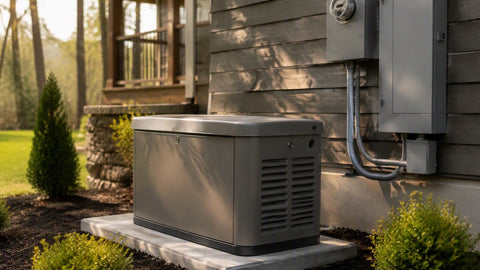
The 076880 is Briggs & Stratton's dealer-exclusive 30kW liquid-cooled standby unit. The dealer-exclusive part matters more than it sounds: this model is sold and supported through the dealer channel rather than big-box retail, which means the people installing it are factory-trained on it and the warranty path runs through professionals rather than a call center queue.
| Specification | Details |
|---|---|
| Model Number | 076880 |
| Series | Dealer Exclusive |
| Power Class | 30kW Liquid Cooled |
| Voltage Configuration | 120/240V Single-Phase |
| Fuel Options | Natural Gas (NG) / Liquid Propane (LP) |
| Enclosure | Steel with RhinoCoat™ powder-coat finish |
| Included Accessories | Block Heater (for cold-climate reliability) |
Output is identical on either fuel — a genuine 30kW on natural gas and 30kW on propane, which is not universal in this class. Many competitors derate noticeably on NG. If you're on utility gas, that parity means no sizing penalty for choosing the cheaper, unlimited-runtime fuel.
| Power Metric | Natural Gas | Propane (LP) |
|---|---|---|
| Rated Power (Standby) | 30kW* | 30kW |
| Rated Current @ 240V | 125A | 125A |
| Rated Current @ 120V | 250A | 250A |
Under about 24kW, most residential standby units are air-cooled — simpler, cheaper, and perfectly adequate for a few hours of outage. At 30kW, liquid cooling with a radiator becomes the standard, and for good reason: sustained multi-day operation at high load generates heat that air-cooled designs struggle to shed in August ambient temperatures. The 076880's 1.8L liquid-cooled engine maintains stable operating temperature through week-long runs, which is precisely the scenario a 30kW buyer is purchasing for. The block heater included with this model keeps oil viscosity where it needs to be for winter starts — in cold climates that single accessory is the difference between a generator that starts at 10°F and one that cranks itself flat trying.
The most common question we get: "Will it run my whole house?" Here's the wattage landscape for the loads that decide the answer:
| Application | Typical Wattage | Notes |
|---|---|---|
| Central Air Conditioning (5-ton) | 5,000 - 6,000W | Typical for 3,000-4,000 sq ft homes |
| Electric Furnace/Heat Pump | 5,000 - 15,000W | Varies by size and auxiliary heat |
| Level 2 EV Charger | 7,200 - 9,600W | Critical for daily transportation |
| Well Pump | 1,000 - 2,000W | Essential for rural properties |
| Home Office Setup | 500 - 1,500W | Computers, monitors, networking |
| Refrigerator/Freezer | 400 - 800W | Protect food and medications |
| Pool/Hot Tub Equipment | 2,000 - 5,000W | Pumps, heaters, controls |
| Medical Equipment | 300 - 1,500W | CPAP, oxygen concentrators, etc. |
| Total Available Power | 30,000W | Run multiple loads simultaneously |
Work the math on a realistic large-home scenario: 5-ton AC cycling at 5,500W, kitchen refrigerator and garage freezer at 1,200W combined, well pump at 1,500W intermittent, lights and electronics at 2,000W, and a Level 2 EV charger at 7,200W overnight. Total simultaneous demand: roughly 17,400W — 58% of the generator's capacity. That's the point of 30kW: you stop managing. Where this unit genuinely is ideal:
| Application | Why 30kW Is Ideal |
|---|---|
| Large Homes (4,000+ sq ft) | Powers central AC, multiple refrigerators, and high electrical demand without load shedding |
| Home-Based Businesses | Ensures zero downtime for home offices, e-commerce operations, or professional services |
| Medical Equipment Needs | Reliable power for CPAP, oxygen concentrators, refrigerated medications, and life-support devices |
| Small Commercial Properties | Retail shops, small offices, restaurants, and professional practices |
| Storm-Prone Regions | Hurricane, tornado, and severe weather areas requiring extended runtime capability |
| Electric Vehicle Owners | Keeps Level 2 chargers operational—essential for EV transportation during outages |
| Properties with Pools/Hot Tubs | Maintains pool pumps, heaters, and controls to prevent equipment damage |
| Well-Dependent Properties | Powers well pumps along with other home loads for complete water independence |
If your home is under 2,500 square feet with gas heat and no EV charger, be honest with yourself — a 22kW or 26kW unit probably covers you for several thousand dollars less. Our whole-home generator sizing guide walks the calculation step by step, and the 26kW guide covers the next size down in detail.
At 240V single-phase, 30kW is 125 amps of available current — enough that the electrical design deserves real attention rather than a hand-wave. Here's the code-checked design path:
| Design Element | Calculation / Code Reference | Result |
|---|---|---|
| Rated output current | 30,000 W ÷ 240 V | 125 A |
| Min. conductor ampacity | 125 A × 115% (NEC 445.13) | 143.8 A |
| Copper feeder (75°C) | NEC Table 310.16 — 1/0 AWG CU = 150 A | 1/0 AWG per leg |
| Standard OCPD | NEC 240.6(A) standard sizes | 150 A breaker |
| Equipment grounding conductor | NEC Table 250.122 (150 A OCPD) | 6 AWG copper |
| ATS pairing | Match home service rating | 200 A service-rated ATS (typical) |
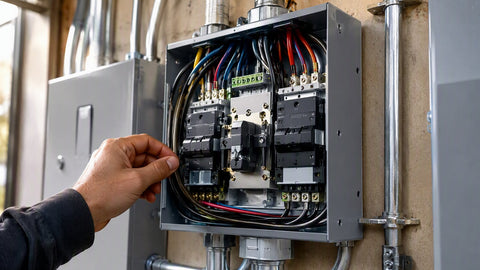
Most 30kW installs pair with a 200A service-rated automatic transfer switch ahead of the main panel, making the setup truly whole-home — no subpanel, no choosing which circuits get power. Our 200–225A transfer switch category covers the common pairings, and the NEC wire sizing guide has the ampacity tables if you want to verify your installer's design line by line.
The gas line is the hidden bottleneck
A 30kW natural gas unit at full load draws on the order of 300+ ft³/hr — often more than every other gas appliance in the house combined. Many homes need a meter upgrade or a dedicated run from the meter to the generator. Get the gas load letter to your utility early; it's the most common cause of installation delays we see, and it's entirely avoidable.
| Dimension | Imperial | Metric |
|---|---|---|
| Length | 48.1 in | 1,222 mm |
| Width | 25.0 in | 635 mm |
| Height | 29.0 in | 737 mm |
| Weight | ~700 lbs | 318 kg |
| Enclosure Material | Galvannealed steel with RhinoCoat™ | |
| Sound Level | <66 dB @ 7 meters (23 feet) | |
At roughly four feet long and 700 pounds, this is a genuine two-person-plus-equipment installation set, typically placed on a poured pad or a manufacturer-approved composite pad properly rated for the full wet operating weight. Placement rules that matter: maintain the manufacturer's clearances from walls and openings (exhaust heat and carbon monoxide are the constraints), keep it out of landscape irrigation spray, and think about the service technician — someone will need to open that enclosure twice a year for the next fifteen years. The sub-66 dB sound rating is conversational level at 23 feet, which keeps most HOAs and most neighbors content.
Customers cross-shop these constantly, so here's the side-by-side we walk through at the counter:
| Factor | Briggs & Stratton 30kW Generator | Battery Backup System |
|---|---|---|
| Runtime | Unlimited (with fuel supply) | 4-12 hours (capacity dependent) |
| Power Output | 30kW continuous | 5-15kW typical |
| Initial Cost | $9,000 - $14,000 installed | $15,000 - $40,000 installed |
| Fuel Source | Natural gas / propane | Grid or solar recharge |
| Maintenance | Annual service recommended | Minimal |
| Noise Level | ~66 dB during operation | Silent |
| Emissions | Yes (NG is cleanest) | None during operation |
| Best For | Extended outages, high loads | Short outages, daily use, solar |
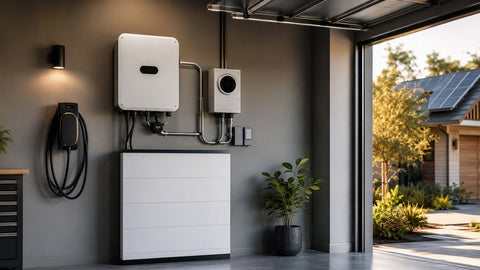
The decision framework I give customers: if your outages are measured in hours and you have solar, batteries are elegant. If your outages are measured in days — Gulf Coast hurricanes, ice storms, fire-season PSPS events — a fuel-fired standby set is the only technology that carries central AC indefinitely. Plenty of our customers ultimately run both: batteries for the daily ride-through and silent overnight coverage, generator for the long events. The battery runtime calculator helps size the battery side if you're exploring a hybrid approach.
Installed Cost: 2026 Numbers

| Cost Component | Typical Range |
|---|---|
| Generator Unit (076880) | $9,000 - $11,000 |
| 200A Transfer Switch | $800 - $1,500 |
| Installation (labor, permits, materials) | $2,500 - $5,000 |
| Concrete Pad (if needed) | $500 - $1,200 |
| Gas Line Upgrade (if needed) | $500 - $2,000 |
| Total Installed Cost | $13,000 - $21,000 |
Operating costs stay modest: natural gas at 50% load typically runs $3–5 per hour, and propane $5–8 per hour at the same output. A three-day outage on NG might cost $150–$250 in fuel — less than one restaurant dinner out per day of full-home comfort, and trivially less than a hotel, a lost freezer of food, or a flooded basement from a dead sump pump.
This is the cross-shop that happens on nearly every residential quote, so let me give you the framework I use at the counter. A 22kW air-cooled unit delivers about 92A at 240V. That's enough for a 3,000 sq ft home with a 4-ton AC if you let the load manager do its job — the EV charger waits while the AC runs, and nobody notices because the software handles it. A 26kW unit buys you a bit more simultaneous capacity and is the current sweet spot for the 3,000–3,500 sq ft band. The 30kW liquid-cooled unit changes the conversation in three specific situations. First, 5-ton or multiple AC systems: once your cooling load exceeds about 6,000W running, the headroom a 30kW provides stops being luxury and starts being the difference between the AC short-cycling on a hot outage day and running properly. Second, all-electric homes — heat pump with auxiliary strips, electric water heater, induction range — where coincident winter load can sail past 20kW without anything unusual happening. Third, home-based businesses where downtime has a revenue number attached; when an outage costs you $500 a day, the price delta between 26kW and 30kW stops being a debate.
What I tell buyers who are genuinely on the fence: get the load calculation done properly, and if your worst-case coincident load is under 18kW, save the money and take the smaller unit. If it's over 20kW, take the 30kW and never think about it again. The miserable outcome is the in-between buyer who purchases 22kW for a 21kW house and spends every outage listening to the load manager shed the water heater.
Fuel planning matters differently for the two fuels. On natural gas, consumption is a utility-capacity question — can the meter and service deliver enough volume at full load while the furnace and water heater also run? On propane, it's a tank-sizing question — how many days of autonomy does your storage give you? Planning figures for this class, using the industry rule of thumb of roughly 10 ft³ of NG per kW-hour at full load with degraded part-load efficiency, and typical LP consumption for a 30kW liquid-cooled engine:
| Load Point | Output | Natural Gas (est.) | Propane (est.) |
|---|---|---|---|
| 25% load | 7.5 kW | ≈90 ft³/hr | ≈1.0 gal/hr |
| 50% load | 15 kW | ≈170 ft³/hr | ≈1.8 gal/hr |
| 75% load | 22.5 kW | ≈250 ft³/hr | ≈2.7 gal/hr |
| 100% load | 30 kW | ≈320 ft³/hr | ≈3.6 gal/hr |
Run the autonomy math on the propane side, since that's where it's decisive. A 500-gallon LP tank holds about 400 usable gallons (tanks fill to 80% for expansion). At a realistic outage duty cycle — call it an average of 40–50% load over the day with overnight setback — you'll burn roughly 35–45 gallons per day. That's 9 to 11 days of autonomy from a 500-gallon tank. A 250-gallon tank (200 usable gallons) buys you 4 to 6 days. I've seen rural customers in ice-storm country spec two 500-gallon tanks specifically so a single fill carries them through any plausible event with margin for the delivery truck being three days late. If you're sizing propane storage, work from your expected load profile, not the full-load number — real homes cycle, and the generator spends most outage hours at part load.
On the natural gas side, the 320 ft³/hr full-load figure is why the meter conversation matters: add a 100,000 BTU furnace and a 50,000 BTU water heater to a generator pulling over 300,000 BTU/hr and you're asking the service for close to half a million BTU/hr of coincident capacity. Many residential services were sized for a third of that. Your installer should submit the gas load letter with the permit package — any dealer who skips this step is volunteering you for a callback.
A typical 30kW residential project runs three to six weeks from signed quote to commissioned system. Week one is the site assessment, load calc, and permit submission — plus the gas utility work order, because that's the pacing item. Weeks two and three are the pad, the gas run, and the electrical rough-in for the ATS. Week four is set-and-connect: the unit lands on the pad, gas and electric get terminated, the battery goes in. The final week is commissioning — factory startup procedure, transfer test, exercise schedule programming, and inspection. Weather, HOA review boards, and utility scheduling can each add a week; order in spring if you're in hurricane country, and before October if you're in ice country. The customers who call us the day after a major storm announcement are shopping against a lead time, not a price. One scheduling note that saves real money: bundle the generator's gas work with any other planned gas appliance project — a tankless water heater swap or an outdoor kitchen run — because the plumber's mobilization and the utility's meter visit cost roughly the same whether they serve one appliance or three.
The dealer-exclusive positioning of the 076880 is worth understanding because it changes your ownership experience. Big-box generators get installed by whoever the store's referral network sends; dealer-exclusive models get installed by factory-authorized dealers whose training and parts access run directly through Briggs & Stratton. When something faults at year six, that channel difference is the difference between a tech with the right diagnostic software and a generalist reading a manual in your driveway. Warranty terms on this class typically run multiple years of limited coverage — read whether labor is included and for how long, because labor is where real repair bills live. Keep your commissioning paperwork and annual service records; warranty claims go smoothly for owners who can document maintenance and painfully for owners who can't. We stock the consumables and service parts for this line, and if you're comparing against other brands, our standby generator category lets you put the whole field side by side.
- Weekly self-exercise — the unit runs its own test cycle; verify periodically that it's completing without faults, and treat any missed exercise as a reason to investigate the same week rather than the same month.
- Annual oil and filter service — or per the run-hour interval after extended events.
- Battery replacement at 3–4 years — the cheapest insurance in the whole system.
- Coolant check annually — liquid-cooled means antifreeze concentration matters in freezing climates; supplemental cold weather accessories help at the margins.
- Annual professional inspection — connections, transfer test, firmware, and a documented once-over keep the warranty clean and the unit honest. Budget a few hundred dollars a year; it is the cheapest component of the entire ownership picture and the one that protects everything else you've invested in the system.
Is a 30kW generator big enough for a whole house? For most homes up to about 5,000 square feet with central AC, yes — 30kW provides 125A at 240V, enough to run a 5-ton air conditioner, kitchen, well pump, and EV charger simultaneously with margin. Homes with electric resistance heat or multiple large AC systems should run the load calculation in our sizing guide before committing.
How much does a Briggs & Stratton 30kW cost installed? Figure $13,000–$21,000 turnkey in 2026, with the unit itself at $9,000–$11,000. The variables are the transfer switch configuration, gas line work, and pad requirements — get a site-specific quote rather than budgeting off the equipment price alone.
Natural gas or propane for a 30kW standby?
Natural gas if you have utility service — unlimited runtime and roughly half the fuel cost per hour. Propane if you're rural: this model makes its full 30kW on either fuel, so there's no output penalty for LP. Browse both configurations across our natural gas and propane categories.
How loud is a 30kW liquid-cooled generator?
Under 66 dB at 7 meters — about the level of a normal conversation. Liquid-cooled units run noticeably quieter than air-cooled equivalents because the radiator system replaces the loud engine-cooling fan of air-cooled designs.
What size transfer switch does a 30kW generator need? A 200A service-rated ATS for a typical whole-home installation with a 200A service. The generator's 125A output determines the feeder wire and breaker; the ATS must match the service it's switching. See the NEC design table above for the full breakdown.
How long will it run during an extended outage? On natural gas, indefinitely with routine maintenance — oil checks during extended runs and service per the engine schedule. On propane, runtime is a tank-sizing question: full-load consumption runs around three to four gallons per hour, so a 500-gallon tank delivers several days of heavy use or well over a week of typical cycling loads.
Get a Straight Answer on a 30kW System
We stock and source the Briggs & Stratton standby line along with transfer switches and install accessories. Tell us your square footage, your AC tonnage, and your fuel situation — we'll tell you whether 30kW is your number or whether a smaller unit does the job for less.
Browse 30kW Generators