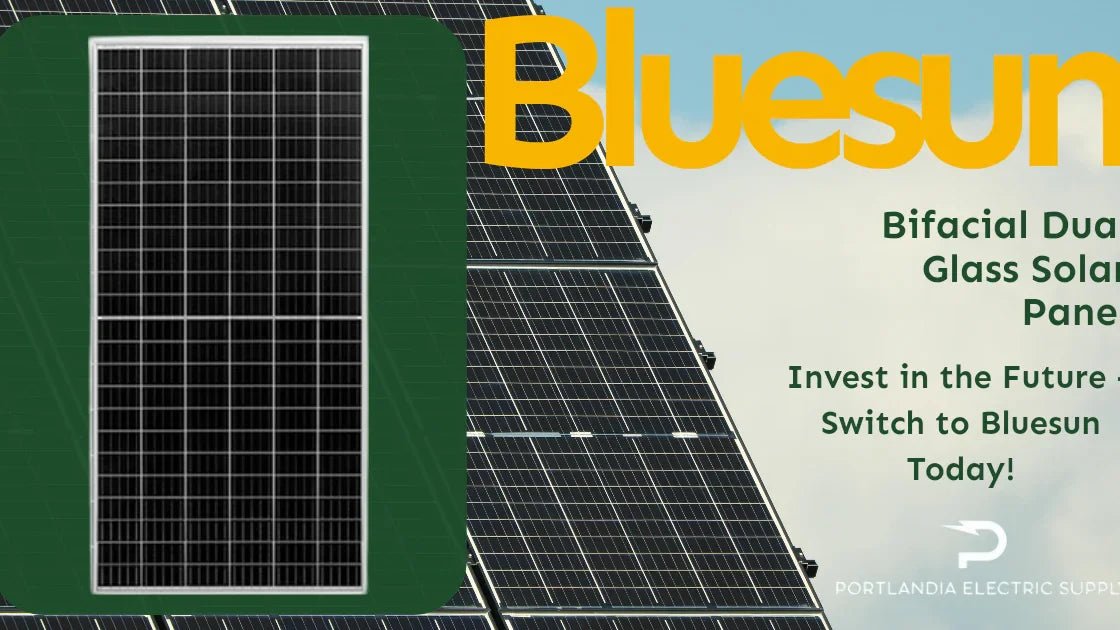
Bluesun 550W Bifacial Dual Glass Solar Panels: The High-Efficiency Workhorse for Modern Arrays
What bifacial dual-glass construction actually buys you, with the string-sizing math, albedo tables, and BOS economics to prove it.

Five years ago, a 550-watt residential-format module would have sounded like a trade-show fantasy. Today the Bluesun BSM550M10-72HBD and its 550W-class peers are standard stock on our warehouse floor, and bifacial dual-glass construction has moved from premium novelty to the default choice for commercial rooftops and ground-mounts that care about twenty-five-year economics. This guide explains what the technology does, where it genuinely outperforms, where the marketing outruns the physics, and how to size strings and structures around these larger-format modules without failing plan review.
We distribute Bluesun alongside a dozen other module lines, so we have no reason to oversell any single panel. What follows is the same analysis we run when a contractor calls asking whether bifacial dual glass is worth the per-watt premium for a specific site.
Field notes from our design desk
- I've laid out enough commercial rooftops to have a standing rule: bifacial panels over a white TPO roof are free money; bifacial over dark asphalt shingles is money left in the brochure. Check the surface before you pay for the second face.
- On a recent 80kW carport job, the rear-side gain from concrete and parked-car reflections ran about 11% over the year — right in the middle of what the albedo math predicted. The math works if you feed it honest inputs.
- The mistake I see most with 550W-class modules is mechanical, not electrical: crews used to 400W residential panels underestimate the size and weight, and suddenly a two-person lift becomes a racking argument. Plan the logistics before the truck arrives.
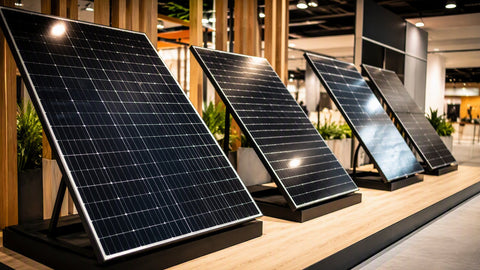
A conventional module sandwiches cells between front glass and a polymer backsheet; the rear of the panel is dead real estate. A bifacial module uses transparent rear glass instead, so light hitting the back of the panel — reflected up from the roof, the ground, or snow — generates additional power. Dual-glass construction also changes the durability story: glass doesn't breathe moisture the way polymer backsheets do, doesn't degrade under UV the same way, and gives the laminate a second structural skin.
The Bluesun 550W module pairs that construction with high-efficiency monocrystalline cells in a half-cut, multi-busbar layout. Half-cut cells reduce resistive losses inside the module and improve shade tolerance; the large format pushes more watts through every racking attachment, wire run, and labor hour. None of this is exotic anymore — it's simply where the industry's manufacturing baseline has landed, and the economics now favor buyers who understand the details.
One honest caveat before the tables: bifacial gain is entirely situational. A module racked four inches over a dark shingle roof sees almost nothing on its rear face. The same module over bright gravel, white membrane, or snow can add meaningful double-digit annual yield. The difference between those outcomes is the single most important design variable in a bifacial project.
Rear-side energy gain scales with ground or roof reflectance (albedo), module height above the surface, and array spacing. The ranges below are typical values consistent with published field studies and manufacturer guidance for elevated racking at reasonable row spacing. Treat them as planning figures, then model your specific site in a proper PV simulation before finalizing financials.
| Surface Under Array | Typical Albedo | Typical Annual Bifacial Gain | Field Comment |
|---|---|---|---|
| Dark asphalt shingles / black membrane | 0.05–0.10 | 0–3% | Effectively monofacial; don't pay the bifacial premium here |
| Grass / vegetation | 0.15–0.25 | 4–8% | Standard ground-mount baseline; keep vegetation managed or albedo drops further |
| Gray gravel / bare soil | 0.25–0.35 | 7–12% | Common commercial ground-mount surface; solid, predictable gain |
| Concrete / pavers | 0.30–0.40 | 9–13% | Carports and parking canopies live here |
| White TPO/PVC roof membrane | 0.60–0.80 | 15–25% | The commercial flat-roof sweet spot; higher standoff height pushes toward the top of the range |
| Snow cover (seasonal) | 0.80+ | Seasonal spikes well above 25% | Bonus winter yield on northern ground-mounts; not bankable year-round |
Two design levers move you up these ranges. First, height: raising the lower module edge from one meter to two meters on a ground-mount typically adds a couple of points of gain, because the rear face sees a wider, more evenly lit patch of ground. Second, row spacing: tighter rows shade each other's rear-surface view. Chasing bifacial gain with wider spacing increases land and trenching cost, so the optimum is an economic calculation, not a physics maximum.
Higher module wattage doesn't just shrink the panel count on a layout drawing — it cascades through the whole bill of materials. Fewer modules mean fewer clamps, fewer homeruns, fewer connections to torque, and fewer serial numbers to map at commissioning. Here is the arithmetic for a representative 100kW commercial array, using 550W modules versus a 400W residential-format alternative like the Solar4America 550W's smaller siblings:
| Line Item | 400W-Class Layout | 550W Bluesun Layout | Delta |
|---|---|---|---|
| Modules for 100kW DC | 250 | 182 | −68 modules (−27%) |
| Racking attachment points | ~1,000 (4 per module) | ~728 | −272 penetrations/clamps |
| Module-level electrical connections | 500 | 364 | −136 connections to land and torque |
| Strings at 12 modules each | 21 strings | 16 strings | −5 homeruns, less combiner and wire cost |
| Install labor (relative) | Baseline | Typically 10–15% lower per kW | Crews report faster per-kW pacing despite heavier modules |
| Serial numbers to map | 250 | 182 | Faster commissioning, cleaner monitoring data |
The counterweights: 550W-format modules are physically larger and heavier, usually in the 28–32kg class. That's a two-person lift by rule on most sites, and some residential roofs with tight hips and valleys simply won't accept the format. For small, chopped-up residential roofs, a compact 400W-class module still wins on layout efficiency. For anything with open rectangles — commercial flat roofs, ground-mounts, carports, agricultural buildings — the large format wins on cost per installed watt almost every time. Run the layout comparison before you commit; our solar panel comparison page and system calculator are built for exactly this exercise.
Large-format modules carry higher voltage and current per string, so the code math deserves a full worked pass. Using representative datasheet values for a current 550W-class bifacial module — Voc 49.6V, Isc 13.9A — here is a complete NEC 690.7 and 690.8 string calculation. Swap in the exact values from the module's datasheet for your permit set; the method doesn't change.
| Step | Code Reference | Calculation | Result |
|---|---|---|---|
| String Voc at STC | — | 14 modules × 49.6V | 694.4V |
| Cold correction, −10°C design low | NEC Table 690.7(A), factor 1.14 | 694.4 × 1.14 | 791.6V — must stay under inverter's 1,000V max input ✓ |
| Alternative: 16-module string | Same table | 16 × 49.6 × 1.14 | 904.7V — still under 1,000V, but verify MPPT window and inverter max ✓ (check datasheet) |
| Maximum circuit current | NEC 690.8(A)(1) | 13.9A × 1.25 | 17.4A |
| Continuous adjustment | NEC 690.8(B)(1) | 17.4 × 1.25 (= Isc × 1.56) | 21.7A |
| Overcurrent device | NEC 240.6(B) / 690.9 | Next standard size ≥ 21.7A | 25A |
| Conductor (75°C copper, THWN-2) | NEC 310.16 | Ampacity ≥ 21.7A | 10 AWG (35A) — standard PV wire practice |
Bifacial note for the AHJ: rear-side gain raises module current above the front-face STC rating. Where the design credits bifacial boost, apply the bifaciality factor to Isc before the 690.8 multipliers — many plan reviewers now ask for this explicitly on bifacial projects. Our NEC compliance guide and permitting guide cover the documentation reviewers expect to see.
The second glass sheet isn't only about bifacial gain. Dual-glass laminates resist moisture ingress, potential-induced degradation (PID), and mechanical microcracking better than polymer-backsheet construction, which is why manufacturers of dual-glass modules typically back them with longer performance warranties and lower annual degradation commitments. The figures below are typical published values for each construction class — confirm the specific warranty document for the exact module you're buying.
| Attribute | Dual-Glass Bifacial (Bluesun 550W class) | Conventional Backsheet Module |
|---|---|---|
| Typical performance warranty | 30 years | 25 years |
| Typical first-year degradation | ~1.0% | ~2.0% |
| Typical annual degradation thereafter | ~0.40–0.45%/yr | ~0.50–0.55%/yr |
| Warranted output at end of term | ~87–88% at year 30 | ~85% at year 25 |
| Moisture / humidity resistance | Excellent — glass is impermeable | Good — backsheet is the long-term weak point |
| Fire class | Class A typical for dual-glass construction | Class A or C depending on build |
| Weight penalty | ~10–15% heavier than backsheet equivalent | Lighter |
Run the degradation difference across a project's life and it compounds into real money. A 100kW array at 0.45%/yr versus 0.55%/yr degradation differs by roughly 1% of cumulative lifetime energy per decade of divergence — at commercial energy values, that alone often exceeds the per-watt premium for the better module. This is the calculation that converts procurement teams from backsheet to dual glass, and it's why we stock the Bluesun 550W as a volume line rather than a specialty item. Cross-check project economics with the solar ROI calculator.
Where These Panels Fit — and Where They Don't

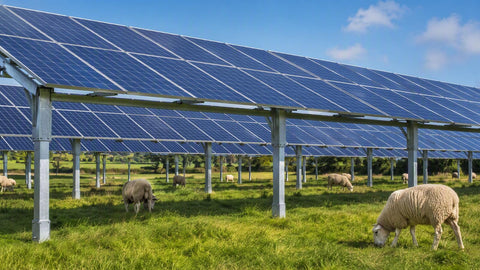
Best fits: commercial flat roofs over white or light membrane; ground-mounts over gravel, concrete, or managed grass; carports and canopies where rear light is unobstructed; agricultural and industrial buildings with open roof planes. In all of these, bifacial gain plus BOS savings plus the degradation profile stack into a clear win.
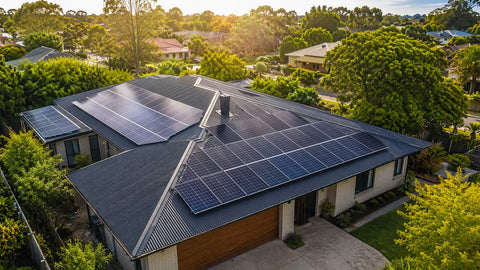
Marginal fits: residential roofs with dark shingles and complex geometry. The modules are big, the bifacial gain is minimal, and the per-module premium buys little. A compact high-efficiency monofacial module serves these roofs better.
Watch items on any site: racking compatibility with large-format clamping zones (check the module's approved clamp locations against the racking manufacturer's engineering letter); wind and snow load ratings for your specific mounting configuration; and logistics — a pallet of 550W-class modules needs forklift access and a staging plan, which our mounting guide and installation guide address in sequence.
For storage-coupled designs, size the battery against the array's real production profile, bifacial gain included, with the battery sizing calculator. And before any project goes to contract, check current pricing support and incentive stacking on our solar incentives by state page — module choice interacts with domestic-content and program requirements more often than buyers expect.
Lab ratings happen at 25°C cell temperature; rooftops in July run 30 degrees hotter than that. Every module loses output as it heats, and the temperature coefficient — typically around −0.30 to −0.35% per °C for modern half-cut mono modules in this class — decides how much of the nameplate survives a hot afternoon. Dual-glass construction dissipates heat somewhat differently than backsheet laminates, and elevated racking with open airflow under the array helps both types. The practical guidance: on hot-climate commercial designs, compare temperature coefficients across your shortlist, not just nameplate watts, and don't pack modules tight to the roof if the mounting system allows airflow standoff.
Soiling is the second real-world tax, and bifacial arrays feel it twice — a dirty front face and a dusty ground surface both cut yield. Flat-roof arrays at low tilt soil faster than steep ground-mounts because rain can't rinse them effectively. Budget a cleaning cycle into the O&M plan, and if the site sits near agriculture, construction, or highway dust, budget two. A monitored array will tell you when soiling has eaten enough to justify the wash — another argument for module-level or at least string-level monitoring on bifacial projects, since the rear-side contribution makes simple nameplate math unreliable as a health baseline.
Snow behavior rounds out the picture. Dual-glass modules shed snow reasonably well at tilt, and bifacial arrays on northern ground-mounts collect the albedo bonus from surrounding snowpack once the face clears. On flat commercial roofs, plan for several lost production days after major storms; no module technology fixes physics there. Budget these seasonal realities into the energy model from the start — the arrays that disappoint their owners are almost always the ones whose models assumed a laboratory year.
Within our catalog, the honest comparison set for this module is other 540–560W bifacial dual-glass offerings and the best large-format monofacial panels. We won't pretend the differences are dramatic — at this point the top tier of module manufacturing is a crowded, quality field, and Bluesun earns its shelf space on consistency, warranty terms, and availability rather than any single headline spec. Where we steer buyers between options:
- Choose bifacial dual glass (Bluesun 550W class) when the surface albedo justifies it, when 30-year degradation economics matter to the pro forma, and when the racking and logistics support large-format glass.
- Choose large-format monofacial when the roof is dark or obstructed but the open planes still suit big modules — you keep the BOS savings without paying for a rear face that sees nothing.
- Choose compact 400W-class modules for complex residential geometry, weight-restricted structures, or any layout where the large format wastes roof area to setbacks and obstructions.
If you're weighing brands across these categories, our best solar panels roundup and the side-by-side data in the panel comparison tool reflect what we actually stock and stand behind.
A pallet of 550W-class dual-glass modules is heavy, tall, and unforgiving of improvisation. Sites need forklift or telehandler access, level staging, and a crew briefed on two-person carry technique — dual-glass laminates resist microcracking better than backsheet modules, but a dropped corner still writes off the panel. Order with a 2–3% spare ratio on commercial jobs; replacement freight on a single module costs more than the spare sitting in the container.
On lead times: high-wattage formats turn over fast, and the exact cell generation inside a 550W label changes as factories upgrade lines. When the permit set lists a specific model, confirm availability before submittal and note an approved-equivalent list in the documents so a mid-project supply shift doesn't trigger a redesign. This is routine for us — a quote request with your layout and target energization date gets you availability, alternates, and freight timing in one response.
Module choice and inverter choice are one decision, not two. Higher string currents from 550W-class modules push some older string inverters past their per-MPPT input current limits, especially once bifacial boost lifts operating current above the front-face STC figure. Before finalizing a pairing, check three numbers on the inverter datasheet: maximum input current per MPPT (must exceed the module's boosted Imp with margin), MPPT voltage window (must bracket your corrected string voltage from the 690.7 calculation), and total usable MPPT count versus your string plan. Our inverter sizing calculator runs this check, and the inverter buyer's guide explains the spec-sheet lines that matter.
For commercial rooftops with parapet shade or multi-tilt layouts, module-level power electronics recover the mismatch losses that bifacial rear-side variance introduces — remember that every module in a bifacial string sees slightly different rear irradiance, so string-level MPPT leaves a little more energy on the table than it does in monofacial arrays. It's a small effect, but on tight-margin projects it's part of the architecture conversation.
We stock the Bluesun BSM550M10-72HBD and comparable 550W-class modules with full manufacturer warranty support, BABA documentation available at no charge for qualifying projects, and freight options tuned for palletized large-format glass. Contractors get volume pricing across our full solar panel catalog, or request a quote with your layout and we'll confirm module availability, racking compatibility, and lead time in one pass. Keep the array performing with the practices in our solar maintenance guide once it's in the air.
How much more energy does a bifacial panel really produce?
It depends almost entirely on the surface beneath the array. Over dark shingles, expect 0–3% — essentially nothing. Over white commercial roof membrane, 15–25% annual gain is typical in field studies, with snow-covered ground-mounts spiking even higher seasonally. Height above the surface and row spacing move you up or down within those ranges. Model your specific site before banking the gain in project financials.
Are 550W panels too big for residential roofs?
Often, yes — not electrically, but physically. At roughly 2.3 × 1.1 meters and around 30kg, these modules are a two-person lift and need large open rectangles to lay out efficiently. Chopped-up residential roofs with hips, valleys, and vents usually fit more total capacity with compact 400W-class modules. The 550W format earns its keep on commercial roofs, ground-mounts, and carports.
Does dual glass really last longer than a backsheet panel?
The warranty structures reflect it: dual-glass modules typically carry 30-year performance warranties with ~0.40–0.45% annual degradation commitments, versus 25 years at ~0.50–0.55% for backsheet construction. Glass doesn't transmit moisture or degrade under UV the way polymers do, which is the mechanism behind the longer guarantees. Confirm the exact figures in the warranty document for the module you buy.
Do I need special racking for 550W bifacial panels?
You need racking whose engineering letter covers large-format modules at your site's wind and snow loads, with clamps landing in the module manufacturer's approved clamping zones. Most major racking lines now have large-format configurations, but the compatibility check is a submittal requirement, not an assumption. Also avoid racking members that shadow the rear face — torque tubes and rails placed per the bifacial manufacturer's layout guidance preserve the rear-side gain.
How does bifacial gain affect NEC wire sizing?
Rear-side gain raises module current above the front-face STC rating. Where the design credits bifacial boost, multiply Isc by the bifaciality factor before applying the NEC 690.8 multipliers (×1.25 for irradiance, ×1.25 for continuous duty). Many plan reviewers now ask to see this step explicitly on bifacial permit sets.
Is Bluesun a bankable brand?
Bluesun is an established Tier-1-listed manufacturer with a global project track record, and we stock their modules with full factory warranty support. For financed projects, confirm the specific module against your lender's approved vendor list — bankability determinations belong to the financier, not the distributor.