Section 45X Advanced Manufacturing Credit: 2023 Solar Factory Boom in America
A per-watt, per-kilogram tax credit for U.S.-made solar components rewired the industry's map in 2023. Here's how 45X works, what it pays, who built what — and what it means for the equipment you buy.
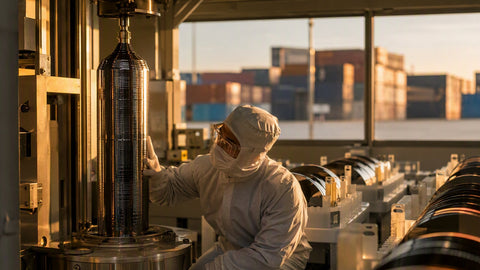
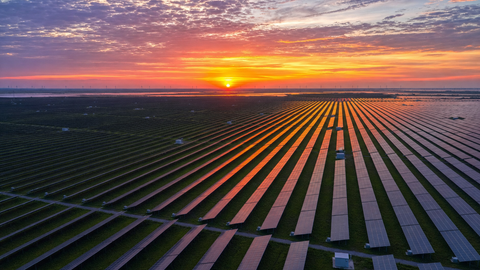
2023 marked a turning point for U.S. solar manufacturing. Backed by the Section 45X Advanced Manufacturing Production Credit created under the Inflation Reduction Act, module and cell makers announced and completed a wave of American factory expansions not seen since the industry's earliest domestic manufacturing push. For distributors and installers, this buildout means a growing supply of domestic-content-eligible components — a critical input for capturing IRA bonus tax credits.
We've had a front-row seat to what this means on the ground: domestic SKUs that were allocation-only in 2022 became quotable in 2023, and by 2026 the "can you get me U.S. panels?" conversation went from a specialty request to a weekly routine. This is the full picture — the credit mechanics, the factory scoreboard, and the sourcing implications for contractors.
Section 45X provides a per-unit production tax credit for eligible components manufactured in the United States and sold to unrelated parties — solar cells, modules, wafers, polysilicon, torque tubes, structural fasteners, inverters, and battery components all qualify. On December 14, 2023, Treasury and the IRS issued proposed regulations (IR-2023-238) providing detailed rules for calculating the credit, defining eligible components, and setting recordkeeping requirements. The guidance also introduced a "Related Person Election," allowing manufacturers to treat sales to related entities as credit-eligible sales — a detail that matters enormously for vertically integrated producers.
Because 45X credits are uncapped relative to production volume and stack across the value chain, they gave manufacturers a direct, bankable incentive to build or expand U.S. capacity from polysilicon through finished modules. Unlike an investment credit, 45X pays on output: every watt, every kilogram, every year the factory runs (until the phase-down begins in 2030).
The statutory rates below are the engine behind every 2023 factory announcement. Keep them in mind when a manufacturer tells you their domestic cost premium is "covered":
| Eligible Component | 45X Credit Rate | Unit Basis |
|---|---|---|
| Solar-grade polysilicon | $3.00 | per kilogram |
| Photovoltaic wafer | $12.00 | per square meter |
| Photovoltaic cell | $0.04 | per Wdc |
| Photovoltaic module | $0.07 | per Wdc |
| Torque tube (tracker) | $0.87 | per kilogram |
| Structural fastener | $2.28 | per kilogram |
| Central inverter | $0.0025 | per Wac |
| Commercial inverter | $0.015 | per Wac |
| Residential inverter | $0.065 | per Wac |
| Microinverter | $0.11 | per Wac |
| Battery cell | $35.00 | per kWh |
| Battery module | $10.00 | per kWh |
Run the factory math and the boom explains itself. A 2 GW module plant earns 2,000,000,000 W × $0.07 = $140 million per year in 45X credits. Add integrated cell production at the same 2 GW and the cell line earns another 2 GW × $0.04 = $80 million per year — $220 million annually for a fully integrated cell-plus-module campus. That is not a subsidy rounding error; it is the difference between a U.S. factory penciling and not penciling. On the inverter side, the asymmetry is deliberate and striking: $0.11/Wac for microinverters versus $0.0025/Wac for central inverters — a 44× per-watt spread that tells you exactly which product categories Congress wanted reshored.
45X is generous but not permanent. For components sold after December 31, 2029, the credit phases down on a fixed schedule:
| Year Component Is Sold | Credit Percentage | Module Credit at $0.07/W Statutory Rate |
|---|---|---|
| Through 2029 | 100% | $0.070/W |
| 2030 | 75% | $0.0525/W |
| 2031 | 50% | $0.035/W |
| 2032 | 25% | $0.0175/W |
| 2033 and after | 0% | $0.00/W |
That schedule is why 2023 announcements all carried aggressive construction timelines: every month of delay was credit value left unclaimed. It's also why we tell buyers today that domestic price premiums should compress through the decade as factories amortize — and why a reshore-or-sunset decision hits every 45X-dependent plant around 2029.
Qcells: the largest buildout in the Western Hemisphere. South Korea-based Qcells made the single largest domestic manufacturing commitment of the year: a $2.5 billion investment announced in January 2023 to expand its Dalton, Georgia factory and build a new fully integrated supply chain facility in Cartersville, Georgia. By October 18, 2023, Qcells completed the first phase — a 2 GW expansion of the Dalton plant bringing output past 5.1 GW, making it the largest solar manufacturing plant in the Western Hemisphere and the first full panel factory expansion completed since the IRA's passage. Combined, Dalton and Cartersville were projected to reach 8.4 GW of annual capacity by 2024 — enough for roughly 1.3 million homes a year.
First Solar: Ohio and Alabama. The largest U.S.-headquartered module maker brought a new Ohio factory online in the first half of 2023 and advanced its $1.1 billion, 3.5 GWdc thin-film plant in Lawrence County, Alabama — its fourth U.S. facility. Alabama's economic development agency awarded infrastructure grant funding in June 2023 to support the project, and First Solar's CEO publicly credited the IRA as the pivotal factor behind the acceleration, with domestic commitments targeting more than 10 GWdc of annual nameplate by 2025.
JinkoSolar: Jacksonville expansion, with drama. JinkoSolar, operating a module assembly plant in Jacksonville since 2018, sought local incentives in April 2023 for a $52 million investment to triple capacity and add 250 jobs. The city's incentive package was withdrawn after a federal search warrant was executed at the facility in May 2023 — but Jinko proceeded on its own capital, and by year-end plant employment had grown from roughly 274 to about 550 workers.
| Manufacturer | Location | 2023 Development |
|---|---|---|
| Qcells | Dalton & Cartersville, GA | $2.5B investment; Dalton 2 GW expansion completed October 2023 |
| First Solar | Ohio & Lawrence County, AL | New Ohio factory online; $1.1B, 3.5 GWdc Alabama plant under construction |
| JinkoSolar | Jacksonville, FL | $52M expansion targeting tripled capacity, 250+ new jobs |
| Trina, JA Solar, LONGi, CSI | TX, AZ, OH, others | Four of the global top five had U.S. facilities operating or under construction by late 2023 |
The momentum reached upstream, too: domestic polysilicon and wafer production drew fresh investment as manufacturers chased the full domestic content stack rather than assembly-only credits. The context that makes this significant: as of 2021, roughly 85% of global PV cell production was concentrated in China, per Wood Mackenzie — so every point of U.S. upstream share is hard-won.
The credit pays manufacturers, but the downstream effects land on your quote sheet. Domestic-content eligibility is the big one: the IRA's domestic content bonus adds 10 percentage points to the ITC (2 points if prevailing wage and apprenticeship requirements aren't met) for projects hitting the required share of U.S.-manufactured product by cost. That required share steps up over time — 40% for projects beginning construction before 2025, 45% in 2025, 50% in 2026, and 55% from 2027 onward. A module that counts toward that threshold is worth more than its nameplate says.
| Buyer Situation | What 45X-Era Supply Means | Action |
|---|---|---|
| Residential installer, no tax-credit customer mandate | Domestic SKUs carry a modest premium; availability now strong | Stock a domestic option for customers who ask; lead with availability |
| Commercial EPC on IRA-eligible projects | Domestic content adder can outweigh module premium several times over | Get cost-breakdown documentation from manufacturers early |
| Developer chasing safe harbor / placed-in-service dates | U.S. factory output is the tariff-immune supply | Lock allocations quarterly; don't assume spot availability in Q4 |
| Public/GSA-adjacent procurement (BABA) | Domestic manufacture is a hard requirement, not a bonus | Request BABA compliance documentation with every quote |
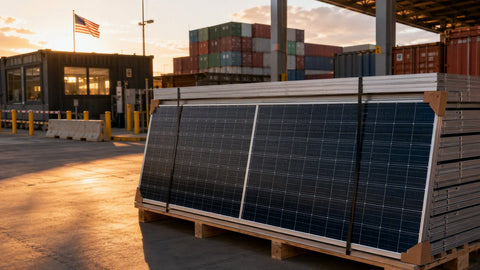
I've watched the domestic-content premium swing from $0.08/W in early 2023 to under $0.03/W on some SKUs by mid-decade as 45X-backed capacity came online — the credit did exactly what it was designed to do. We now stock U.S.-made panels as a first-class category rather than a specialty shelf, with depth across Qcells, Mission Solar, Silfab, and Jinko's U.S. line.
One caution from the quote desk: "assembled in the USA" and "45X-eligible" are different claims, and neither automatically equals "domestic content qualified." I've seen three projects this year discover at the eleventh hour that their module's cell content disqualified the cost percentage they'd modeled. Ask for the manufacturer's domestic content cost breakdown and 45X component documentation before you price the adder into your bid — not after.
45X didn't arrive in a vacuum. The 2018 Section 201 tariffs put a floor under the idea of trade protection for solar; 45X added the carrot to that stick. The result, three years on, is a manufacturing map that would have been unrecognizable in 2021 — and a policy stack that keeps evolving, from the Section 301 component duties to the 2026 Section 232 minimum import prices now reshaping the import side of the ledger. The through-line for buyers is unchanged: know where your equipment is made, know what it's made from, and get it in writing.
Solar got the headlines, but the battery credits may prove bigger. At $35 per kWh for U.S.-made battery cells and another $10 per kWh for modules, a 5 GWh cell plant earns 5,000,000 kWh × $35 = $175 million per year — before the module-line credit. That's why essentially every 2023 solar factory announcement was followed within eighteen months by a battery or battery-component announcement, and why our battery and energy storage category has more domestic-adjacent SKUs every quarter. The stationary storage buyers we supply are the direct beneficiaries: cells, packs, and cabinets with U.S. content documentation are steadily easier to source.
Two mechanics turned 45X from a tax attribute into cash flow. Elective pay (the "direct pay" election) lets manufacturers treat the credit as a tax overpayment refundable in cash for up to five years — crucial for pre-revenue factories with no tax liability to offset. Transferability lets a manufacturer sell the credit to an unrelated taxpayer for cash. Together they made 45X financeable: lenders underwrite factories against projected credit revenue, which is precisely how a $2.5 billion Georgia campus gets built on a credit that pays $0.07 per watt. For buyers, the relevance is simpler: bankable credits mean committed factories, and committed factories mean allocation you can actually contract against.
I've been shipping solar equipment long enough to remember when "domestic module" meant a two-model shelf with a six-week lead time. The 45X era changed our warehouse in ways you can count:
| Category | Early 2022 Reality | Post-45X Reality |
|---|---|---|
| Domestic-content residential modules | Handful of SKUs, allocation-only | Broad catalog across Qcells, Silfab, Mission, and more |
| U.S.-assembled commercial/utility panels | Rare; quote-by-project | Standing inventory, volume pricing tiers |
| Origin documentation quality | "Assembled in USA" sticker, little else | Cost breakdowns and component attestations on request |
| Premium vs import pricing | Often $0.08/W or more | Frequently under $0.03/W on volume lines |
The catch we flag to every buyer: domestic capacity is growing but not infinite, and project-level demand for domestic-content SKUs spikes every time a deadline looms. We watched allocation tighten twice in 2023–2024 around ITC guidance drops, and again in 2026 around the safe harbor and Section 232 calendars. If a project needs documented domestic modules, lock the allocation when the project firms up — not when procurement gets around to it.
Two shadows hang over the boom. First, overcapacity: announced U.S. module capacity vastly exceeds domestic demand, and not every announced factory will survive the shakeout — several high-profile 2023 announcements were quietly shelved by 2025. Second, the phase-down: a factory whose economics depend on the full $0.07/W credit faces a 25% revenue haircut on that line in 2030 and zero by 2033. The plants most likely to endure are the vertically integrated ones — cell-plus-module campuses like Cartersville — because they stack multiple credit streams and control their own feedstock. Buyers should expect consolidation, and should treat multi-year supply agreements with credit-dependent factories the way they'd treat any counterparty risk: with documentation, diversification, and a backup supplier on file.
Buried in the 45X schedule are two racking-side credits that quietly reshaped the tracker and mounting industry: $0.87 per kilogram for torque tubes and $2.28 per kilogram for structural fasteners. Those numbers sound small until you scale them — a 100 MW single-axis tracker project carries hundreds of tons of torque tube, and domestic racking steel suddenly had a per-kilogram federal tailwind. U.S. steel mills and racking fabricators responded with their own capacity additions through 2023–2024, which is part of why our racking and mounting category now has genuine domestic depth instead of a flag sticker on imported tube. For ground-mount developers chasing the domestic content adder, racking is often the cheapest domestic percentage points in the whole BOM.
Step back from any single factory and the 2023 pattern was staggering in aggregate. Industry trackers counted dozens of new or expanded U.S. solar facilities announced in the first eighteen months after the IRA passed, representing tens of billions of dollars in committed capital and tens of gigawatts of nameplate capacity across modules, cells, inverters, and racking. Not all of it got built — several splashy 2023 announcements were quietly restructured or shelved by 2025 as module prices collapsed and capital tightened — but the projects with 45X credit revenue underwritten into the financing mostly broke ground on schedule. That filter is worth remembering when you read any factory press release: the credit made announcements cheap and construction expensive, and only the underwritten ones poured concrete.
For the contractors and EPCs we supply, the scoreboard that matters isn't press releases — it's deliverable SKUs with documentation. On that measure 2023 delivered: the domestic catalog went from boutique to broad, and it has kept widening every year since.
The 45X era made "American-made" a marketing asset, which means it also made it a marketing exaggeration. Before you price a domestic content adder into a bid, run this five-point check on every major component:
The documentation checklist we use:
- Component-level origin statement — cell, wafer, frame, glass, junction box, not just final assembly location.
- Cost breakdown letter — the domestic content test is a cost-percentage calculation; you need the manufacturer's manufactured-product cost split in writing.
- 45X component eligibility statement — which specific components the manufacturer claims credits on, which signals which tiers are genuinely U.S.-produced.
- BABA compliance letter if the project touches federal money — a separate standard from the tax-credit test.
- Dated validity — supply chains shift quarterly; a 2023 letter is stale documentation on a 2026 bid.
Manufacturers with real domestic depth answer all five inside a week. When the answer to the cost breakdown is "we'll get back to you," treat the adder as unverified and price the bid accordingly. We maintain current documentation files on the domestic lines we stock, and we'll pull them into your quote package on request — it's faster than chasing them mid-procurement.
The last word belongs to the factory floors themselves. Whatever one thinks of industrial policy, 2023 proved that a well-structured production credit can move capital at a scale tariffs alone never did: concrete poured in Dalton, Lawrence County, and Jacksonville because the credit made the math work, and American module supply is measurably deeper for it. The buyers who understand that machinery — who know which credits built which factories and when those credits step down — will source smarter than the ones reading press releases. That edge is available to anyone who reads the schedule above and asks for the documentation. Three years on, the verdict from the supply side is simple: 45X moved real steel and real silicon. The domestic shelf is no longer the expensive exception — on a growing list of projects, it's the default. That shift — from niche to normal — is the credit's clearest scoreboard.
What is the Section 45X credit?
A per-unit production tax credit under the Inflation Reduction Act for eligible components manufactured in the U.S. and sold — solar polysilicon, wafers, cells, modules, trackers and fasteners, inverters, and battery components. It pays on output, not investment, and runs at full value through 2029 before phasing down through 2032.
How much is the 45X credit for solar modules?
$0.07 per watt DC. A 2 GW module factory earns $140 million per year at full rate; add integrated cell production at $0.04/Wdc and a 2 GW cell line earns another $80 million annually.
Does 45X benefit installers directly?
Not as a credit — that goes to manufacturers. The installer benefit is indirect but real: more domestic supply, smaller domestic premiums, and a deeper bench of modules and inverters that qualify for the 10-percentage-point domestic content ITC adder and BABA requirements.
When does 45X phase out?
Credits for components sold after December 31, 2029 step down: 75% in 2030, 50% in 2031, 25% in 2032, and zero thereafter. Critical minerals produced under 45X are exempt from the phase-down.
What was the biggest 45X-driven factory announcement of 2023?
Qcells' $2.5 billion Georgia commitment — expanding Dalton past 5.1 GW (completed October 18, 2023, the largest plant in the Western Hemisphere) and building a new integrated facility in Cartersville, with combined capacity projected at 8.4 GW annually.
Does "assembled in the USA" mean 45X-eligible or domestic-content qualified?
Not automatically. 45X eligibility is component-specific, and domestic content qualification is a cost-percentage test. Request the manufacturer's cost breakdown and component documentation before pricing the adder into a bid.
Sourcing Domestic-Content Equipment?
PES Supply stocks U.S.-made panels and tariff-resilient equipment with origin documentation — 7–10 business day delivery on in-stock lines.
Browse U.S.-Made Solar PanelsNeed domestic content documentation for a bid? Call (502) 790-0600 — we'll pull manufacturer cost breakdowns with your quote. Related: solar incentives by state.