A swimming pool pump is the second-largest electrical load in most homes that have one — behind only the HVAC system — and it runs on the most solar-friendly schedule imaginable: broad daylight, every day, all summer. I have helped size solar for dozens of pool owners and installers, and the projects that succeed all start the same way: with honest math about what the pump actually draws, not a guess pulled from the nameplate horsepower. This guide walks through that math, the equipment paths (direct DC pumps versus conventional AC pumps on solar), the NEC 680 rules that make pool electrical work its own discipline, and the sizing tables you can hand straight to a customer.

One promise up front: every number below is either from the NEC, from basic electrical physics, or from arithmetic you can check with a calculator in thirty seconds. Pool solar has attracted more than its share of marketing fog over the years. Fog does not size wire.
First, understand the load: what a pool pump really draws
Horsepower is an output rating, not an input measurement. The electrical draw of a single-speed pump motor is its horsepower times 746 watts, divided by motor efficiency — and single-speed pool pump motors typically run 55 to 70 percent efficient in real plumbing conditions. Using 65 percent as a working assumption:
| Pump size | Mechanical output (HP × 746) | Estimated input watts (÷ 0.65) | Current at 240 V |
|---|---|---|---|
| 3/4 HP | 560 W | ≈ 860 W | ≈ 3.6 A |
| 1 HP | 746 W | ≈ 1,150 W | ≈ 4.8 A |
| 1.5 HP | 1,119 W | ≈ 1,725 W | ≈ 7.2 A |
| 2 HP | 1,492 W | ≈ 2,300 W | ≈ 9.6 A |
| 2.5 HP | 1,865 W | ≈ 2,870 W | ≈ 12.0 A |
Verify with a clamp meter on the installed pump — plumbing head, impeller wear, and voltage all move the real number by 10 to 15 percent. A clamp reading taken on a hot afternoon with a clean filter is the number you design around. Our power consumption guide covers the measurement method if the customer wants to follow along.
The variable-speed revolution: the cheapest solar panel is a slower pump
Pump affinity laws are the best-kept money-saving secret in residential electrical work. Power draw scales with the cube of speed. Run a pump at half speed and it moves half the water using one-eighth the power. Because filtration quality depends on total water turnover, not speed, the winning strategy is longer runtime at lower RPM:
| Operating profile | Power draw | Daily runtime | Daily energy |
|---|---|---|---|
| 1.5 HP single-speed, full tilt | 1,725 W | 8 h | 13.8 kWh |
| Same pump curve at 75% speed (VS pump) | ≈ 970 W (0.42× full) | 10 h | 9.7 kWh |
| Same curve at 50% speed | ≈ 215 W (0.125× full) | 14 h | 3.0 kWh |
| Same curve at 40% speed (overnight skim + day run) | ≈ 110 W | 16 h | 1.8 kWh |
Read that table twice before buying a single panel. A variable-speed pump conversion cuts the solar array requirement by 60 to 80 percent on its own. At typical installed costs, the VS pump pays for itself faster than the array does, and it makes the solar project dramatically smaller. I have talked more pool owners into a VS pump than into any other single piece of equipment, and I have never had one complain afterward.
Sizing the array: arithmetic you can check
Daily energy requirement divided by peak sun hours, divided by system derate. The derate factor (0.75–0.82) covers temperature losses, wiring, inverter efficiency, and soiling — anyone promising you better than 0.85 on a real roof is selling something. Portland averages roughly 4 peak sun hours annually (5.5+ in summer, under 2 in December); Phoenix runs 6.5; most of the Sun Belt sits between 5 and 6.
| Load scenario | Daily energy | Array needed (5 PSH, 0.8 derate) | Panels (400 W class) |
|---|---|---|---|
| 1 HP single-speed, 6 h/day | 6.9 kWh | 6.9 ÷ (5 × 0.8) = 1.73 kW | 5 |
| 1.5 HP single-speed, 8 h/day | 13.8 kWh | 13.8 ÷ 4.0 = 3.45 kW | 9 |
| 2 HP single-speed, 8 h/day | 18.4 kWh | 18.4 ÷ 4.0 = 4.6 kW | 12 |
| 1.5 HP replaced by VS pump at 50% speed, 14 h/day | 3.0 kWh | 3.0 ÷ 4.0 = 0.75 kW | 2 |
| VS pump + pool heater heat-pump assist, combined | 22 kWh | 22 ÷ 4.0 = 5.5 kW | 14 |
The system size calculator automates this arithmetic for whole-home projects, and our 400 W-class panels are the workhorse module for arrays in this size range.
Three equipment paths, compared honestly
| Approach | How it works | Strengths | Weaknesses |
|---|---|---|---|
| Grid-tied whole-home solar | Existing or new house array offsets pump energy through net metering | Simplest, most flexible, pump runs on any schedule, surplus serves the whole house | Does not run the pump during outages; economics depend on utility tariff |
| Dedicated AC array + inverter | Small array feeds a dedicated circuit or subpanel for pool equipment | Clean accounting, easy to size exactly to the pump, expandable | Duplicate inverter hardware; still grid-dependent without storage |
| Direct DC solar pump | Specialized DC pump motor driven straight from panels through a pump controller | No inverter, no grid at all; superb for off-grid pools, ponds, and ag water | Runs only when sun shines; pump replacement is specialized equipment; winter performance is whatever winter sun gives you |
For most suburban pool owners, the honest recommendation is path one: fold the pump load into a properly sized whole-home system and let net metering do the accounting. Direct DC shines where there is no grid — ranch tanks, off-grid cabanas, agricultural circulation — and it is genuinely elegant there. The dedicated-array middle path makes sense when the house roof is full or shaded and the pool equipment pad has its own sunny exposure nearby.
NEC 680: pool electrical is its own discipline
Pool electrical work carries the most concentrated shock-risk rules in the residential code, and solar additions do not exempt you from any of them. The load-bearing requirements for a pool pump circuit:
| Requirement | NEC reference | Field translation |
|---|---|---|
| GFCI protection for pump motors | 680.21(A) | The pump circuit gets GFCI protection regardless of voltage class in current editions — no grandfathering assumptions on rewires |
| Equipotential bonding | 680.26 | All metallic parts within 5 ft of the water — pump, heater, rails, reinforcing steel — bond to the common grid; solar racking near the pool joins that conversation |
| Grounding of equipment | 680.6 / Article 250 | Insulated EGC sized per 250.122, run with the circuit conductors |
| Wiring method restrictions near the pool | 680.10–680.12 | Raceway types and burial depths are specified; overhead conductor clearances in 680.9 apply to any new solar homerun routing |
| Disconnecting means | 680.12–680.13 | A local disconnect in sight of the pump, plus the PV disconnects Article 690 requires for the solar side |
If the pool equipment pad is getting a new subpanel to host solar backfeed, that subpanel inherits the whole 680 rulebook plus 705.12 interconnection math. Our disconnect and OCPD guide and the grounding and bonding guide cover the Article 690 and 250 sides in detail. This is licensed-electrician territory; pool electrical is not the place for a homeowner learning curve, and I say that as someone who generally encourages DIY curiosity.
Wire sizing for the dedicated-array path
For a dedicated pool-pump array, conductor sizing follows the same NEC 310.16 foundation as any PV work, with the 690.8 multiplier (1.56 × Isc) on source circuits. A 3.45 kW array of nine 400 W modules wired as one string lands around 13 A of Isc — call it 20.3 A of design current, carried comfortably by 12 AWG THHN-2 (25 A at the 75°C column) before temperature corrections. The pump circuit itself, at 240 V drawing 7–12 A depending on pump size, runs on 14 or 12 AWG copper with a 15 or 20 A two-pole GFCI breaker. Long runs to a distant equipment pad deserve a voltage-drop check: keep it under 3 percent with VD = 2 × K × L × I ÷ circular mils, K = 12.9 for copper. The ampacity chart guide and conduit fill chart are the two references to keep open while you design the run.
Adding batteries: does pool solar need storage?

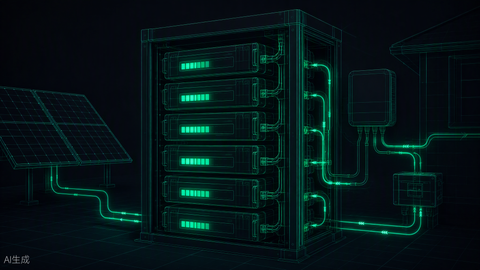
Usually no — and this surprises people. The pool itself is the battery: an over-pumped, well-filtered pool at 6 PM stores the day's work as clean water, not lithium. Storage earns its place when the customer also wants outage resilience for the pump (freeze protection circulation in cold climates is the legitimate case) or when the whole-home system already includes batteries and the pump joins the backed-up loads panel. If storage enters the picture, our 5–15 kWh battery range covers the residential sizes, the battery sizing guide does the math, and a 10–12 kW hybrid inverter ties solar, battery, and pump loads into one managed system. For a straight grid-tied pool offset, save the battery budget and buy the variable-speed pump first.
Seasonal reality in the Pacific Northwest
Northwest pool season runs roughly May through September — beautifully aligned with our solar production curve. A dedicated array sized at 5 summer PSH covers the pump exactly when the pump is needed, and the winter surplus (what little there is) either nets against house loads or simply rests. Customers sometimes ask about running the pump for freeze protection in January off a dedicated DC system; the honest answer is that a dark December week produces almost nothing, and freeze protection circulation needs the grid or a battery, not a prayer. Design for the season that matters and let net metering smooth the rest.
Field notes from the equipment pad
We have wired a lot of pool equipment over the years, and the pad tells you everything about the house: a corroded timer box from 1987, bonding conductor dangling loose behind the heater, a pump drawing 30 percent over nameplate because the filter has not been cleaned since the last presidential administration. Fix the pad first. A clean filter alone can drop pump draw 10 to 15 percent, which is free solar capacity nobody had to buy. I once watched a customer's "undersized solar problem" evaporate entirely with a filter cleaning and a VS pump speed adjustment — the array was fine; the hydraulics were the defect. Check the boring stuff before you sell the exciting stuff.
Pool heating is the real energy hog — plan for it or fence it off
The pump gets the attention because it runs daily, but a resistance pool heater draws 5 to 11 kW while it runs and can double a pool's energy footprint in a single cool month. If the customer heats the pool, three honest options exist. A heat-pump pool heater moves heat at a coefficient of performance around 4 to 6 — one kWh of electricity delivers four to six kWh of heat — and pairs beautifully with solar because it runs hardest in the sunny shoulder seasons. A solar thermal pool heater (unglazed collector mats on a roof or rack) uses the pump you already own and delivers the cheapest pool heat known to physics, at the cost of roof area and plumbing work. And a gas heater remains the right tool for occasional rapid heating of a spa, where its speed beats its inefficiency. What does not pair well with rooftop PV is brute resistance heating — it will eat any residential array for breakfast. Size the solar for the pump and house first, treat heating as a separate engineering conversation, and never let a salesperson blend the two into one rosy spreadsheet.
The buyer's checklist we hand across the counter
When a pool owner or their installer comes in to spec the project, this is the sequence that keeps everyone honest. One: clamp the existing pump and get real watts, with the filter clean. Two: pull twelve months of bills and decide whether the project is pump-only offset or a whole-home system wearing a pool costume — the whole-house analysis helps frame that. Three: price the variable-speed pump conversion as line item zero, before any panel gets quoted. Four: confirm the equipment pad's electrical condition — GFCI, bonding conductor intact, working clearances — because solar scope stacked on a deficient pad fails inspection on the old sins, not the new work. Five: verify roof or ground area near the pad if a dedicated array is planned, and check racking options for ground mounts if roof space is gone. Six: file permits for both the PV work and any pad electrical corrections together — one inspection trip beats two.
Mistakes that sink pool solar projects
Three errors account for nearly every unhappy pool-solar customer we have counseled after the fact. First, sizing from nameplate horsepower instead of measured draw — a tired 2 HP pump can out-draw a healthy 2.5 HP, and the array sized off the brochure comes up short every August. Second, ignoring the timer schedule: a pump programmed to run 6 PM to 2 AM is a battery project pretending to be a solar project, and no array fixes a schedule. Move the runtime into daylight before anything else. Third, treating the equipment pad as exempt from code because "it was like that when we got here" — the 680 bonding and GFCI deficiencies that predate your project become your project's problem the moment your permit opens the file. Document existing conditions, correct what the scope touches, and put the rest in writing to the homeowner. That last habit has saved more contractor reputations than any tool purchase we sell.
A word on pool solar for installers building a book of business
For contractors, the pool-niche pitch is quietly one of the best residential entry points in the trade. The customer already understands mechanical equipment, already pays a visible monthly bill for a single identifiable load, and already has a service relationship culture (pool techs, weekly chemical routes) that makes a maintenance-minded solar contractor an easy fit. Lead with the pump audit, not the array. A $0 clamp-meter visit that ends with a VS pump quote, a pad cleanup, and a right-sized solar proposal wins more signed contracts than any door-knocking script ever written. The pool owners in a neighborhood talk to each other at the swim-club fence — the contractor who fixed the Hendersons' pump bill gets the next three backyards on the street by reputation alone. We stock the residential modules, the charge controllers for the off-grid variants, and the 5 kW-class inverters that dedicated pool arrays typically need, precisely because this niche keeps growing.
And for the homeowners reading this: the order of operations is pump first, schedule second, solar third. Get the load efficient, put its runtime in the sunshine, then size the array to the real number. Do it in that order and a pool stops being a bill and becomes what it was supposed to be — the best room of the house, running on the roof.
Off-grid and agricultural water: where direct DC truly wins
Step outside suburbia and the direct-DC approach stops being a compromise and becomes the obvious answer. Stock tanks, irrigation circulation, remote pond aeration, and off-grid cabana pools all share the same profile: water needs moving when the sun shines, there is no grid to lean on, and a battery bank sized for motor starting surge costs more than the pump. A dedicated DC pump controller soft-starts the motor as array voltage builds each morning, tracks maximum power the way an MPPT charge controller does, and simply idles when clouds roll through. Component selection is the craft: panel voltage strings matched to the controller's input window, wire sized for the full round trip to the array with under 3 percent drop, and a pump head curve matched to the plumbing it will actually push against. Our controller sizing guide covers the MPPT logic that these specialized pump controllers borrow, and the 300–399W panel tier is usually the right building block for arrays in the 1–3 kW range these systems live in. Get those three matches right and the system runs for a decade with nothing but an occasional panel rinse.
Whatever path the project takes — grid-tied offset, dedicated array, or direct DC — the physics rewards the same discipline: measure the real load, exploit the cube law, respect Article 680, and let the sunshine do what it does every single day without being asked twice.
The pump that runs on noon sun is the pump that never sends a bill — size it right and the customer forgets it was ever a problem.
Frequently asked questions
How many solar panels do I need to run a pool pump?
A 1.5 HP single-speed pump running 8 hours daily uses about 13.8 kWh, needing roughly 3.5 kW of array — about 9 panels at 400 W — at 5 peak sun hours. A variable-speed pump at half speed cuts that to 2–3 panels' worth of energy.
Can solar panels run a pool pump directly without the grid?
Yes, with a direct DC solar pump and controller — panels power a specialized DC motor whenever the sun shines. It is excellent for off-grid pools and agricultural water, but it stops at night and under heavy cloud, so grid-tied offset suits most residential pools better.
Do I need batteries for a solar-powered pool pump? Rarely. The pool stores the day's filtration work as clean water, so daytime solar matches the load naturally. Batteries only make sense for outage freeze protection or when part of a larger whole-home storage system.
Is pool pump electrical work safe to DIY? No. NEC Article 680 imposes GFCI, equipotential bonding, grounding, and disconnect requirements that exist because pools concentrate shock risk. This is licensed-electrician work in virtually every jurisdiction, and inspection is required.
Should I replace my single-speed pump before adding solar? Almost always yes. Pump affinity laws mean half speed uses one-eighth the power, so a variable-speed pump can shrink the required solar array by 60 to 80 percent — usually the fastest payback in the entire project.
How much does it cost to run a pool pump on solar? After installation, effectively zero marginal cost. The project cost is the array itself — roughly $2.50–$3.50 per watt installed for a dedicated residential system before incentives — offset against electric bills that typically drop $60 to $150 per month depending on pump size and rates.