Updated September 2026 — refreshed against the live PES catalog; product pricing verified 2026-09-26.
2026 product line update
| Product | Class | Price |
|---|---|---|
| Canadian Solar 710W TOPCon Bifacial Solar Panel | 710W | $340.80 |
| Hyundai 640W 156-Cell TOPCon Bifacial Solar Panel | 640W | $220.78 |
| Thornova Solar TS-BGT72(600) 600W Bifacial Solar Panel | 600W | $165.76 |
| Thornova Solar 595W Solar Panel 144 Cell Bifacial TS-BGT72(595) Wholesale 31 panels per pallet | 595W | $164.64 |
| ZNShine Solar 585W 144-Cell Bifacial Solar Panel | 585W | $246.99 |
| Hyundai HiS-S585OJ 585W Clear on Transparent156 Half-Cell Bifacial Solar Panel | 585W | $195.86 |
Live prices verified 2026-09-26. The current pallet line tops out at 550–640W, plus the Canadian Solar 710W TOPCon flagship panel.
How Much Does It Cost to Install a 10 kW Solar System?
The short answer for 2025: a 10 kW residential solar system runs $25,000–$35,000 installed before incentives in most of the U.S., and roughly $17,500–$24,500 net after the 30% federal tax credit. Portland and the Pacific Northwest land in the middle of that band. The long answer — what drives the spread, what to watch in a quote, and how to tell a fair price from a padded one — is the rest of this guide. We sell the equipment that goes into these systems, so we see both sides: the wholesale BOM and the installed invoice.

Why 10 kW? Is It a Good Benchmark?
Ten kilowatts is the workhorse size of American residential solar — big enough to offset a typical high-consumption household (roughly 12,000–16,000 kWh/year depending on climate), small enough to fit on a standard roof with 22–25 modern panels. It's also the size where per-watt pricing stops penalizing you: below 5 kW, fixed costs dominate; above 15 kW, you start running into panel count and inverter stacking complexity. If your usage says 8 kW or 12 kW, the economics in this guide scale nearly linearly — just multiply.
One field note: size from your utility bill, not from a salesperson's default. Pull 12 months of kWh usage, divide by your local production factor (about 1,100–1,300 kWh per kW per year in Portland; 1,400–1,700 in the Southwest), and that quotient is your system size. A household using 13,000 kWh in Portland needs roughly 10–11 kW. The solar system calculator does this math for you.
Current U.S. Market Pricing (2025) — What You Can Expect
| Pricing Band | Gross Cost (10 kW) | Net After 30% ITC | What You Typically Get |
|---|---|---|---|
| Value / DIY-friendly market | $22,000–$26,000 ($2.20–2.60/W) | $15,400–$18,200 | Tier 1 modules, string inverter, standard racking, competitive market (TX, FL, AZ) |
| National median | $27,000–$31,000 ($2.70–3.10/W) | $18,900–$21,700 | Quality equipment, full-service installer, most metros including Portland |
| Premium / complex | $32,000–$38,000+ ($3.20–3.80/W) | $22,400–$26,600 | Microinverters or optimizers, difficult roof, battery-ready design, high-cost metros (CA, Northeast) |
Where does the money go inside a 10 kW quote? Roughly like this — the percentages hold whether you're buying in Portland or Phoenix, though the absolute dollars shift with labor markets:
| Component | Rough Share / Range | What Drives Variation |
|---|---|---|
| Modules (22–25 panels) | $5,500–$8,500 | Brand tier, wattage class (430–500W), domestic content |
| Inverter(s) | $2,500–$5,500 | String ($2.5–3.5k) vs microinverters ($4–5.5k for 22–25 units) |
| Racking & attachments | $2,000–$3,500 | Roof type; tile and metal cost more than composition shingle |
| Electrical BOS (wire, disconnects, breakers) | $1,500–$3,000 | Run lengths, main-panel upgrades, rapid shutdown devices |
| Labor | $5,000–$9,000 | Regional rates, roof pitch/access, crew size |
| Permits, engineering, interconnection | $1,500–$3,500 | AHJ fees, structural letters, utility review |
| Overhead & margin | $4,000–$8,000 | Installer business model; sales-driven companies run high |
Breakdown of Cost Components
Modules: 10 kW is 22–25 panels at current 430–460W residential sizes. Tier 1 TOPCon modules from brands like JA Solar, Trina, Qcells, or Jinko run $0.25–$0.40/W wholesale; premium brands (REC, Silfab) command more for better degradation warranties and domestic content. The wholesale-vs-installed spread on modules is where informed buyers save real money — panels are 20–25% of the installed invoice but a far larger share of installer markup in some quotes.
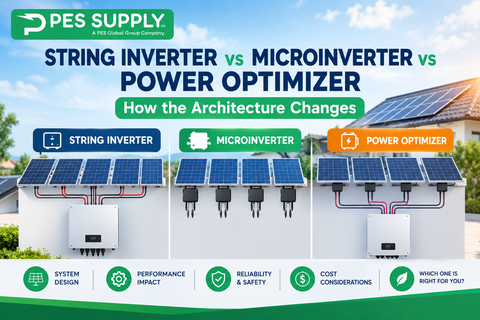
Inverters: a 10 kW system runs on one string inverter (SolarEdge HD-Wave class or similar — see SolarEdge and string inverters) or 22–25 microinverters (Enphase being the default). String is cheaper and simpler; micros give module-level monitoring and shade tolerance. On a clean south-facing roof, string wins on price. On a roof with three dormers and a maple tree, micros earn their premium.
Racking and BOS: unglamorous but safety-critical. Attachments flashed correctly on composition shingle, proper rail spans for your wind and snow zone, PV wire in conduit where exposed, and a listed rapid-shutdown solution per NEC 690.12. This is the layer where cheap quotes cut corners and where inspections catch them.
Adjustments for Region & Site (Portland / Oregon & U.S.)
Sunlight / Production Differences
A 10 kW system produces roughly 11,000–13,000 kWh/year in Portland's marine climate, 13,000–15,000 in California's Central Valley, and 15,000–17,000 in the high desert Southwest. Cloudy doesn't mean uneconomic — Portland's production at $0.13–0.15/kWh retail rates beats Phoenix production at $0.10/kWh rates — but it does mean the payback clock runs slower here than in the sun belt. Size for your kWh need, not your neighbor's array.
Local Incentives & Rebates (Oregon / Portland Focus)
The stack for an Oregon homeowner in 2025: the 30% federal ITC is the anchor on every project. Oregon adds state-level programs that have varied year to year, plus utility incentives through Energy Trust of Oregon for PGE and Pacific Power customers — historically $0.20–$0.40/W upfront rebates, subject to budget availability. Net metering at retail rate in both major Oregon utilities materially improves payback versus wholesale-export states. Verify current program status on our solar incentives by state page before you model — program budgets open and close mid-year.
Labor & Permitting in Portland / Oregon
Portland-area labor runs mid-range nationally: expect $0.50–$0.70/W of a 10 kW quote to be labor. Permitting through the City of Portland BDS or county AHJs is straightforward for residential — plan check typically 2–4 weeks, fees $300–$600, and Oregon's electrical inspectors are thorough but fair. Interconnection with PGE or Pacific Power is a standard net-metering application, usually 2–6 weeks from submission to permission to operate. One regional quirk worth knowing: Oregon's wet season compresses roof work into weather windows, so a contract signed in November may not see a roof crew until a dry stretch appears — build schedule float into your expectations, and don't let anyone rush flashing details to beat a rain front.
Example Scenarios: What You Might Pay
Scenario A — Standard 10 kW Residential in Portland, Moderate Complexity
| Line Item | Amount |
|---|---|
| 24 × 430W Tier 1 TOPCon modules (10.3 kW) | $6,400 |
| String inverter + rapid shutdown | $3,100 |
| IronRidge-class racking, composition shingle | $2,600 |
| Electrical BOS, wire, disconnect | $2,100 |
| Labor (3-person crew, 3 days) | $6,800 |
| Permits, engineering, interconnection | $2,200 |
| Overhead & margin | $5,300 |
| Gross total ($2.77/W) | $28,500 |
| Less 30% federal ITC | −$8,550 |
| Less Energy Trust incentive (illustrative $0.30/W) | −$3,100 |
| Net cost | ~$16,850 |
Scenario B — High-End / Complex Roof / Premium Components
Same 10 kW on a steep two-story tile roof with microinverters, a main-panel upgrade, and premium all-black modules: modules $8,000, 24 microinverters $4,800, tile-compatible racking $4,200, panel upgrade $2,800, BOS $2,400, labor (tile is slow) $9,500, permits/engineering $2,800, overhead $7,500 — gross $42,000, net after ITC ~$29,400. The lesson isn't that tile roofs are a rip-off; it's that roof type and inverter architecture are the two biggest quote variables you control. Know which one is driving your number before you negotiate.
Return on Investment (ROI) & Payback Period
Energy Savings
Portland scenario A: 11,500 kWh/year produced, 90% self-consumed or net-metered at $0.14/kWh — about $1,450/year in year one, escalating with utility rates. Southwest equivalent: 15,500 kWh at $0.16/kWh is $2,480/year. Both are before rate escalation; 3% annual escalation is a defensible planning number.
Watch one trap in savings projections: some proposals model 100% self-consumption at full retail value. That's only honest when your daytime load absorbs production as it's made — home businesses, pool pumps, EVs charging midday. Households that empty out from 8 AM to 6 PM export a large share at whatever the tariff pays for exports. Ask the modeler what self-consumption percentage they assumed, and why. That one number quietly moves projected savings by 20–30%.
Payback Period
Scenario A pays back its ~$16,850 net in roughly 9–11 years simple, faster with rate escalation and Energy Trust incentives at historical levels. Southwest and high-rate Northeast installs commonly see 6–8 years. California with batteries under NEM 3.0 is its own spreadsheet. Anything modeled under 5 years deserves scrutiny of the assumptions — production, rate, and escalation, in that order.
Long-Term Value
Panels carry 25–30 year performance warranties; modern n-type modules degrade about 0.4–0.5% per year, meaning year-25 production around 87–90% of day one. String inverters typically need one replacement around year 12–15 ($2,500–$4,000 installed) — budget it. Even with that reserve, a 10 kW system in Portland returns roughly $25,000–$35,000 in cumulative savings over 25 years on a ~$17,000 net investment, and studies consistently show owned (not leased) solar adding resale value. The solar ROI calculator lets you run your own address-specific numbers.
Warranty structure deserves a closer look than most buyers give it. A "25-year warranty" is actually three separate promises: the product/workmanship warranty (12–25 years depending on brand — premium lines like REC and Silfab push 25), the performance warranty (typically 84–90% of nameplate at year 25), and the installer's workmanship warranty on roof penetrations and wiring (the industry standard is 10 years; demand it in writing). The installer warranty is statistically the one you'll use — roof leak callbacks dwarf module failures by an order of magnitude — which makes installer longevity a bigger risk factor than brand choice. A 25-year promise from a 3-year-old company is a marketing document, not a warranty.
How PES Supply Helps Solar Installers & Projects

We're the wholesale side of this equation. Owner-builders and small installers buy the same Tier 1 modules, inverters, and racking that national installers mark up — solar panels, inverters, racking, and complete solar kits at pallet and project pricing. A DIY-capable homeowner or a cash buyer working with a licensed electrician for the final connections can realistically land a 10 kW system $8,000–$12,000 under national-installer quotes. Open a Pro Account or request a quote with your panel count and we'll price the BOM honestly. The solar installation guide covers the build sequence, and our 10 kW solar battery kit page shows what the same system looks like with storage included.
Tips to Help Reduce Your 10 kW System Cost
Five moves that actually work. Get three itemized quotes and compare $/W gross, not monthly payments — financing hides everything. Choose string over microinverters if your roof is unshaded; that's $1,500–$2,500 on this size. Buy equipment-savvy: ask installers to quote against a named BOM, or supply equipment yourself. Time the project for the installer's slow season (late fall through February in the Northwest) when crews are hungry. And claim every incentive — federal, state, utility — because a missed rebate is the most expensive paperwork error in residential solar.
A sixth move, for the hands-on: hybrid DIY. Homeowners with construction experience regularly handle racking and module mounting themselves — the mechanical work is honest carpentry with a torque wrench — then pay a licensed electrician for the panel tie-in, the inverter commissioning, and the permit sign-off. That split saves $4,000–$7,000 on a 10 kW job while keeping the paper trail clean for insurance and resale. Our installation guide maps exactly where the DIY/pro boundary sits, and our DIY solar kits exist for precisely this path. What never belongs in DIY territory: service panel work, utility interconnection, and anything above the roof deck's rated capacity without an engineer's letter.
Financing a 10 kW System: Cash vs. Loan vs. Lease
The financing choice moves the economics more than the equipment choice at this system size:
| Financing Path | Upfront | 25-Year Net Value | The Catch |
|---|---|---|---|
| Cash | $25,000–$35,000 | Highest — full savings, full ITC | Requires capital; opportunity cost of the cash |
| Solar loan (10–20 yr) | $0–$5,000 down | Good — ITC still yours; interest eats 15–25% of savings | Dealer fees of 15–30% hide inside "low rate" loans — ask for the cash price |
| Lease / PPA | $0 | Lowest — the leasing company captures ITC and most savings | Escalator clauses, transfer friction at home sale, 20-year commitment |
The single most expensive sentence in residential solar is "zero down, low monthly payment." Dealer-fee-loaded loans quoted at 2.99% frequently embed $6,000–$9,000 of fees in the financed amount on a system this size — compare the loan price against the same installer's cash price and the fee materializes instantly. Credit unions and home-equity lending routinely beat installer-arranged financing by thousands of dollars over the loan term. Leases and PPAs make sense for one profile: the homeowner with no tax appetite who values simplicity over savings. Everyone else should own the asset outright or borrow against cheap collateral.
Does a 10 kW System Pair Well With Batteries?
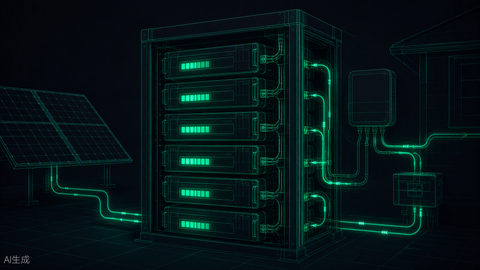
Increasingly, yes — but the math is tariff-dependent. Under retail-rate net metering (Portland's situation), a battery is a resilience purchase, not a savings engine: you're paying $10,000–$15,000 for backup power and peace of mind, and that's a legitimate choice, just not a financial one. Under California's NEM 3.0 or any wholesale-export tariff, storage is nearly mandatory to make solar pencil, because exported kWh are worth a fraction of consumed ones. The middle path that's exploded in popularity: battery-ready inverter architecture now (hybrid inverters like Sol-Ark or EG4 gear), batteries later when prices or tariffs justify them. Rough in the conduit and breaker space during the solar install and the future battery addition becomes a half-day job instead of a rewire.
Roof and Site Requirements for 10 kW
Twenty-two to twenty-five panels need 440–500 square feet of clean roof — "clean" meaning unshaded from roughly 9 AM to 3 PM solar time, structurally sound, and with 10+ years of roofing life remaining. South-facing at 20–40° pitch is ideal in the northern hemisphere, but west-facing arrays trade only 10–15% of production while shifting generation toward expensive late-afternoon hours, which under TOU rates can be a wash or better. East-west split arrays work fine with microinverters or dual-MPPT string inverters. Shading is the silent killer: a single vent pipe shadow crossing a string can cost 20% of that string's output without module-level electronics. Have the site assessed with a real shade tool, not a squint from the driveway.
FAQ Section (People Also Ask Style)
Planning for the Loads You Don't Have Yet
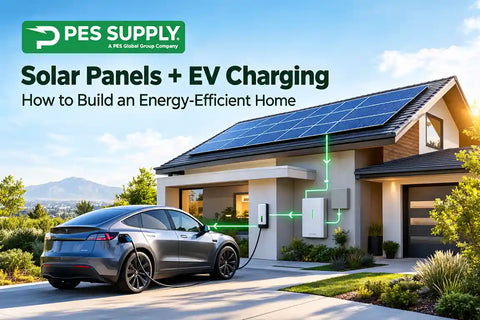
Size for the house you're becoming, not just the house you are. An EV added next year is 3,000–4,000 kWh of new annual consumption — roughly 2.5–3.5 kW of additional array in the Northwest. A hot tub is 2,000–3,000 kWh. Electrifying a gas furnace with a heat pump is 3,000–6,000 kWh depending on climate. If any of these are on your five-year horizon, tell your designer now: upsizing the array during the initial build costs $2.00–$2.50 per added watt versus $3.00+ for a second project with fresh permits, fresh mobilization, and fresh interconnection paperwork. At minimum, install the inverter and panel capacity with headroom — expanding the array later is cheap when the infrastructure anticipated it. This is also the moment to think about the home EV charger circuit, since the same electrician visit can rough in both.
Key Takeaways & Final Thoughts
A 10 kW system in 2025 is a $25,000–$35,000 gross, $17,500–$24,500 net proposition that returns 6–11-year paybacks depending on your sun and your rates. The quote variables you control — inverter architecture, module tier, installer overhead, and season — swing the price more than any regional difference. Buy the equipment intelligently, claim every incentive, size from your actual bills rather than averages, and the math works in most of America, cloudy Portland very much included.